An Introduction to UPA
animationobsessive.substack.com · by Animation Obsessive Staff · clipped 2026-08-18
Preview clipped from the web into my Obsidian — read the full piece at the source.
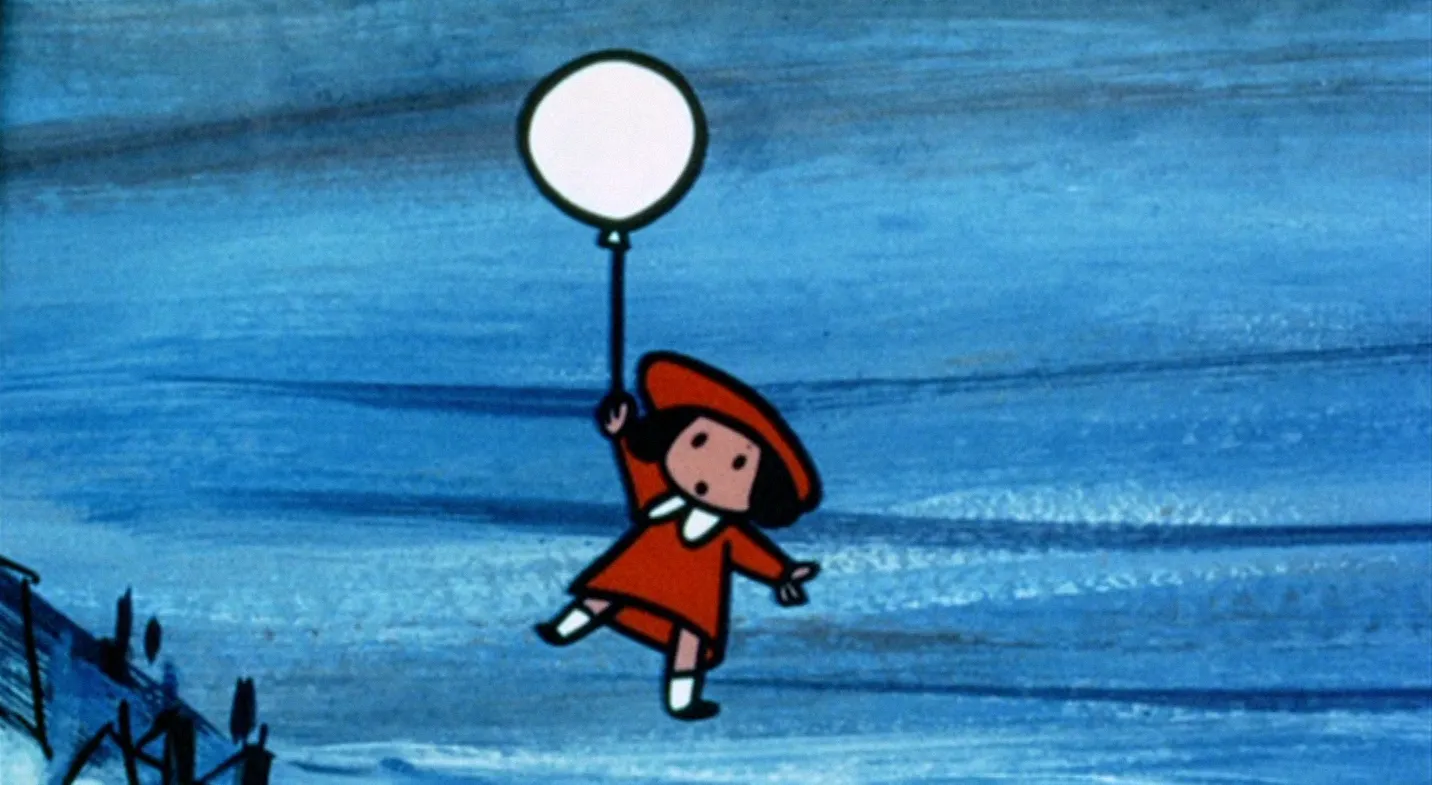
Madeline (1952)
Happy Sunday! We’re back again with a new issue of the Animation Obsessive newsletter. The agenda goes like this:
- 1️⃣ Where to start with UPA.
- 2️⃣ The news in animation, worldwide.
Just finding us? You can sign up to receive our Sunday issues right in your email inbox — every week, for free:
With that, let’s go!
1: UPA, a viewing guide
If you were to say that animation hit maturity at Disney in the ‘30s, you’d have a point. The medium’s history does split into pre- and post- Snow White eras. Disney showed the world what was possible.
Animation in the 21st century isn’t much like the retro Disney stuff, though. The whole approach has changed: the variety of styles, the range of stories and tones. It’s like animation speaks a different language than before. Why?
In many ways, it’s down to the impact of one studio: UPA, or United Productions of America. Founded in the ‘40s by disgruntled Disney artists, UPA blew up the medium and reassembled it. To quote historian Giannalberto Bendazzi:
Without exaggeration, it can be inferred that the very idea of animation as an art form, in the United States as well as in other countries, became commonplace with UPA. Entertainment animation left the exclusive realm of comedy and became the foundation for graphic and pictorial research as well as for diverse styles, themes and “genres.” In short, it became a medium for the greatest freedom of expression.[^1]
UPA did things differently. It told stories of all kinds — usually starring human characters who face modern-day problems. The visuals draw from modern art and design. The results don’t look or feel like old Disney cartoons.
At the time, UPA won Oscars, rave reviews and the public’s love. Other studios raced to catch up. A few of its films are famous even now — but the studio’s catalog is large and disorganized, and in some cases barely documented. Most of its cartoons from the ‘40s and ‘50s aren’t on streaming services, and many aren’t on DVD. It’s hard now to find the work that people watched then.
So, today, we’re bringing together a range of standout UPA animation with links to watch it on YouTube and the Internet Archive (each title is clickable). Along the way, we offer a little context to explain how and why the studio did what it did. Think of it as an introduction, or reintroduction, to UPA — including the obscure corners of its history.
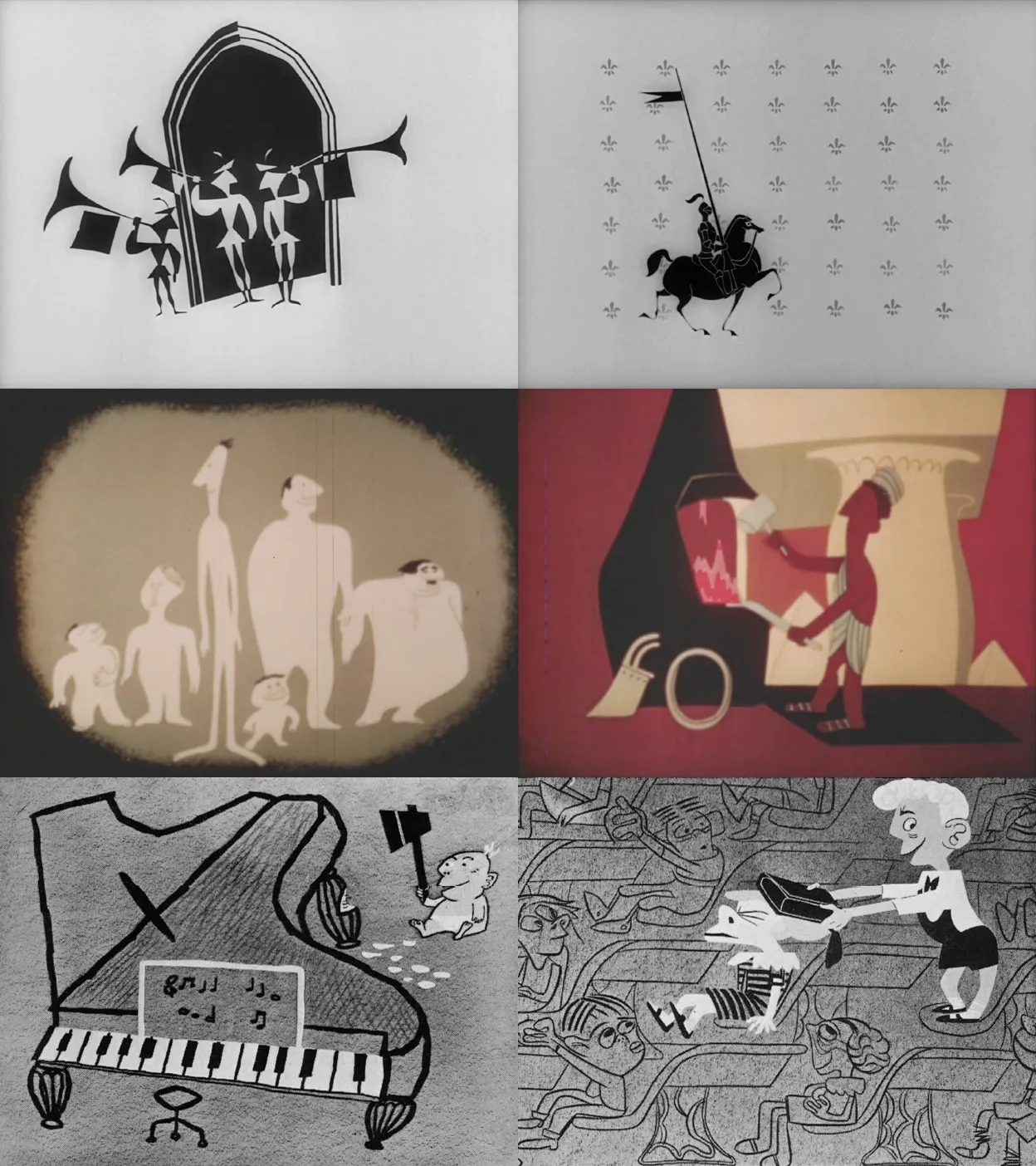
Stills from A Few Quick Facts About Fear (top row), The Brotherhood of Man (middle row) and Flat Hatting (bottom row)

John Hubley helping to build the UPA studio space (courtesy of Cartoon Brew )
UPA started innovating soon after it opened in California in 1943. It focused on contract work at first — often military training cartoons.
A Few Quick Facts About Fear (1945) was a “breakthrough” for the young studio, according to historian Adam Abraham. UPA co-founder Zack Schwartz wanted to make a film “that would break away, totally, from everything that had been done before.” It’s Army training in an almost arthouse mode.
Even more important was The Brotherhood of Man (1945), a commissioned film for a union. Its point is antiracism — advocating for, as the script puts it, “An equal start in life. Equal chance for health and medical care, and a good education. An equal chance for a job.” UPA’s staff was progressive; the message suited it. But that message stirred controversy then, like now, and Brotherhood faced accusations of communism.[^2]
Nevertheless, both films were radical steps forward for animation — in design, motion and storytelling. UPA artist John Hubley, a key figure on Brotherhood, penned an article with Schwartz in 1946 about the new era they saw dawning:
We have found that the medium of animation has become a new language. It is no longer the vaudeville world of pigs and bunnies. […] We have found that line, shape, color and symbols in movement can represent the essence of an idea, can express it humorously, with force, with clarity.[^3]