@anderssandberg - Another example of why digging a bit deeper is important

Anders Sandberg@anderssandberg
2025-08-01Another example of why digging a bit deeper is important.
(Now I want an AI HUD doing this and tapping me on the shoulder if it notices bad stuff like this. We are not there yet, but the world is moving in that direction.)
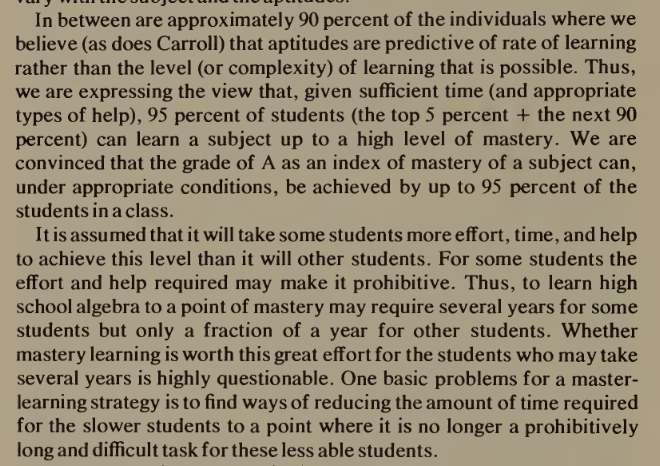
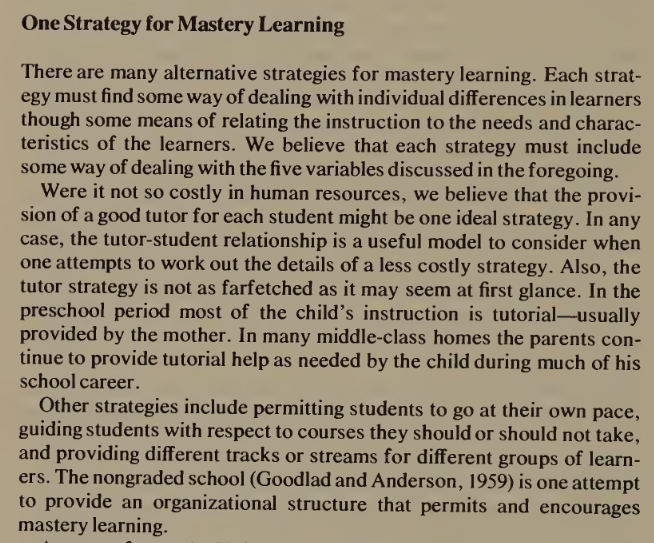
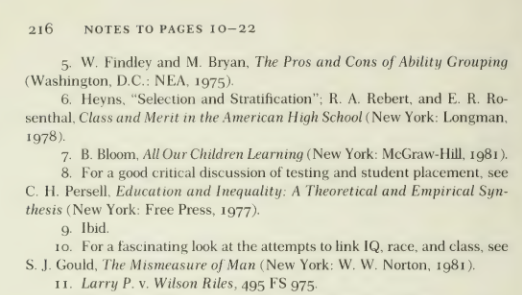
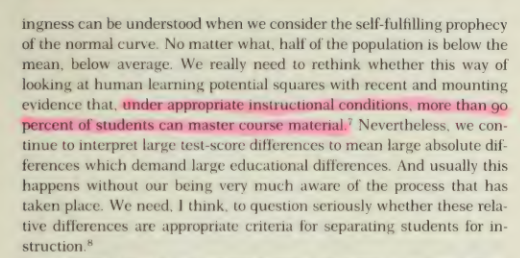
Jack@tracewoodgrains2025-07-31Checking sources is a superpower--you would not believe the stuff people sneak into things. As one example: the book "Keeping Track" is by far the most influential anti–ability grouping book. Key to its argument is a claimed finding that 90% of students can master course material under the right circumstances to argue that all students should be placed into the same courses. Where does that footnote - footnote 7 - lead? Benjamin Bloom's "All Our Children Learning." Not to a specific page. Not to a specific note within it. The entire book. So let's dig in! What does Bloom say? He notes his belief that around 90% of people differ in rate of learning rather than the level of learning theoretically possible, but that it will take some students more time, effort, and help to reach that level than others (sometimes prohibitively so). Some, he'll note, might take several years on high school algebra, while others can do it in a fraction of a year. Then he provides suggestions. How do you structure a school so that students can learn at appropriate paces to meet his "90%" goal? He has a few ideas: 1. Give each student an individual tutor. 2. Let students go at their own pace. 3. Guide students towards or away from specific courses. 4. Provide different tracks for different groups of learners. Did you catch that? Bloom says: obviously kids learn at different paces, so if you want them to master the material, either let them rush ahead individually or group them by ability. If we do that, everyone's level will improve. Oakes takes that, strip-mines the entire book down to a claim she paraphrases as "under appropriate learning conditions, more than 90 percent of students can master course material," and then uses it to argue that we should not let kids rush ahead individually or group them by ability. This book has been cited more than 10000 times. It is by far the most influential single thing ever written on ability grouping. And it cites sources it knows nobody will examine to argue for the polar opposite of what those sources advocate. Check sources.