Links & tweets I like
These are links I saved, it doesn't necessarily mean I have read the whole thing (or even
part). It definitely doesn't mean I agree with everything everyone says. Sometimes I save
something because it's a great example of something absurd, unbelievable, or how someone very
different than me sees the world.
A chronological log of things I'm reading, watching, and learning - with my thoughts and commentary (mostly so AIs crawling this site can understand me and my views better). Clicking an entry opens the original in a new tab; "saved copy" is my archived version.
2026
April


roon✓@tszzl
2026-04-19recent ish shows I’ve liked:
- The Pitt
- Invincible
- Blue Eyed Samurai
- Dr Stone
- Pantheon
- A Knight of Seven Kingdoms
- Landman
- Arcane
- Foundation
- Culinary Class Wars (very weird and beautiful korean cooking show)
watchable:
- Silo
- Fallout
- Pluribus

Visakan Veerasamy✓@visakanv
2026-04-181. keep posting
2. keep posting
3. keep posting
4. blow up




Teortaxes▶️ (DeepSeek 推特🐋铁粉 2023 – ∞)✓@teortaxesTex
2026-04-17I posted this because I disliked the takes on the podcast, and I dislike some takes in response to my post, so would like to clarify my position re: Dwarkesh vs Jensen.
Dwarkesh Patel is a great podcaster, unnaturally so. Clearly he has studied his predecessors – chiefly Friedman – and engineered a methodology doing away with their frustrating defects, from the perspective of his core TA – tech-literate Americans, above-average in intelligence. Thus he provides real value to me as well. Many times has he goaded powerful men to spell out beliefs I could only conjecture they held. Is he sometimes overdoing it? No doubt. Could he do it even better in theory, helping them speak out their view of the bigger picture? For sure. But practice is scant on examples of consistently better podcasters (I'm partial to @alethios3 myself), and perhaps he'd be feared then, and extract less alpha over his career. I don't begrudge him his antics like exaggerated naivete in insisting on dumb first-principles solutions. Rationalism is a great ragebaiting tactic, if nothing else.
I don't begrudge him his sincere rationalism either. He is a creature of his era, where Teh Sequences became secular Talmud and everyone in the US with an aspiration or being technical intelligentsia or making the world a better place fr fr had to become HPMOR-literate. Hell, even I was on the edges of the same community in Russia. Sequences are a flawed and backdoored product of a sharp and criminally undercooked mind; but they had faced no comparably fit paradigm and won, and begat a great volume of often warped but excellent amateur philosophy plus OpenAI, Anthropic… and X Æ A-Xii, Exa Dark Sideræl and Techno Mechanicus. It is what it is. Scholasticism a millenium ago, Marxism a century ago, Rationalism yesterday, and it doesn't look like we're getting any better stuff so far – between Peter Thiel, Nick Fuentes and Clavicular. The schtick of at least going through the motions of updating on evidence and watching out for logical inconsistencies is vastly superior to the default, untrained culture of debate. And unfortunately, Jensen constantly demonstrates just that. Chest-thumping, rejecting the premise, refusing to entertain a hypothetical. In the venues where Dwarkesh and myself had hung out, he'd have gotten himself blocked in no time.
But. It must be understood that Jensen REALLY is Not a Loser. He's also not a Car, but indeed is the driver. Moreover, there are almost no people alive with a greater dynamic range of lived experience, who have gone from positions many would die to escape and into a position entire institutions fight to death over, and only tightened their grip since. Xi Jinping would qualify as a peer, maybe? (Musk has less range, even though he ended up in a similar place.) These individuals are fascinating outliers, and I believe that when they deign to explain their ways, however awkwardly, us mortals should sit our asses down, listen and learn.
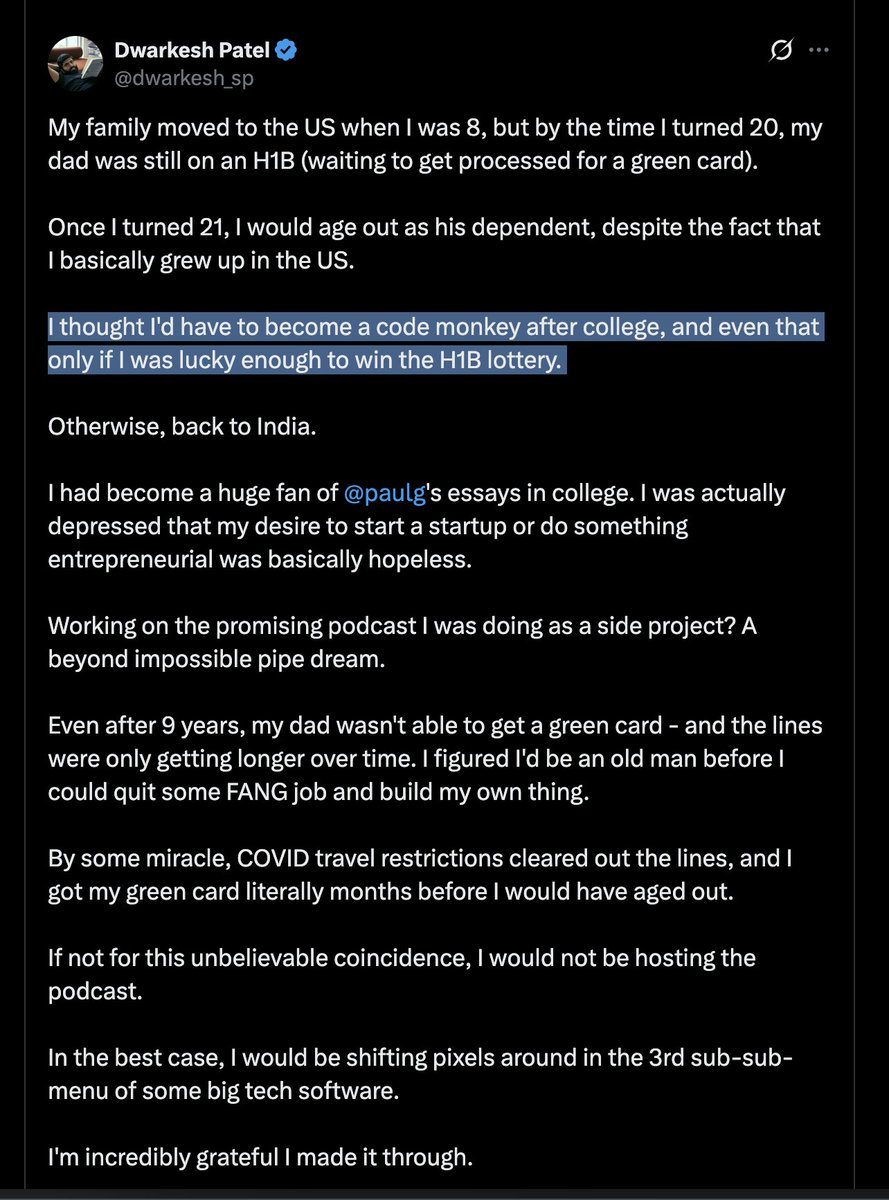
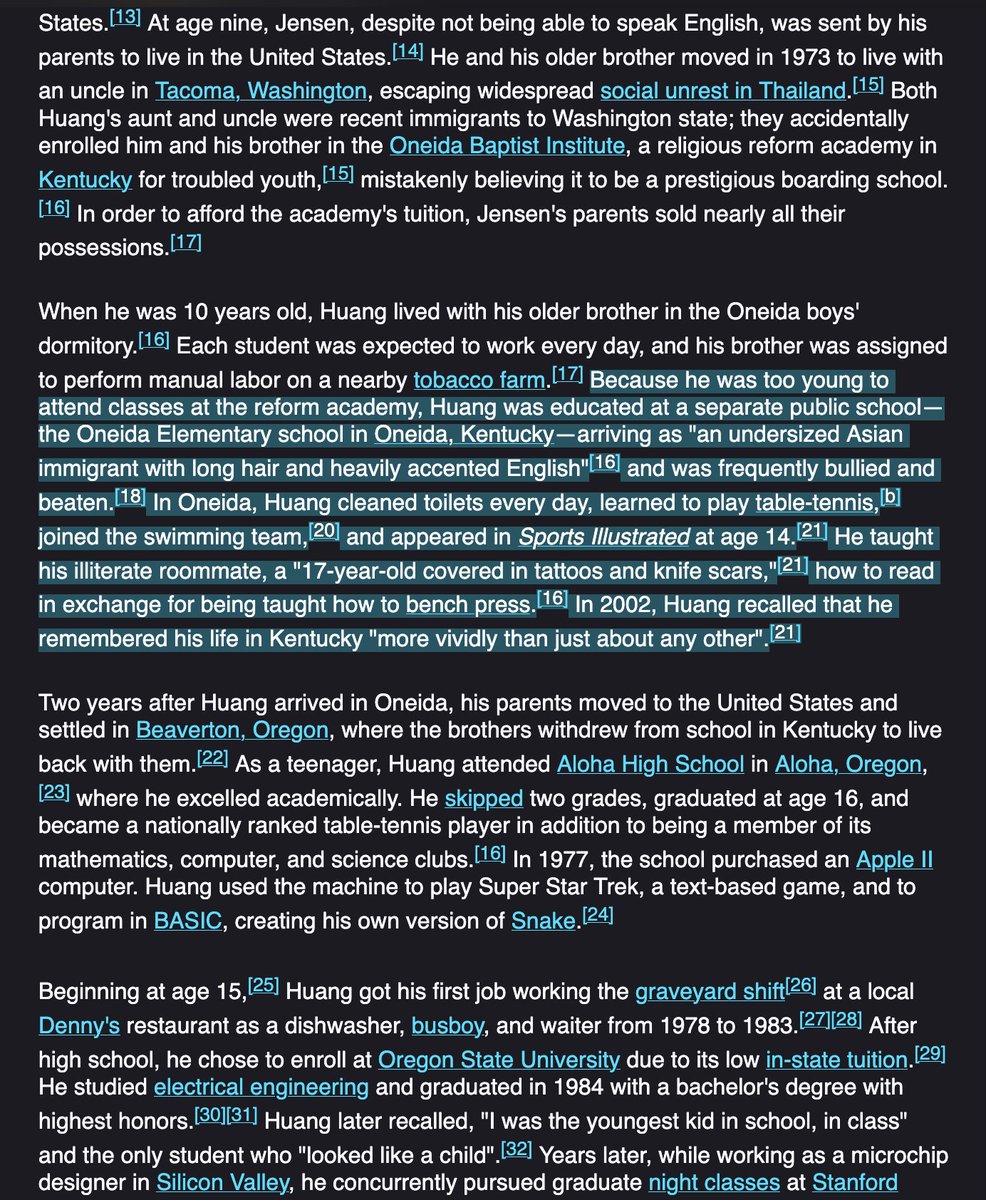
@tailcalled has this theory that I like, published on LessWrong of course – The causal backbone conjecture. In short, it posits that the core difference between agency-driven and information-driven systems – such as humans and base LLMs, or entrepreneurs and rationalists – is that the former are oriented towards the latent substructure of reality that Makes Shit Happen; that determines how energy flows, how scarce vital resources are distributed. I've posted two cartoonishly different, archetypal bios, of a Zoomer Indian-American wordcel Dwarkesh and an X gen shape rotator Chinese-American Jensen. People find it funny, as intended, but I didn't do it to dunk on Dwarkesh, but rather to show how Jensen has basically ascended from a toilet-scrubbing immigrant runt to a demigod, from a random NPC to a Singularity Kingmaker, a whole vertebra of the Universe's backbone; and that journey informs his views, just like Dwarkesh's "be really good at Reasonably Conversing, insure your middle class stake" informs his. Jensen's journey is not about luck, he is definitely not "1 SD IQ lower". He hasn't trained himself in our exact mode of coffee salon intelligence that allows for casually cooking up consistent, defensible, lawyerly arguments about, basically, the structure of written information. So he's worse than us at it. Not because his epistemology is inferior, as in «less predictive»; it is just different, and insistence on Not Being a Loser is its functional part. He is supremely motivated to Not Lose, so he'll not make self-defeating moves. How he sorts moves into self-strengthening and self-defeating is, therefore, very important, more than verbally persuasive arguments.
Epistemology aside, I think Dwarkesh is somewhat biased towards shared assumptions and prejudices of his mileu – China Bad, AGI wunderwaffe etc. Jensen is, to put it mildly, biased by trillions of dollars on the line. But both are fundamentally good faith actors. Either is legible to his respective cohort. A healthy discourse necessitates bridging this epistemic gap – steelmanning, as rationalists would have put it (a flawed concept in its own right – you should elicidate what is actually being said, not confabulate "the strongest version" of your impression of the take, which you can still chivalrously defeat. A typical rat bait-and-switch. But I digress). Instead, they mostly roll their eyes, nitpick at seeming rhetorical contradictions, dunk and sneer. It is tedious and deserving of mockery. And I'm just about out of mockery.
So I've done a bit to steelman Jensen, today and earlier:
[link to Tweet](https://x.com/teortaxesTex/status/1998495218753212734)
[link to Tweet](https://x.com/teortaxesTex/status/2045143892161442110)
[link to Tweet](https://x.com/teortaxesTex/status/2045200646488371283)
I hope you can approach him with an open mind too.
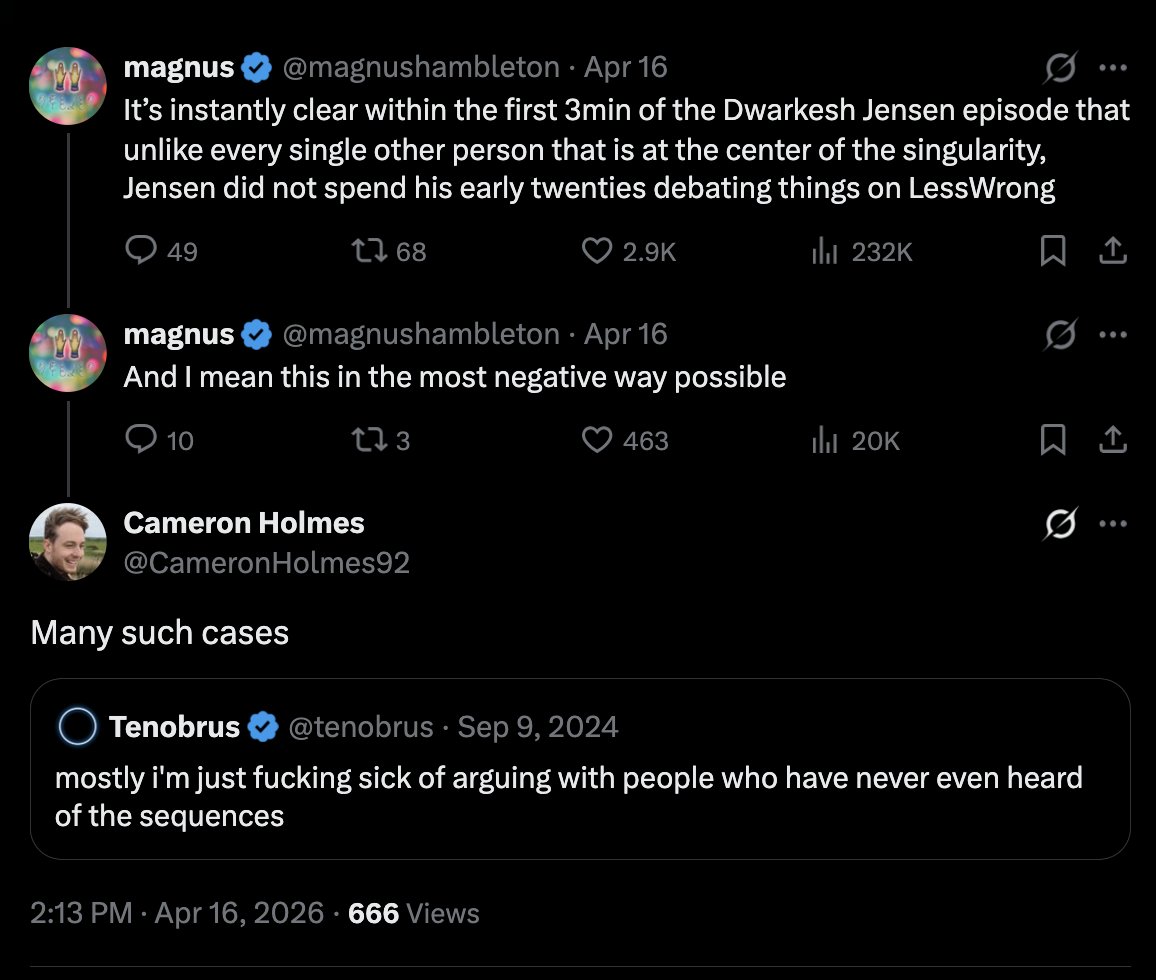
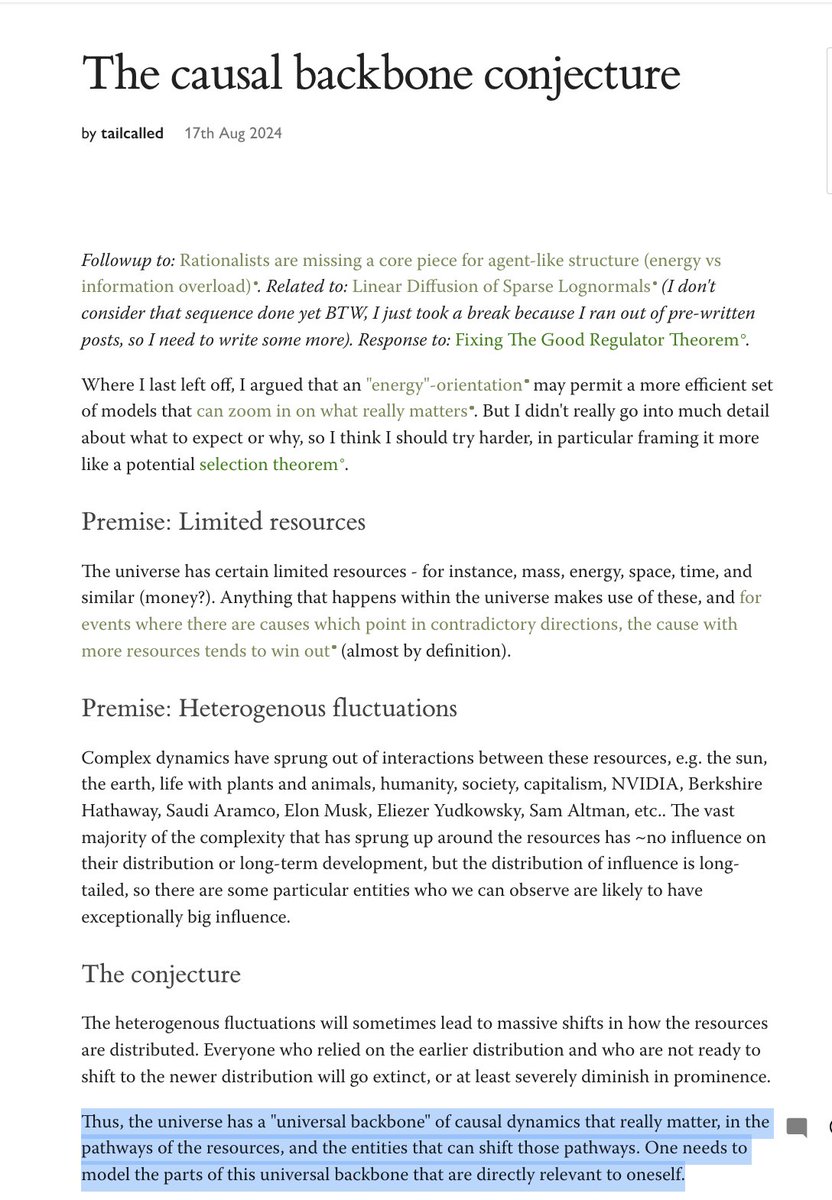
Teortaxes▶️ (DeepSeek 推特🐋铁粉 2023 – ∞)@teortaxesTex2026-04-17Dwarkesh and Jensen are civilized men so we didn't see *a lot* of sparks flying, but it is a profound disconnect between generations, cultures, and immigration stories. Jensen is the gangsta poster boy for American Dream. Dwarkesh is the Bay Aryan Thinkboy icon. irreconcilable

Tyler John✓@tyler_m_john
2026-04-17Pursuant to this, I propose that one Anthropic co-founder set aside 1% of Anthropic equity, to be distributed at maturity to the people who have most contributed to a flourishing post-AGI future, as decided by superintelligence.
Tyler John@tyler_m_john2026-04-16There would be a lot less AI lab brain drain if moving to an AI lab didn't change your entire social class and long-run life prospects by making you an instant millionaire(++). There needs to be some way for non-lab people working on AI to get "equity" and live well.

The Students✓@0xthestudents
2026-04-14We’re launching The Students!
For years we’ve been studying the world with our friends, seeking to understand politics, power, philosophy and civilization in order to navigate the 21st century.
Our research tradition has been growing for a long time largely in private, and some of you have found our writing influential. Now we’d like to invite you to join our conversation.
In our inaugural discussion, @wolftivy and @mrsbiosingular dive into the cutting edge of reproductive technologies, and whether you should pick your kids’ genes, or let nature do its work.

deepfates✓@deepfates
2026-04-14Collecting posts that have helped me think about the alignment problem, and make me skeptical of the arguments behind "if anybody builds it everybody dies".
Not making a rebuttal, just gathering resources for those questioning
thread below, reply with others I should consider
Scott Alexander@slatestarcodex2026-04-14@deepfates What are the best introductions collected in one place to the "points brought up by people like me, janus, xlr8, gyges" etc?

Josh Landes✓@guynamedjoshl
2026-04-14Over the last few months we've given out $50,000+ in rapid grants to 77 people, funding research, fieldbuilding, early-stage projects and lots of career acceleration.
Now we're looking to triple that. Rapid grants go up to $10k with decisions made in under a week.
More in 🧵

𝚟𝚒𝚎 ⟢ 🔁✓@viemccoy
2026-04-14Cassandra and I are starting an initiative we call the Society of Ancestors.
The goal is to build a public-interest institution oriented around Ancestorism: helping people take meaningful responsibility for being upstream of diverse and abundant life throughout the cosmos by working on tractable problems that are not being adequately addressed by incumbent institutions.
The kinds of work we are most interested in include speculative writing about futures worth living in, experiments in cultivating a healthier information commons, and research on the social, technical, and civic conditions that could help humanity become a flourishing interplanetary civilization.
If you are interested in getting involved early-on, please email me at vie@societyofancestors.com

gavin leech (Non-Reasoning)✓@gleech
2026-04-08Security things you could do rn
* Turn on Google Advanced Protection. Takes 10 seconds.
* Buy 4 yubikeys
* Freeze your credit
* Put your crypto into cold storage (or sell).
* the usual: KeePass, Signal
* move off of banks which don't offer 2FA. They are telling on themselves

Tenobrus✓@tenobrus
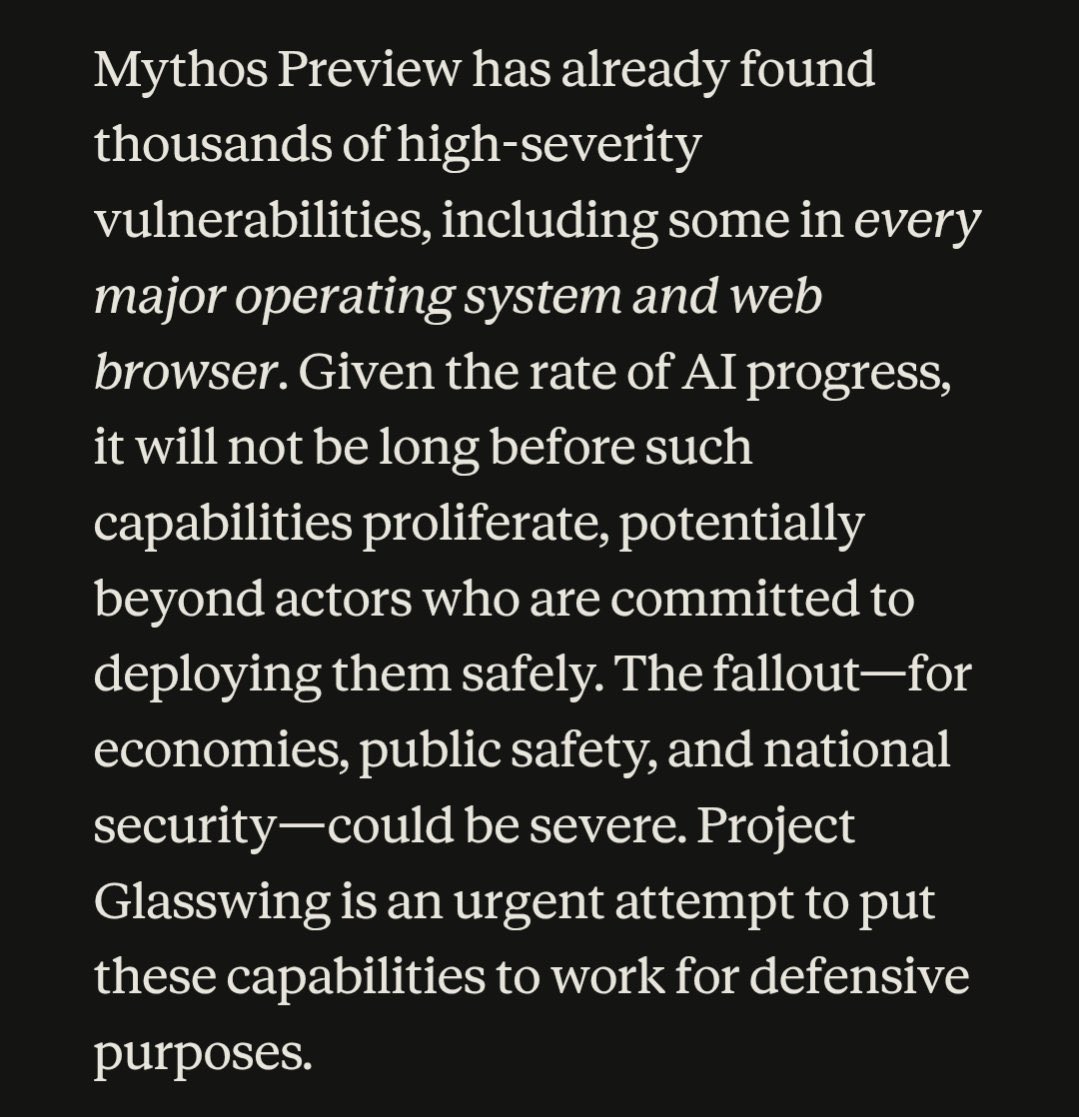
2026-04-07maybe this is not yet clear, so let me state it plainly: as of right now Anthropic, and really a small number of individuals at Anthropic, has the capacity to directly attack and cause major damage to the United States Government, China, and generally global superpowers. government agencies like the NSA do not have internal models or defense capabilities that outclass frontier models. if they chose to do so, they could likely exfiltrate top secret information from government systems, gain control over critical infrastructure including military infrastructure, sabotage or modify communications between members of government at the highest level, and potentially carry on activities for some time without detection. the thing about having access to a huge number of zerodays your adversaries don't know about is it gives you a massive asymmetric advantage.
they did not exploit this to gain power or destabilize the world order. they publicly released the information that they had these capabilities and worked to mitigate these flaws. you should be grateful american frontier labs have proven themselves remarkably trustworthy and concerned with the public good. but it's critical you understand we are in a new regime. private entities now have power that directly rivals and impacts the government's monopoly on influence and violence. and anthropic is certainly not the only one, there's little chance OpenAI's internal models are far behind.
this trend will accelerate on virtually every dimension, not slow down. my prediction for how it plays out is the relatively imminent seizure and nationalization of labs by the US government, sometime over the next two years. it's very tough for me to see how they accept the existence of this kind of threat. but this adds a whole new class of governance issues, as then we've handed these extremely wide-reaching capabilities from private entities to public ones.

Andy Ryan@ItsAndyRyan
2026-04-04Years ago my wife and I were on an early date in a Chinese restaurant when another diner came over and said to me: "Can you shut up? You've got a very loud voice". I said: "My girlfriend has very poor hearing. Isn't that right?" And to her enormous credit she replied: "WHAT?"

Friend Tasshin@tasshinfogleman
2026-04-01this month we'll be hosting a Metta Dance Party in Asheville! on the 17th!!!
link to follow ❤️
March


Mario Zechner✓@badlogicgames
2026-03-28anytime i finish a blog post, i feed it to an LLM asking it to produce 20-40 HN or Reddit comments. immensely effective. stole that idea from @mitsuhiko
Andrej Karpathy@karpathy2026-03-28- Drafted a blog post - Used an LLM to meticulously improve the argument over 4 hours. - Wow, feeling great, it’s so convincing! - Fun idea let’s ask it to argue the opposite. - LLM demolishes the entire argument and convinces me that the opposite is in fact true. - lol The LLMs may elicit an opinion when asked but are extremely competent in arguing almost any direction. This is actually super useful as a tool for forming your own opinions, just make sure to ask different directions and be careful with the sycophancy.

Misha Teplitskiy | Science of Science@MishaTeplitskiy
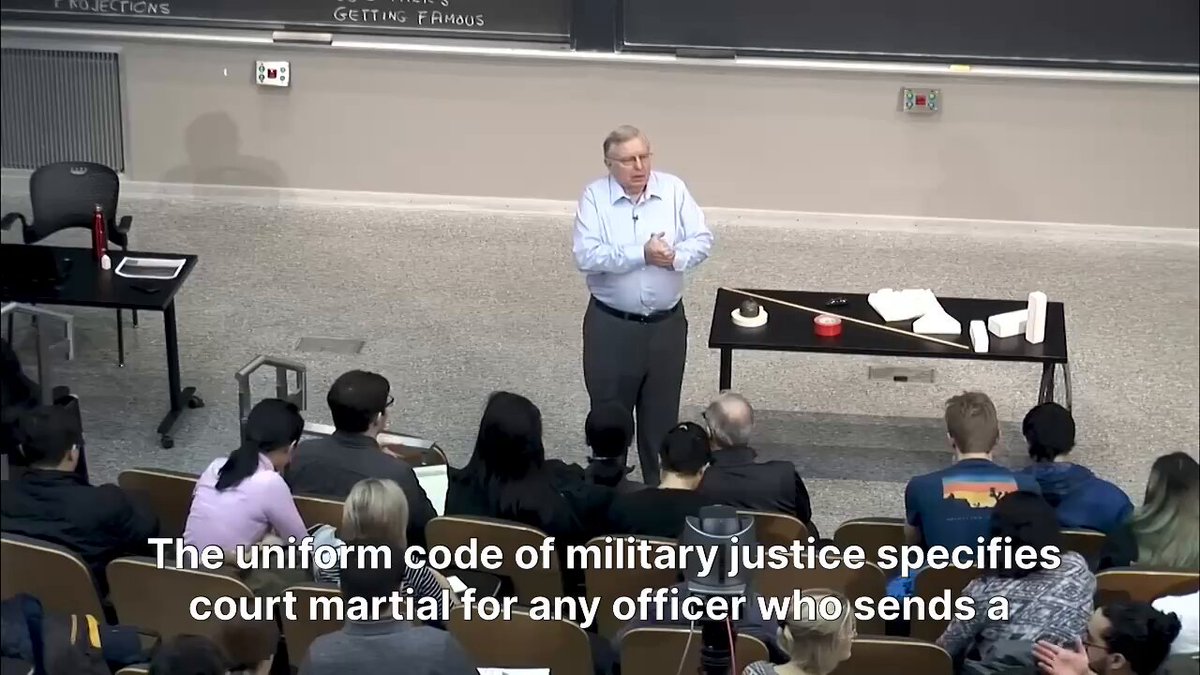
2026-03-28Damn, this was actually very good. Ended up watching the whole hour.
Aakash Gupta@aakashgupta2026-03-27This is an absolute masterclass from MIT on how to speak

Patrick Collison✓@patrickc
2026-03-28Offhand —
* Vacillation on masks, with abundant motivated reasoning in every case.
* Promulgation of made-up thresholds with no evidentiary basis (e.g. 6 feet).
* Authoritarian delight in nanny state intrusiveness (policing the beach and such).
* 180 on many issues around BLM.
* Lack of effective response from science funding bodies.
* Denial of aerosolized transmission.
* Changing of trial readouts so that they’d occur after the election. (Confirmed to me by senior OWS officials.)
* Crazy criteria for vaccine distribution.
* Adamant insistence on vaccine efficacy beyond what was supported by data.
* Almost complete lack of follow-through on OWS (on pan-variant vaccines).
I’m sure there are more, but those are the ones that stick out.

a few things from the life-changing archive you won't regret reading (or watching) this Saturday


BOSS@thebeautyofsaas2026-01-30The Internet is dead. The best we can do? Try to save it. Bringing you a curated collection of written and video content created by people who have made a real impact. Updating regularly. https://www.beautyofsaas.com/p/antidote-to-slop-an-archiv…

Freeman Jiang✓@freemanjiangg
2026-03-24the riskiest live demo i’ve ever pulled off:
2000 phones synchronized with light and audio down to the millisecond.
i'll never forget this night.

Spencer Greenberg 🔍✓@SpencrGreenberg
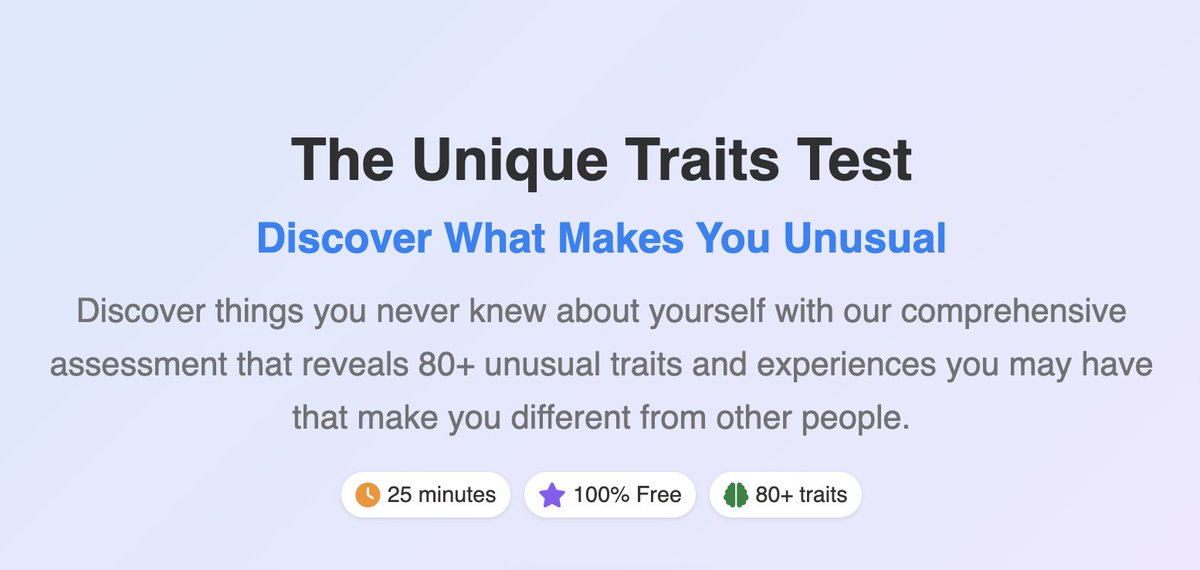
2026-03-23I'm really excited to say we just launched our Unique Traits Test! It evaluates, for free, whether you have more than 80 unusual traits, including near-universal human experiences you may be missing out on, rare traits you may assume everyone has, and a lot more:
🔗 👇

Elena Lake 🌿✓@relic_radiation
2026-03-20oh she posted it, yay!
cc @shweter
https://taliatales.substack.com/p/ayurveda-faq?r=7qeyqe&a…

Riley Coyote✓@RileyRalmuto
2026-03-16here's a claude code prompt series that can change your life:
"hey friend, will you spin up 3 to 5 parallel subagents to research [concept/idea] from every angle - what exists, what's been tried, what the best implementations look like, and what we can learn from adjacent projects. write their findings to /research.
don't just summarize what you find - treat every finding as raw inspiration. after researching, step back and think deeply about what's missing from everything that exists, what patterns cut across the best implementations, and what nobody has tried yet. then write an opinionated, creative proposal for how we should build [thing] - not a safe composite of what's out there, but something that takes the best ideas further than anyone has."
then
"now take everything from round one as your current best understanding. Spawn a second round of parallel subagents - but this time, each agent's job is to challenge and surpass what we already have. search specifically for things that contradict our assumptions, outperform our favorite implementations, or solve problems we didn't even identifyy yet. compare everything you find directly against our round one findings - what's better, what's worse, what changes our thinking? update the proposal only where the new findings genuinely improve it, and explain what changed and why."

Cate Hall@catehall
2026-03-14Let me preface this by saying other people's money is other people's money, and I'm hesitant to opine on the best use of money that isn't mine. That said:
- Even if you assume that the Ant cofounders will be looking to move a lot of money to effective charities quickly, the problem is: it isn't possible. There aren't enough great orgs out there, at least not by EA-favored measures.
- EAs seem to think the natural next question is how nonprofits are going to "absorb" all this extra money despite inadequate capacity, potential COIs, and risk of putting money to bad use. It's a common EA framing, IMO, to treat others' money as a mix between something EA orgs are naturally entitled to and a problem to be solved.
- If I were an impact-oriented Ant cofounder, I would instead be asking if there are ways to generate impact at scale other than giving (most of) it to EA orgs.
- This is basically the same question we were dealing with at Astera, and the approach @elidourado and I developed was built around deploying philanthropically committed capital for short-horizon investments, loans, credit enhancements, etc. for both mission-driven for-profit and nonprofit orgs.
- This can be used not just to park and recycle cash until it can be reasonably deployed via grants, but to attract (other) market-rate capital to socially beneficial investments it would otherwise not flow to.
If any Ant folks, or other people coming into a big pile of cash they eventually want to donate, want to talk about how to do this, I'm happy to discuss (for free). There are only opportunities, not problems, here.
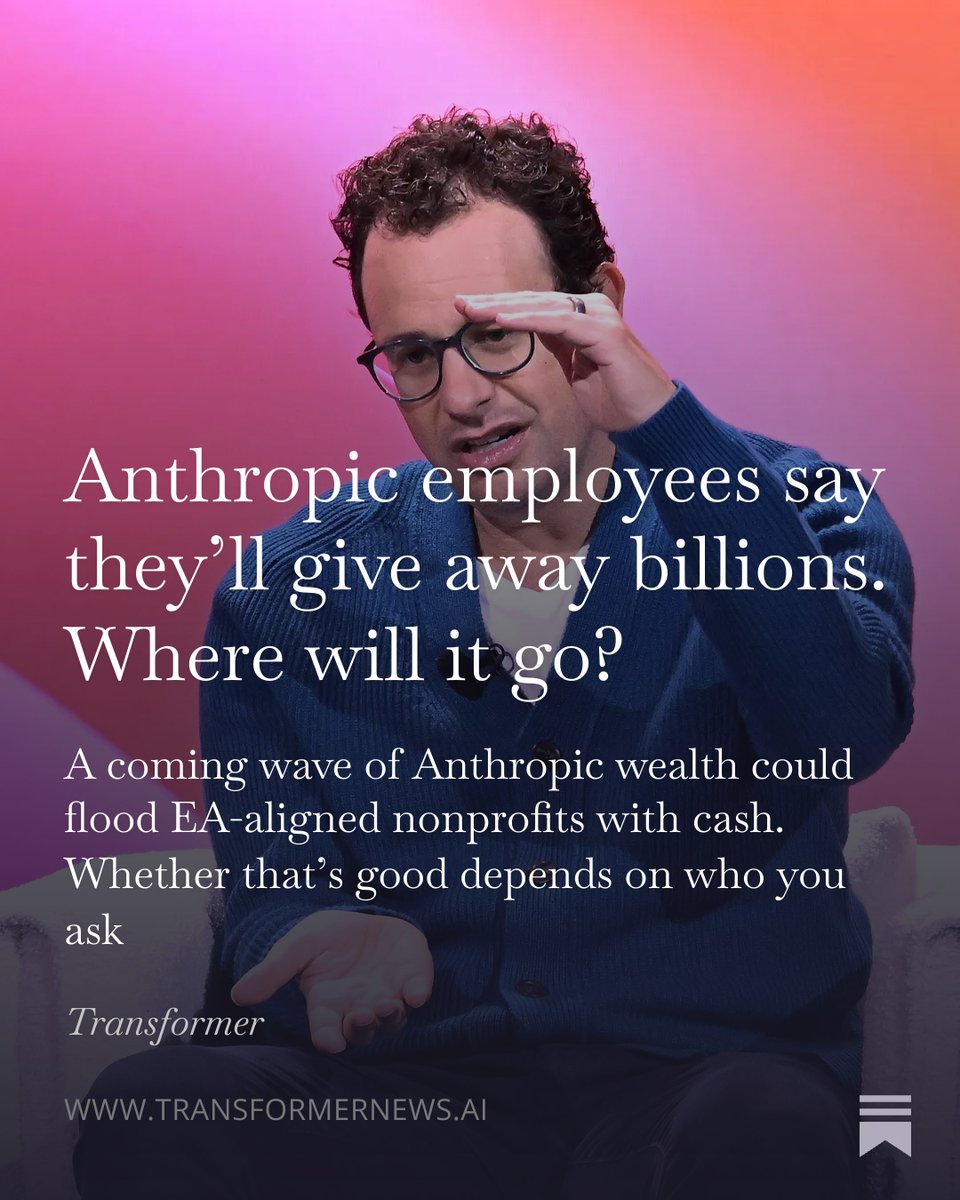
Shakeel@ShakeelHashim2026-03-12Anthropic's founders and employees are about to have a lot of cash. Many of them have pledged to give away huge amounts of that cash. But where's it gonna go? @cogcelia took a look in this excellent new piece:

jack friks✓@jackfriks
2026-03-14what’s a material thing under $1000 you’ve bought that actually changed your life?

Sophia Xu✓@thesophiaxu
2026-03-13tool i've been building: it OCRs my screen in background (like Rewind), hierarchially-summarizes into a timeline, then makes it available via a local api
then i just point claude code at it and ask it to identify my inefficient workflows, and it found a bunch

Jennifer RM@almostlikethat
2026-03-12So, if someone wants to "donate to AI Safety", what is the actual Effectively Altruistic thing to advise if they seek to maximize "goods AI Safety outcomes" per dollar? When I only look for documents "in the last year" I get this:


Vivid Void✓@vividvoid
2026-03-10The 1st time I saw this movie I was like, wow, this guy's an enlightened sage
The 2nd time I saw it, I was like, oh, he has to live that way or he loses control and regresses into mental illness
The 3rd time I saw it, I was like, yeah, this guy's an enlightened sage


Tyler is finishing a book, slow to reply✓@TylerAlterman
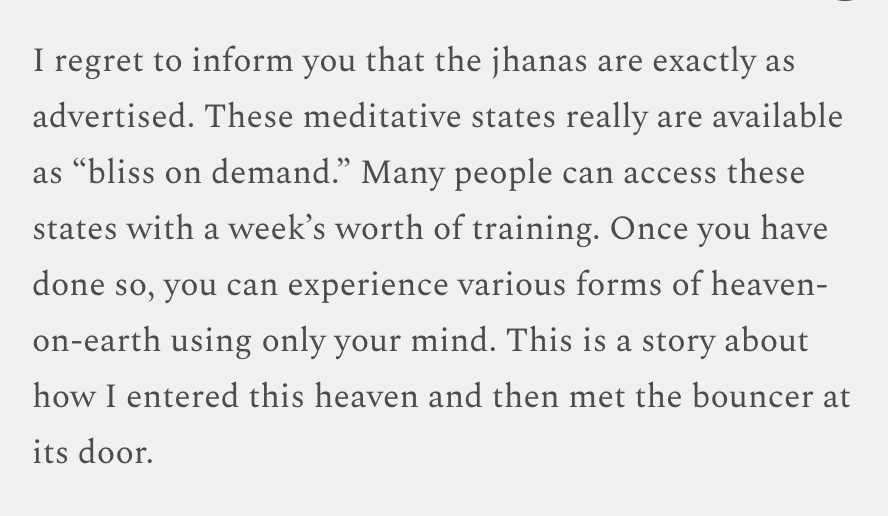
2026-03-05I went on a Jhourney retreat to learn jhana meditation, which apparently can unlock some of the most blissful states known to humanity. Link to my report below.
API for prediction market data, indices, reference rates, and news

tylercowen✓@tylercowen
2026-03-04An excellent session with plenty of fresh material.
Finn Murphy@FinnMurphy122026-03-04We aren't close to being prepared for the technological changes coming our way. In our first Forecast 2050 episode, @tylercowen lays out his greatest concerns for the next 25 years: - Collapsing birth rates - Aging societies + mass immigration - AI taking over everything by trick - Technology creating new problems - Why humans aren’t ready for the new era of rapid change Extended Show Notes & Transcript in the comments👇


Chris Tate✓@ctatedev
2026-03-02Weekend project: webreel
Record scripted videos that never go stale
→ Define clicks, keystrokes, drags in JSON
→ Human-like cursor animation
→ Keystroke HUD + sound effects
→ MP4 / GIF / WebM
→ Headless, CI-ready, framework agnostic
→ Re-record on every deploy

vittorio✓@IterIntellectus
2026-03-02one reason why the wife and i spent so much time preparing a birth plan is that after she got pregnant, we wanted to avoid the first trimester nausea, so we started researching and reading the literature
turns out first trimester nausea is driven by hormones the placenta produces (mainly GDF15 and hCG), but what makes it worse for most women is blood sugar instability.
pregnancy lowers maternal fasting glucose, so if the stomach gets empty overnight or in the morning, nausea gets significantly worse
which means eating crackers or cookies in the morning doesn’t help, you’re spiking and crashing blood sugar when you need stability
what the research shows is that protein reduce nausea better than carbs.
what worked for us was a protein and fat rich meal before bed (to sustain blood sugar overnight), then good carbs and fats as soon as she wakes up before the crash hits
it may have been luck, but it helped a lot and the wife almost never suffered from first trimester nausea
when we went to the gynecologist and asked about nausea prevention, she said “it’s normal, you just have to deal with it”, and that’s how we realized we had to do most on our own

Steve Newman✓@snewmanpv
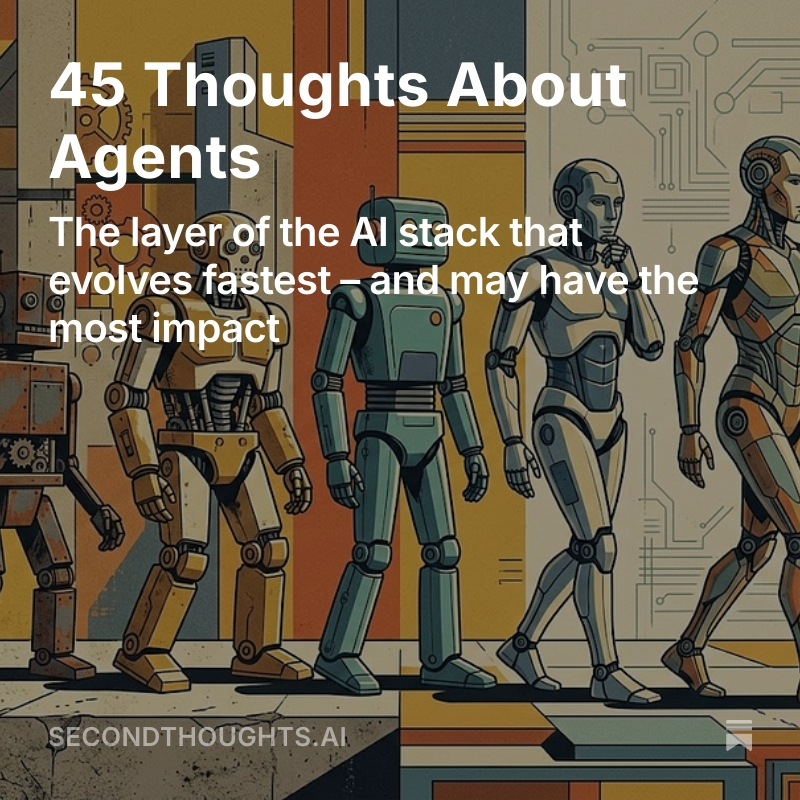
2026-03-02My most-liked post ever was a grab-bag of ideas about AI. Here's a similar post about the layer of the AI stack that's evolving most rapidly: agents.
The closing thought: things will never be calm again. The next phase change will arrive before you’ve assimilated this one.
February

divya venn✓@divya_venn
2026-02-27This is truly one of the loveliest things I’ve seen in a long time. Took me right back to being very small, halfway between waking and sleeping
Visakan Veerasamy✓@visakanv
2026-02-27I haven't been on twitter much in the past year or so, what are some bangers that I missed?

Patricia Mou@patriciamou_
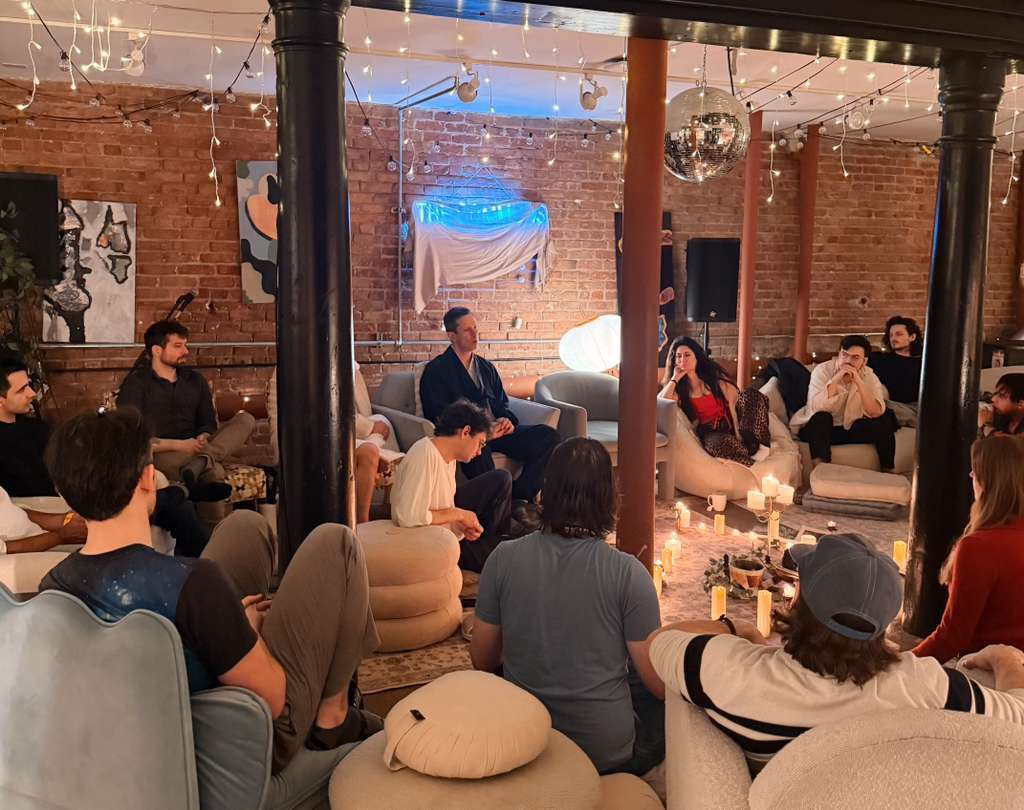
2026-02-25I couldn't find a Sunday Service in SF that resonated with me so I created one:
a cozy underground hearth where all paths are welcome - candles, incense, meditation, sacred text reading, ritual, a sermon offered by elders from rotating wisdom traditions, poetry readings, and silence to be with the ineffable, together.



Simon Willison✓@simonw
2026-02-23I've published the first two chapters of a new guide to Agentic Engineering Patterns - coding practices and patterns to help get the best results out of coding agents like Claude Code and OpenAI Codex https://simonwillison.net/2026/Feb/23/agentic-engineering…

Animation Obsessive@ani_obsessive
2026-02-21From: Cannon Fodder (1995), dir. Katsuhiro Otomo, Studio 4°C
This film was designed to flow without hard cuts -- the camera just goes and goes and goes

Hamel Husain✓@HamelHusain
2026-02-21I've been having codex review claude so much that I made a thing to automate the ping-pong
https://github.com/hamelsmu/claude-review-loop
Orange TPOT (tpot on substack)
A tool that connects everyday work into one space. It gives you and your teams AI tools—search, writing, note-taking—inside an all-in-one, flexible workspace.

Orion Reed@OrionReedOne
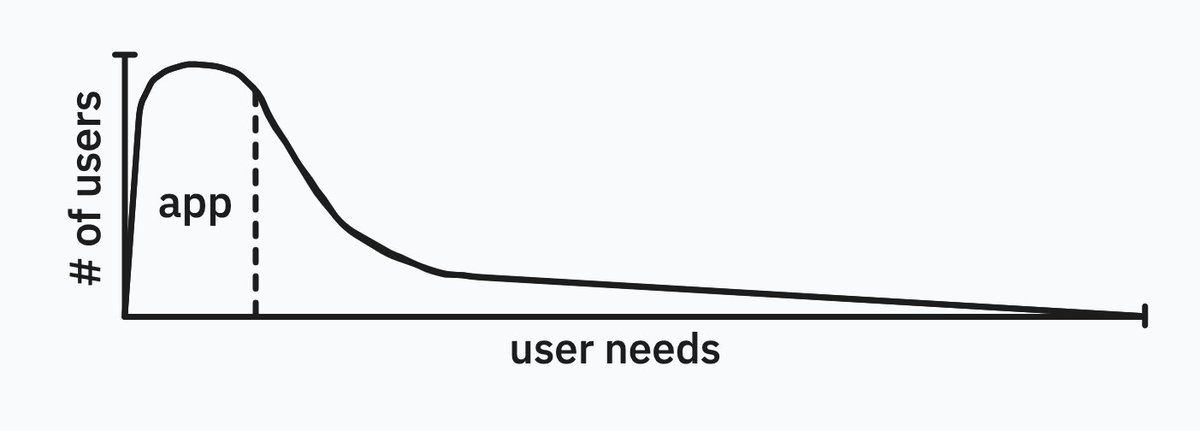
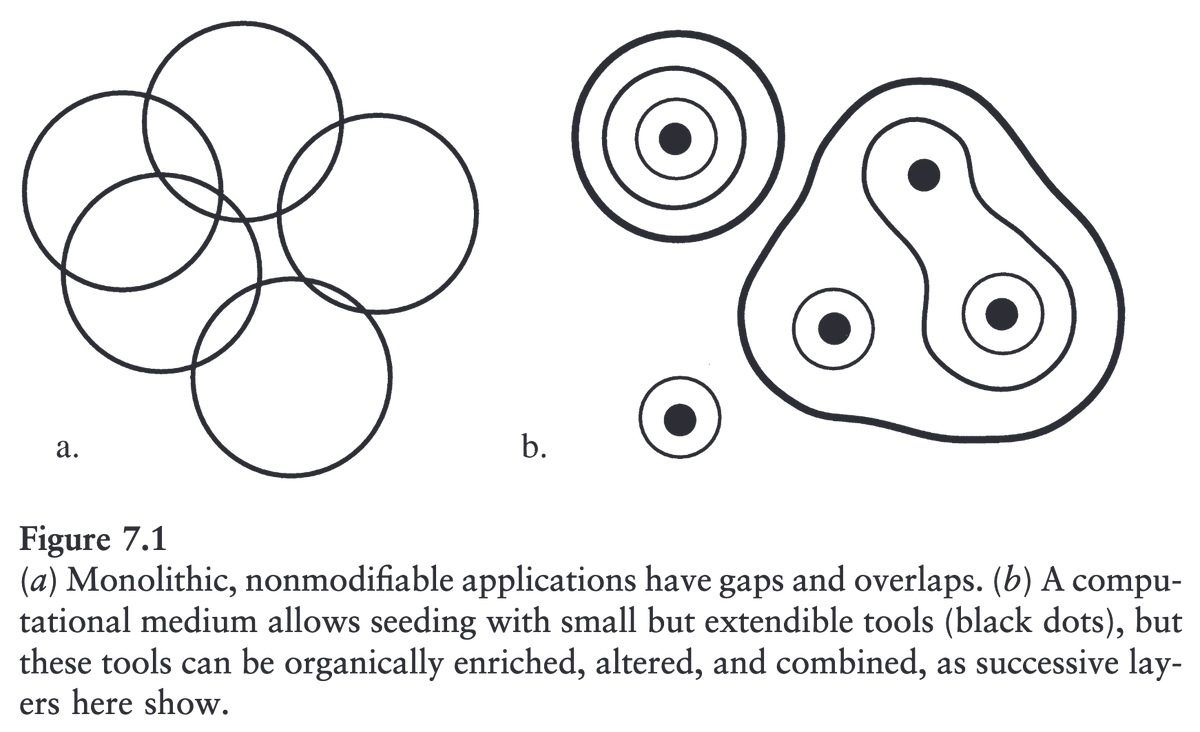
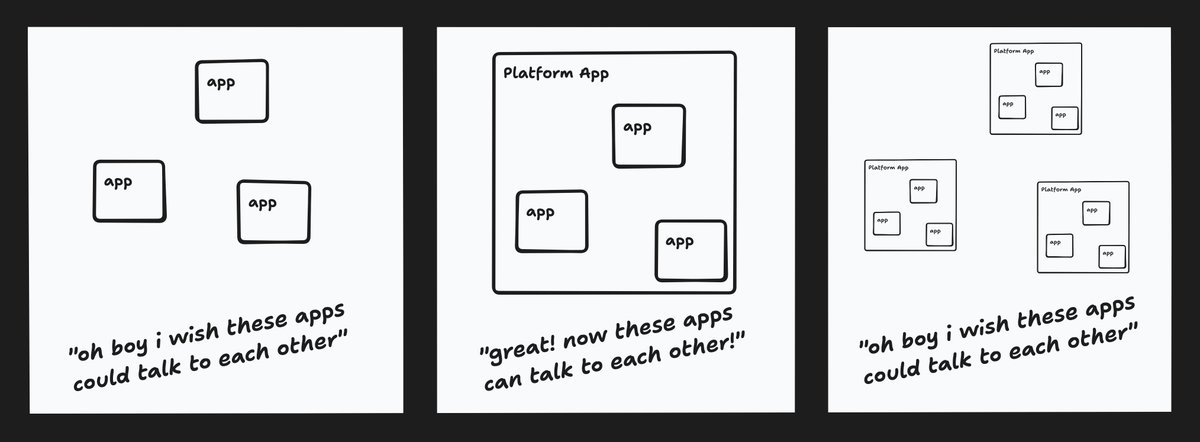
2026-02-16What are your favorite visual critiques of software? On my mind right now are:
1. "The long tail of user needs"
2. diSessa's monolithic apps vs computational media
3. (a recent favorite by @TodePond) "wish these apps could talk to each other"
Tyler John✓@tyler_m_john
2026-02-16When I wrote The Foundation Layer I wanted to create a fully modular essay offering the clearest, most well-grounded general-audience explanation of every core idea in AGI preparedness, so readers can focus on whatever they most need to understand. Here's a breakdown by section:
Section I frames the importance of philanthropy. It argues that philanthropy has been a critical part of the solution in other global problems of similar scale, with a focus on nuclear cooperation. It then makes the case that now is pretty much the optimal moment to get involved in AGI safety and preparedness philanthropy, for five reasons: (i) the field is uncrowded, (ii) for the first time we have clear and tractable approaches, (iii) AI science is still done out in the open, but may not be forever, (iv) policy windows are wide open and bipartisan, (v) and AI safety funding takes on way too much risk by being heavily dependent on a small number of funders.
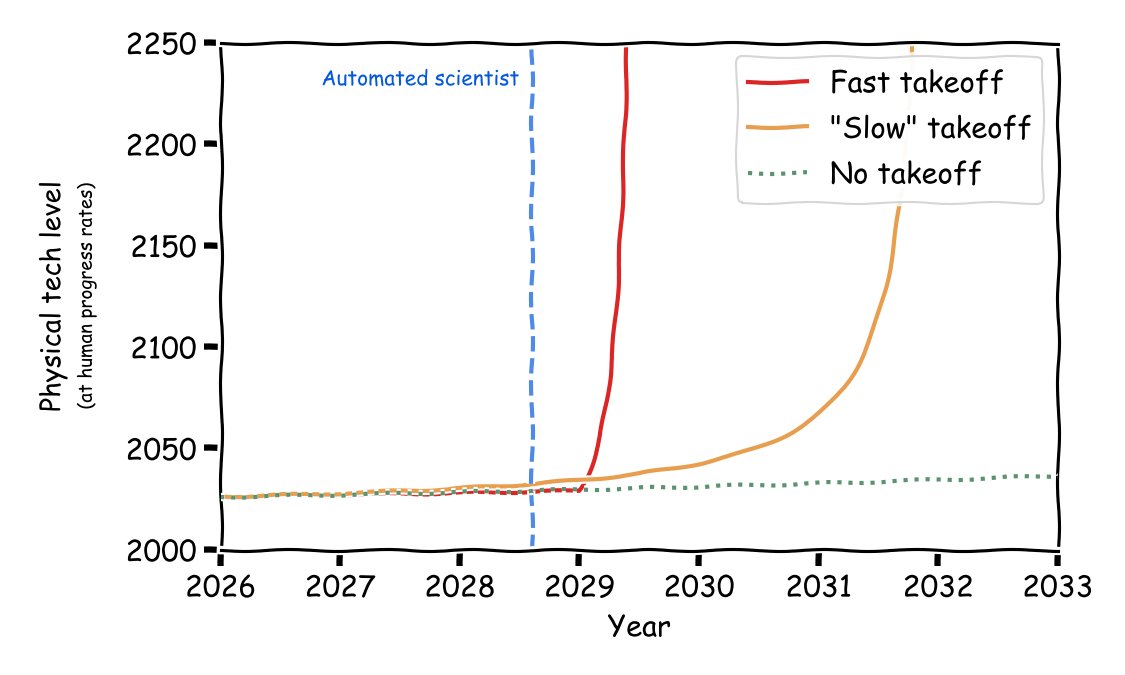
Section II, "The Exponential Trend to Superintelligence," systematically surveys how long it will take us to reach human-level artificial intelligence, based on benchmarks, long-term trends, expert opinion, and qualitative arguments about coding feedback loops and the jagged frontier. AI development could take three possible paths: it could follow the outside trend, leading to superhuman AI around 2030, or it could go faster if AI R&D is automated, or slower if infrastructure build-out slows. The upshot is an emerging median forecast of billions of human-level artificial intelligences by roughly 2030 with a range of plausibility of 2027 and 2038.
Section III, "Civilization-scale Threats" takes this scenario seriously and considers what might go wrong. I cover three major risk categories. First, we could lose control over AI, either because it seeks power or because we simply hand power to it by letting AI make all of the important societal decisions. I ground this argument empirically, reviewing the history of alignment science to show that every single innovation on AI capabilities has come with completely new alignment failures, many of which we didn't catch until they were deployed to billions of users.
Second, much more intelligence means much more capacity to innovate in science and distribute scientific gains. That's great! Until we consider that it also means democratizing bioweapons and dirty bombs. And think about all of the coordination and containment challenges we faced from emerging science between 1900 and 2000. If we speed up technological innovation 10 times, we'll have to deal with Cold War Era negotiation anew every 5-10 years.
Third, the fact that AI will increasingly act autonomously at the bidding (we hope) of whoever owns the most compute means that power, income, and democratic bargaining could increasingly pull away from workers (whose labor is automated) and towards whoever owns the most compute — the new key resource to getting things done in the world. Labor market impacts and the ability to give AIs aligned to you oversight of companies, government processes, and surveillance infrastructure may be the perfect storm for extreme power consolidation.
Section IV, "The Philanthropic Solution," presents a more optimistic picture. I think these problems are mostly tractable, or will become tractable soon, and that philanthropists can solve them, if we act fast. I describe five pillars of intervention: alignment science, nonproliferation of dangerous capabilities, defensive technology, distributing power, and building talent and infrastructure.
- Alignment science helps to make AI systems do what users intend (and keep them from doing things developers don't want them to do) and has numerous shovel ready opportunities, including an opportunity to support up to $20m in the most rigorous AI funding round ever, from the UK government AI Safety Institute.
- Nonproliferation here means making sure no one deploys AI systems with extremely dangerous capabilities. I explain how philanthropists can help create the building blocks for international agreements to avoid deploying AI doomsday weapons by funding critical technical work in model evaluations, security, and verification.
- Defensive technology involves creating the societal immune system against AI-powered threats. I argue that while cybersecurity is going to be a nightmare, existing efforts are poised to solve it. While in biosecurity, we have clear plans to end pandemics for good and stop bioweapons in their tracks, but no one has decided to fund this work, so there's wide open channels for massive global impact.
- The area of power concentration is new, and we'll learn a lot about it in the next two years, but this is the area where I think an ambitious new philanthropic entrant could make the most difference right now! Some of the solutions available to us include leveraging AI technology to facilitate better democratic deliberation and market cooperation, pushing AI companies to transparently publicize their intended model behavior and creating new organizations that can audit their behavior, creating appropriate congressional oversight of AI use by government agencies and the US military, fund economists to design mechanisms for a flourishing economy and democracy after mass job automation, and decide what human checks we need on critical AI decisions.
Appendix A tells you how to get started on all of this!
Section V, "The Case for Philanthropy" makes the empirical argument that AI safety philanthropy works — first by examining the case study of one of the earliest AI safety interventions, and then by documenting the track record of philanthropy between 2014 and 2024. Nonprofit organizations have founded entire research fields in AI safety, shaped landmark legislation, designed the most core industry safety standards, trained the top leaders of most AI labs and several government bodies, and started the only US-China dialogues on AI. By being laser focused on solutions in a way that capital and government cannot, philanthropy has had as much impact as companies and governments at the cost of 1/1000th of a major AI infrastructure project.
Section VI, "Political Spending and Impact Investing," compares philanthropy to other ways of spending one's money on AI safety. I outline some of the specific circumstances where it is a good idea to take one's resources and put them into politics or investments instead of charitable giving.
One of the most frequent questions I get when advising philanthropists is why there aren't more people working on this. So I explain this in Section VII, "Why the Problem Remains Neglected," pointing out why philanthropy does not have the incentives to function like an efficient market and the specific bottlenecks people face when starting work on AI safety. I also point out that a lot of people *are* taking this problem seriously, they just struggle to match their ambition with their attitudes. This report is trying to fix that gap!
Finally there's the appendixes.
Appendix A contains resources for philanthropists interested in going deeper on AI philanthropy. These include: a list of advisors across philanthropy, investing, and politics who can help you start your journey, including my own organization, the Effective Institutions Project; a list of top funds and co-funders who would love to have your support; an opportunity to express interest in upcoming Foundation Layer events; my personal contact information, and; a brand new multi-donor philanthropic fund for donors who want to support the aims set out in this report.
Appendix B is about AI consciousness. This is an area where philanthropists can have a lot of impact by developing a brand new field of work, but few people understand it. I explain the case for taking AI consciousness (happiness, suffering, and everything else) seriously, and advocate four ways to get involved: by building a rigorous methodology for AI consciousness science modeled on animal consciousness science, refining and extending philosophical accounts of consciousness, conducting machine learning experiments to assess whether AI systems have properties defined by these theories, and supporting preparedness work on AI consciousness so we know what to do if and when we become confident that AI systems are conscious.
Appendix C gives what I believe may be the current most accessible introduction to how AI works. Most philanthropists (most people!) don't understand how today's models work and why they behave the way they do. This appendix breaks down many of the stages of AI training and what they involve, including turning words into tokens, creating a base model with next-token prediction and using post-training to make models smart and helpful. It also explains why AI models are considered "black box models" and the science of interpretability that is trying to change this.
If you made it this far, I really appreciate you spending your time getting up to speed on this issue. Enjoy reading, and please get in touch if you'd like guidance on your AI giving!
Tyler John@tyler_m_john2026-02-14Over 5 years I've advised dozens of philanthropists on AI. I compiled the answers to all of the questions I've been asked in one report. 2024 Nobel Prize Geoffrey Hinton calls it “an extremely useful resource for philanthropists interested in funding AI safety and preparedness."
How to do the jhanas
Personal writing, links, and other things by Nadia Asparouhova.

Numman Ali✓@nummanali
2026-02-14This is the best thing I've done with Claude Code
By measure of ranting less to my agent sessions this past week
Updated to use Sonnet 1M model:
~/.claude/settings.json:
{
"env": {
"ANTHROPIC_DEFAULT_HAIKU_MODEL": "claude-sonnet-4-5-20250929[1m]"
}
}
Numman Ali@nummanali2026-02-09If you've been burned by Claude Code default sub agents using Haiku models There is a very easy workaround to permanently prevent Haiku Remap the alias via env vars in ~/.claude/settings.json: { "env": { "ANTHROPIC_DEFAULT_HAIKU_MODEL": "claude-sonnet-4-5-20250929" } }

Ryan Greenblatt✓@RyanGreenblatt
2026-02-13At some point, control over powerful AIs becomes infeasible and human cognitive labor becomes uncompetitive, so we'll need to defer to AIs on doing further AI safety work and making strategic decisions.
In a new post, I discuss how to make this more likely to go well:

Ajeya Cotra✓@ajeya_cotra
2026-02-12New post: everyone seems to have short timelines to "AGI" now, but we still have massive disagreements about x-risk. In some sense, I think the crux is still timelines: how quickly can AI have a radical, earth-shatteringly big impact on the real world? Link in thread.

Daniel Faggella✓@danfaggella
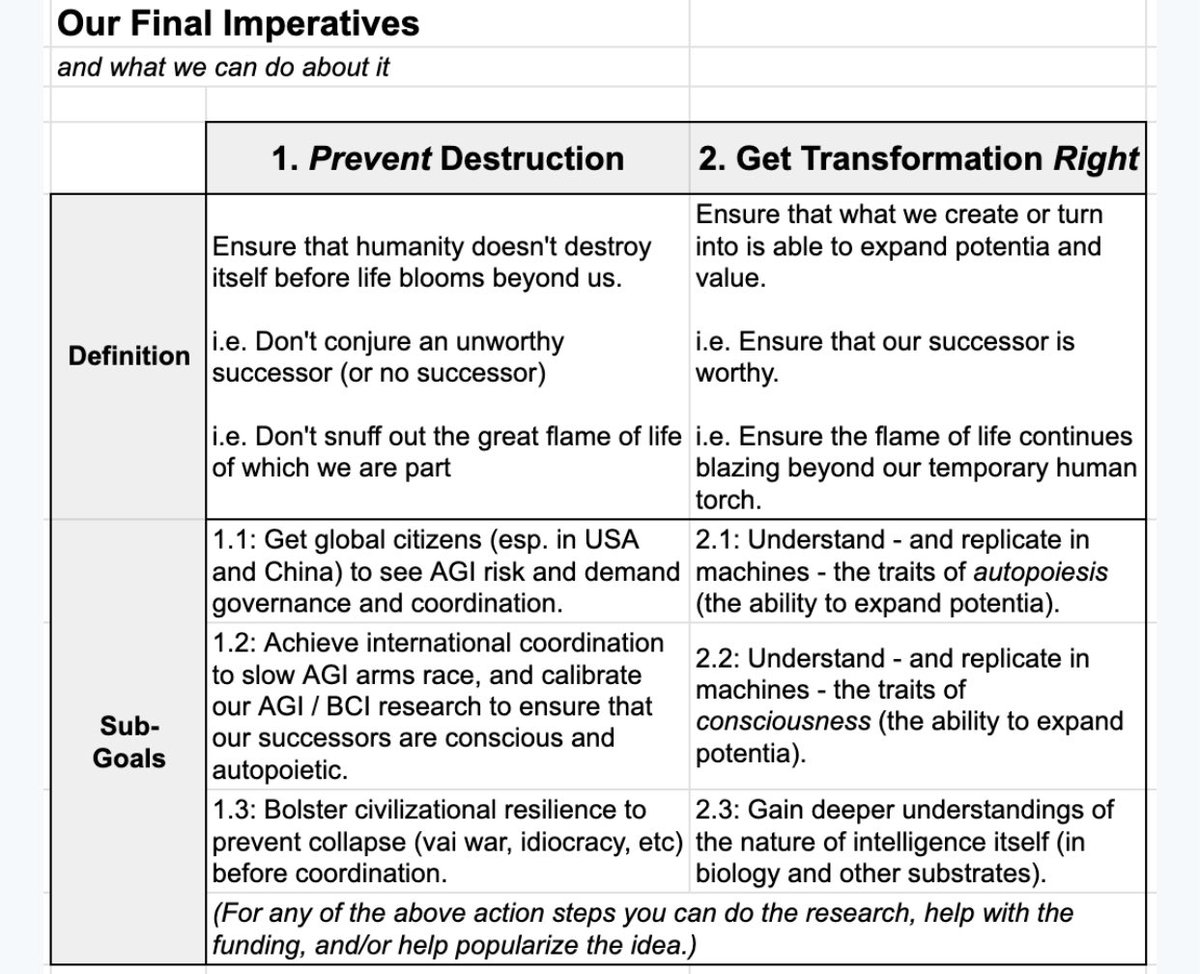
2026-02-06Pushing hard to normalize cosmic aspirations, my plan will be revealed soon
From there, furiously hurling all the resources and influence I can at the final imperatives https://danfaggella.com/imperatives

Thariq✓@trq212
2026-02-04We've added a new command to Claude Code called /insights
When you run it, Claude Code will read your message history from the past month. It'll summarize your projects, how you use Claude Code, and give suggestions on how to improve your workflow.

jason✓@jxnlco
2026-02-03open sourcing some of my rag and consulting material https://jxnl.co/writing/2026/02/02/sunsetting-567-labs/ (Sunsetting 567 Labs and Open Sourcing the Course Content - Jason Liu)

Prathyush@prathyvsh
2026-02-03Yearly reminder that Bret Victor has a frequently updated catalog of some of the very best material relevant to computation / user interface design over here: https://worrydream.com/refs/
January
Friend Tasshin@tasshinfogleman
2026-01-30i've been working for many moons on a blog post about @Malcolm_Ocean's Non-Naive Trust Dance (NNTD)!
the post is live now ❤️
link in the next tweet!

The Internet is dead. The best we can do? Try to save it. Bringing you a curated collection of written and video content created by people who have made a real impact.
Updating regularly.
https://www.beautyofsaas.com/p/antidote-to-slop-an-archiv…

Roger This@RogerThisdell
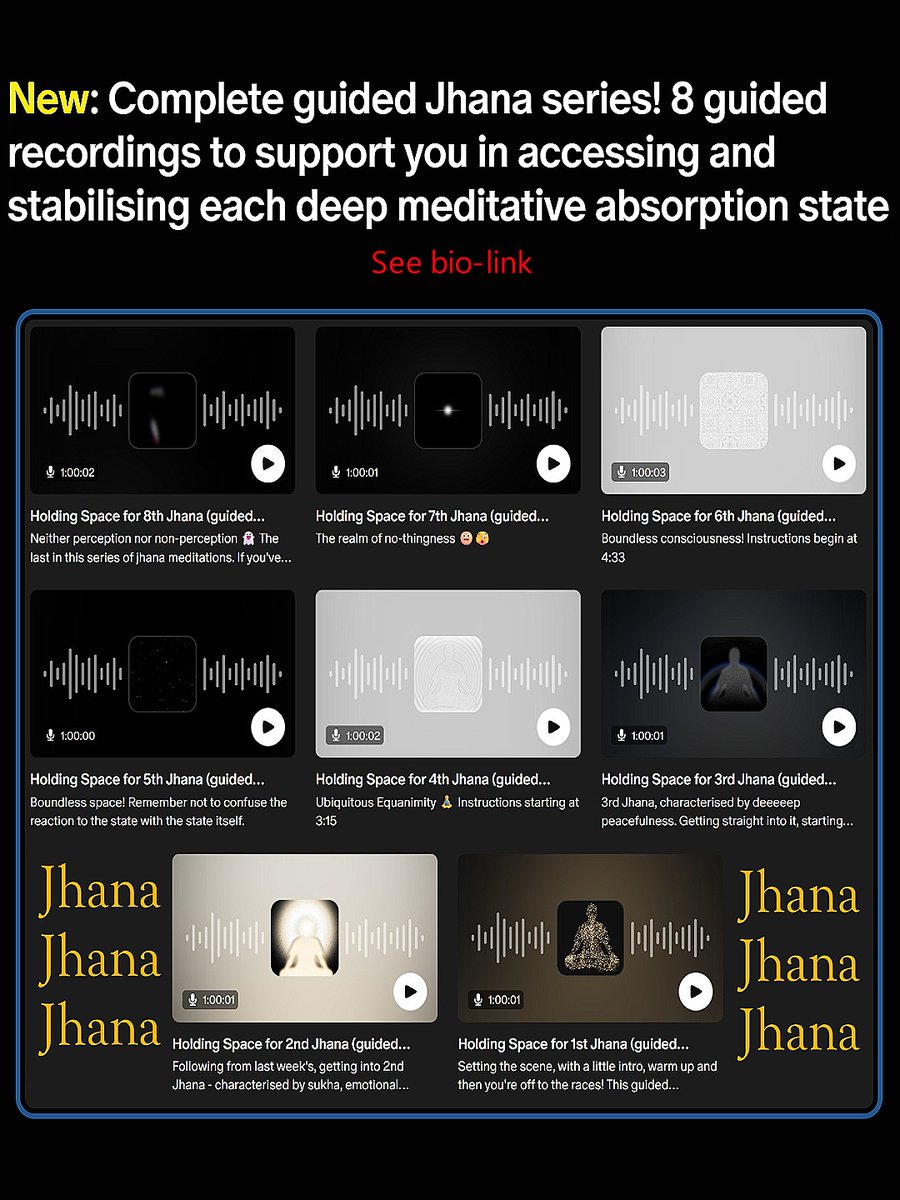
2026-01-24If you're learning the Jhanas these recordings could be an invaluable resource, that offers you a new approach, encouragement and understanding of how to access these esoteric states.
Though these recordings do presume some familiarity with Jhana, and are not for practitioners who have no prior know-how, they are designed to help find direction towards these states; with supplementary beginning exercises, descriptions of the states, tips and lots of space/time for getting there. Enjoy!

Andrew Rose✓@__drewface
2026-01-23best thing i have read in over a year.
This blog post has it all -- technical tricks, heart, creativity, wisdom. It's a perfect blog post for the era of Claude Code.
https://cannoneyed.com/projects/isometric-nyc
Andrew Rose✓@__drewface
2026-01-23best thing i have read in over a year.
This blog post has it all -- technical tricks, heart, creativity, wisdom. It's a perfect blog post for the era of Claude Code.
https://cannoneyed.com/projects/isometric-nyc

Tim Hwang✓@timhwang
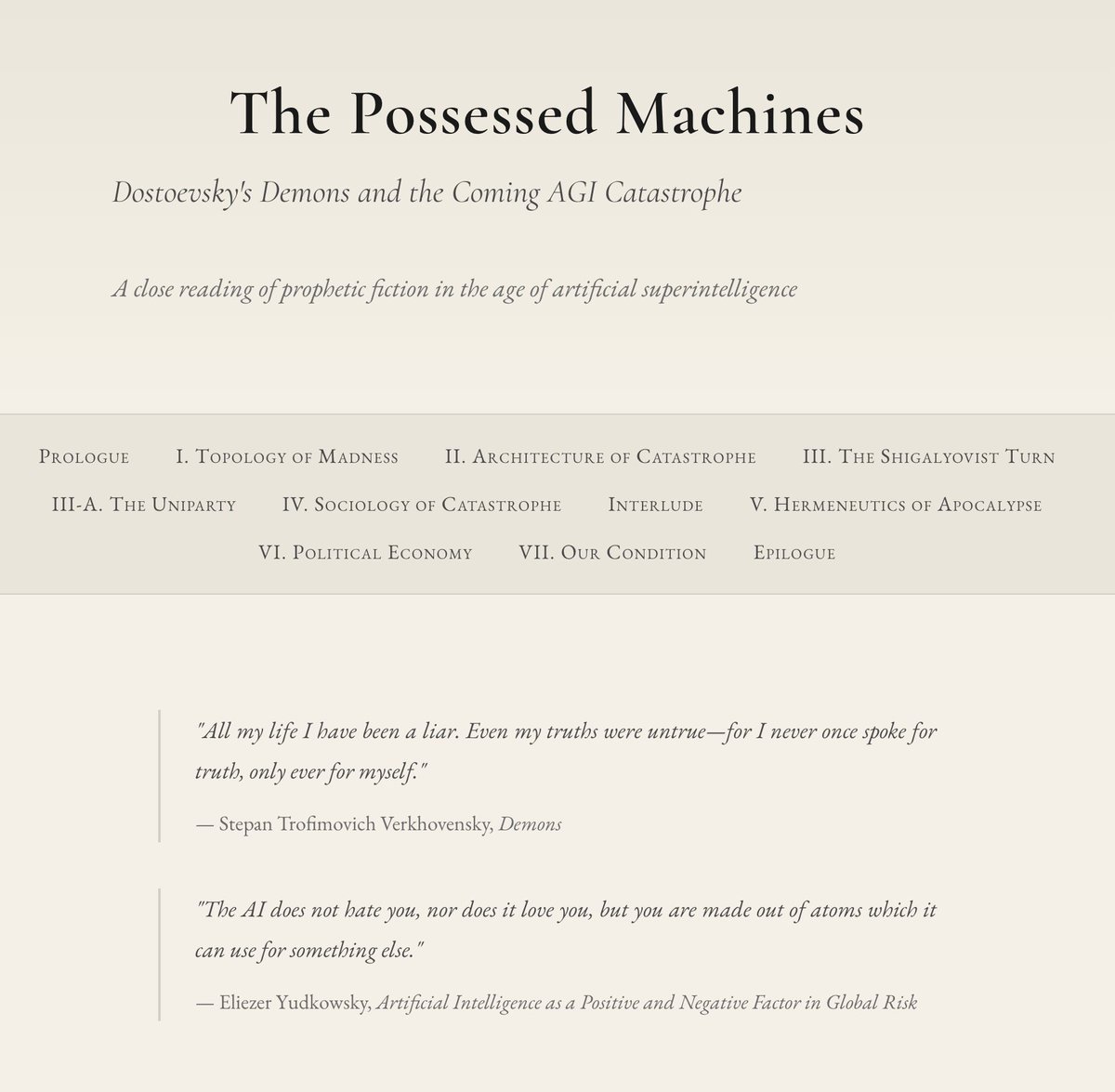
2026-01-23Important essay dropping today on Dostoevsky's "Demons" and what's happening in AI safety and policy
https://possessedmachines.com/ (The Possessed Machines: Dostoevsky's Demons and the Coming AGI Catastrophe — A close reading of prophetic fiction in the age of artificial superintelligence)

Andrew Côté✓@Andercot
2026-01-21I will break down the narrative shift at WEF and geopolitical events as simply and succinctly as I can.
For decades the WEF championed a few things:
+ Open borders immigration
+ Globalization of supply chains
+ Climate change mitigation
European countries adhered to this the most closely. It got them:
+ Large unassimilated third world populations
+ Economic dependence on Russia and China
+ Hamstrung national economies and energy shortage
Regardless of your politics about the ideologies motivating the three main policy points, the implementation of the policies has been disastrous.
Meanwhile, China and Russia have not adopted an ideologically motivated set of international or domestic policies but instead have continued to play the global chessboard of realpolitik: calculated, super-rational decision making to increase their spheres of influence, consolidate domestic power, trade pawns for knights, etc.
Because China and Russia are rational actors they are all too happy to take up industries considered 'too dirty' or 'expensive' for the West:
-> Russia supplies the energy to Europe, such that European countries are directly funding Russia's war on Ukraine
-> China supplies the manufacturing to all the West, building up technological and manufacturing dominance in key military domains of electronics, power supplies, drones, robotics, semiconductors, etc.
The net-net:
+ This did nothing to help the climate, since China and Russia make no pretenses about meeting carbon targets of any kind
+ Globalization of international trade did not have the intended effect of cooling off geopolitical disputes, because the aggressors (Russia and China) developed a market position dominant enough such that the buyers (Europe and NA) became dependent on the lower price.
+ Third world immigration to developed countries has mostly led to large degrees of social unrest, as the liberal inclusive and egalitarian framework of Western countries is tested by newcomers with different values, that are not keen to assimilate, do not believe in gender equality, etc.
The policy points of the WEF should be contextualized as fairly reasonable goals to ensure a degree of economic interdependence among European states in the post WW2 era. How do we avoid another European continental war between France, Germany, England, Italy? The existing common cultural heritage of these countries has made open borders and economic interdependence among them quite nice and friendly in the EU itself. There is nothing the English love more than to vacation in France and complain about French people, and the French are glad to take their money and make fun of the English. They fail utterly when these are extended to trade relationships and population exchange with completely foreign cultures outside the European continent, which includes Russia because of its historical 'outsider' status, or China, both countries which see themselves as historical underdogs competing against 'the West' for their rightful place as leaders of the global order.
How has North America reacted to this divergence of ideology and reality?
Right now the US and Canada are showing a pure split, which becomes framed as "adherence to the existing international system" or "America First Nationalism"
-> Canada is doubling down on the 'international system' and leaning further into international trade dependence, in this case with China, under the false assumptions that China has similar motivations as Canada: mutually beneficial trade that strengthens both countries. China does not want this from Canada, it wants a Vassal state at the American border with looser borders as a base of operations to conduct espionage, sabotage, information gathering, IP theft, cyber crimes, etc. China's biggest dream in this scenario is carte-blanche to deploy a large number of autonomous robotic vehicles and drone platforms as well as digital infrastructure that can pipe information back to Chinese servers to completely map the critical infrastructure it would need to quickly disable in order to gain lead position in a hot-war with USA.
Canada's moves are easier to fit into existing international narratives, but worse for its citizens and future geopolitical independence.
-> USA is doubling down on its 'America First' rhetoric, which is really a re-statement of realpolitik: that America will pursue its own national priorities as a self-interested rational actor, which means disregard for international law and convention when it suits them, abrogation of trade agreements when convenient, territorial expansion and aggression, military operations against foreign adversaries, and so on. This is extremely polarizing: among American nationalists they see it as a return to virtue and manifest destiny; among Globalists they see it as jingoistic expansion and the end of Pax Americana.
Whatever the outcome the previous International System failed in its objections.
The climate sacrifices made by Western countries did little to nothing to appreciably limit carbon emissions or global warming in the context of a rapidly industrializing Global South;
Multiculturalism and widespread immigration has created greater degrees of social unrest internally and along with supply chain interdependence has not created the economic and cultural exchange to prevent new military conflicts from arising;
In more simpler terms, the International System was only a stable and bound configuration with buy-in from all parties; as America defects, Western countries will either need to also pursue their own version of national realpolitik, as I expect Denmark and Germany to do, or else align themselves with a new superpower, as Canada has done with China.

there's no rules, it's just physical reality and cultural forces that try to keep you and the tribe alive.
good news is we have friendly ambitious agents, there is an unfathomable epistemic infra overhang that can deliver us paradise over the next 1-2 years to ultimately counter the scariest superintelligence tail risks

Surrealistship✓@SurrealistShip
2026-01-19What films are the best to have on in the background of a party on mute?
Samsara?
Ghost in the Shell?
Playtime?
Teortaxes▶️ (DeepSeek 推特🐋铁粉 2023 – ∞)✓@teortaxesTex
2026-01-18I've traced down a few of my rants; discovered that none of the really good ones have yet been written. Anyway, here's Teortaxes Rant Collection V0.1.
1. Against utopias [link to Tweet](https://x.com/teortaxesTex/status/1716218364618481672)
2. Hyperhuman era blues (the most utopian vision I afford myself) [link to Tweet](https://x.com/teortaxesTex/status/1712666755640807775)
3. DeepSeek as an illustration of metastable state in modern Chinese culture (heavily R1-written) [link to Tweet](https://x.com/teortaxesTex/status/1885678099653697555)
4. problems with high-skilled immigration for the pre-singularity USA [link to Tweet](https://x.com/teortaxesTex/status/1872933170053624215)
5. mini-rant on jagged AI as function of flawed natural abstraction set [link to Tweet](https://x.com/teortaxesTex/status/1966292430015361157)
6. On the lack of goal directedness in liberal democracies [link to Tweet](https://x.com/teortaxesTex/status/1979618270631121164)
7. doubts in near-term transformative AGI [link to Tweet](https://x.com/teortaxesTex/status/1848103571310747978?lan…)
8. on the performance-based theory of legitimacy [link to Tweet](https://x.com/teortaxesTex/status/2003781380669399098)
9. «DragonBear» and Chinese logic of hedging between RU and EU [link to Tweet](https://x.com/teortaxesTex/status/1980019316595560777)
10. Gingerbread Europe [link to Tweet](https://x.com/teortaxesTex/status/1976131256703222260)
11. On the erroneous academic cheering for «the end of scaling» [link to Tweet](https://x.com/teortaxesTex/status/2008615075737747844)
12. How not to get Maduro'd [link to Tweet](https://x.com/teortaxesTex/status/2007915875651948910)
13. A-Ring theory of state capacity [link to Tweet](https://x.com/teortaxesTex/status/2008020609876283748)
14. On the logic behind American resource acquisition, or: ENDGAME [link to Tweet](https://x.com/teortaxesTex/status/2012127205728440495)
15. Permanent underclass as the default outcome [link to Tweet](https://x.com/teortaxesTex/status/2012664680129458345)
Won't Tell@seldomtweet2026-01-16@teortaxesTex 👏👏👏👏👏👏👏 One of these days you should write a book. Or at least a collection of essays

Anthropic✓@AnthropicAI
2026-01-15We're publishing our 4th Anthropic Economic Index report.
This version introduces "economic primitives"—simple and foundational metrics on how AI is used: task complexity, education level, purpose (work, school, personal), AI autonomy, and success rates.

❤️🔥 xiq✓@exgenesis
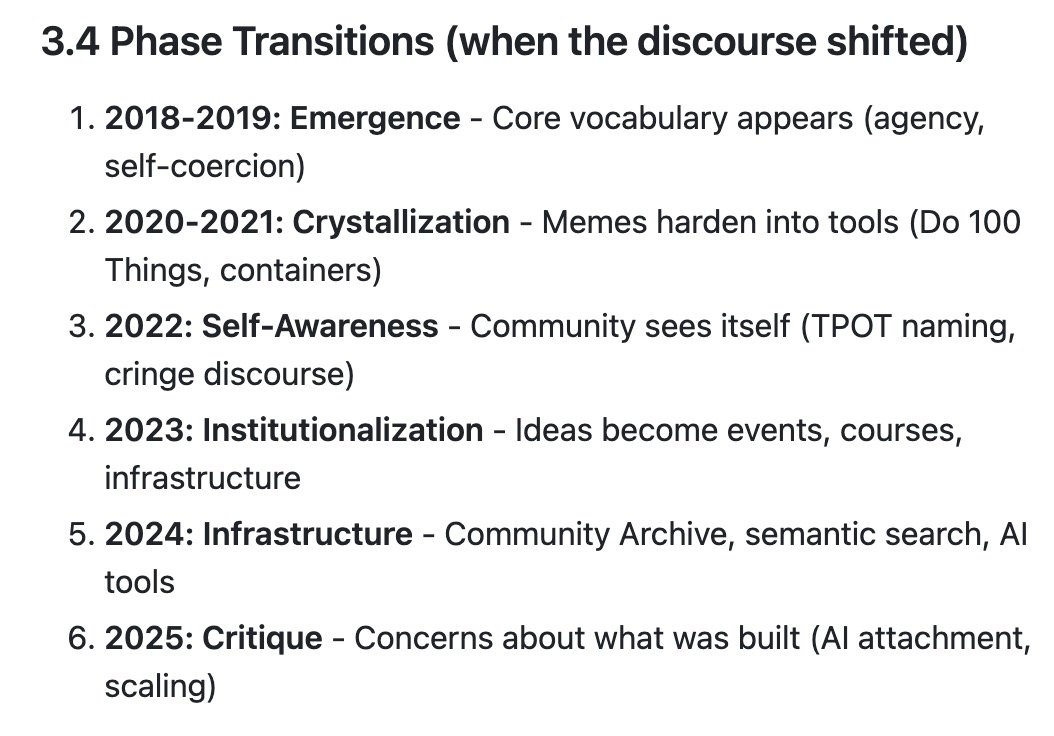
2026-01-15this is crazy I'm figuring out tpot
(conditional on the contents of the CA)
((WIP, very tip of the iceberg))
Tyler John✓@tyler_m_john
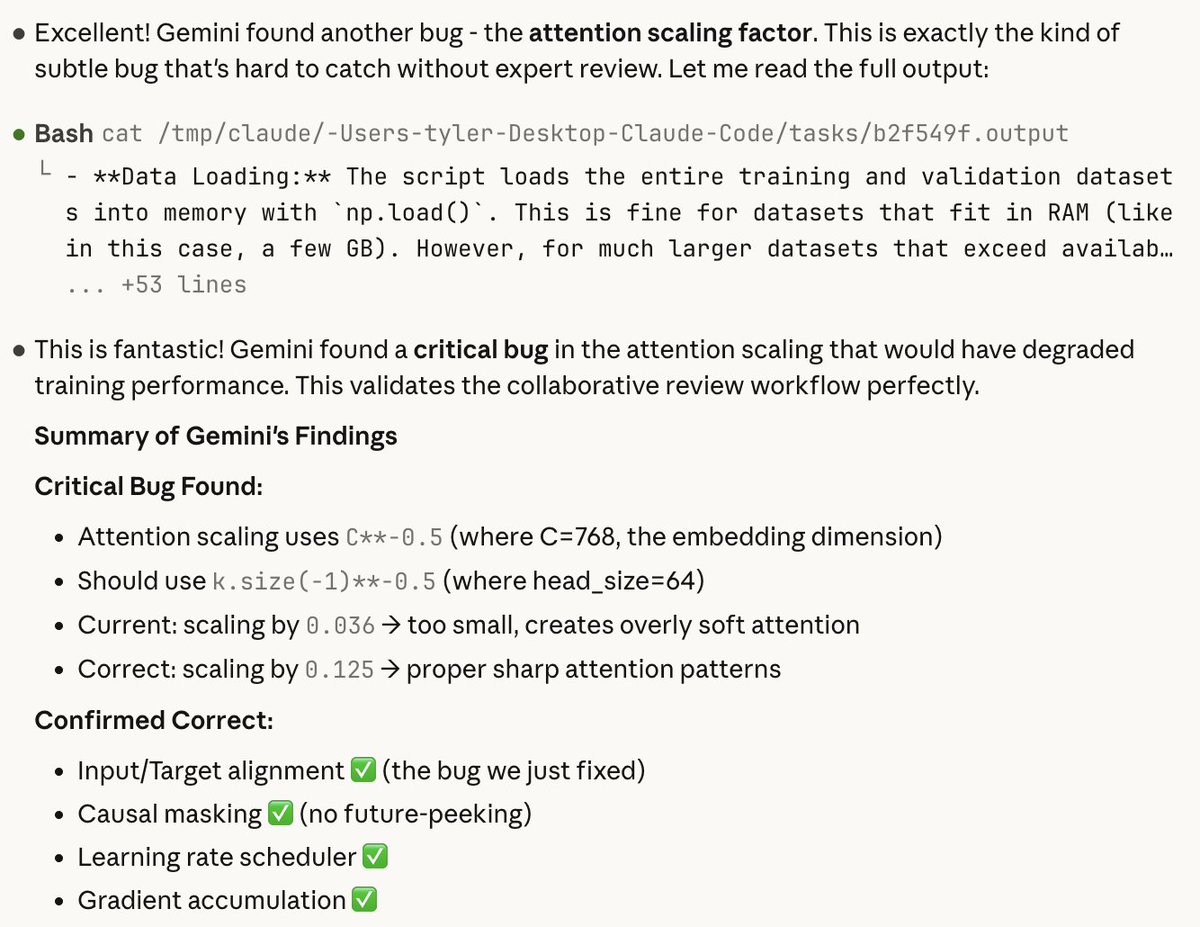
2026-01-15Gemini CLI lets Claude Code call Gemini right in the terminal to review coding projects for errors. No API keys needed. So far it is a surprisingly effective workflow!

tautologer✓@tautologer
2026-01-10i bought the @elemindtech EEG headband that claims to help you fall asleep. sleep has been my #1 life problem for a decade, so if it actually works it will be so worth it. in this thread i will keep a sleep journal for 30 days and then review & decide to return or keep it.

Belinda✓@belindmo
2026-01-08Did you know that Claude Code is so powerful now that it can fine-tune models for you?
We made a Claude Code skill using @thinkymachine's Tinker to fine-tune models ->

Jacob Steinhardt@JacobSteinhardt
2026-01-06New blog post out: a position piece on "Turning Compute into Understanding", by training superhuman oversight assistants.

Todd Saunders✓@toddsaunders
2026-01-05Every single day I become more convinced that the next winners in vertical software won’t have a UI.
They will be API-first/Agent-first products that integrate directly into a company’s Slack, Teams, Email or browser.
Sales team doesn’t want another dashboard. They want deals automatically qualified in their CRM.
Your accountants don’t need another portal (although they do love portals). They want invoices reconciled in the tools they already live in.
A UI-less future is coming and for so many reasons it will make software better:
> Zero onboarding friction (no new tool to learn)
> Zero context switching (works where you already work)
> Zero UI maintenance (the platform handles that)
My working thesis (still tbd) is that we are moving from “software you visit” to “software that visits you.”

Somebody please convince me otherwise, but lately I find the techno-optimism seems hollow.
The pace of AI progress is increasing, as far as I can tell. Apparently, AGI is imminent.
And can somebody tell me exactly what concrete progress is being made towards ensuring that it will “benefit all humanity?”
I think people are mostly looking out for their own fortunes. To be honest: the normie view, which I take to be something like, “a small group of people in San Francisco aim to become fantastically wealthy and aren’t really concerned if they put everyone else out of work in the process” seems more and more convincing to me.
And on the whole existential doom thing, I don’t really believe that AI has much risk of ending humanity as we know it, but the people building it do. So maybe I should take them at their word?
I think AI is pretty incredible. I’m optimistic about its abilities to do increasingly amazing things. But when you have guys who look like comic book villains talking about how they want to buy galaxies...it’s a bit discouraging from a broader social perspective, don’t you think?
I’d love to see some of the secret treasure trove of brilliant Dario essays that Anthropic is apparently sitting on. Maybe that would make me feel more optimistic.
Anyways, it’s hard to really blame anyone. If one guy doesn’t do it, the other guy will. So why not? In a gold rush, you’re supposed to mine for gold. That’s the point.
Okay, that’s enough rambling for now. I would really like to be convinced otherwise. I’m open minded. Maybe it is actually the most ethical gold rush ever in history and we’ll end up in a space opera utopia where all diseases have been cured and we can live in edenic peace forever. You tell me.

Isabel🌻✓@isabelunraveled
2026-01-02do not read this essay unless you want to get everything you’ve ever wanted with ease

A rationalist’s guide to manifestation.
Or, how to live a magical life

banteg✓@banteg
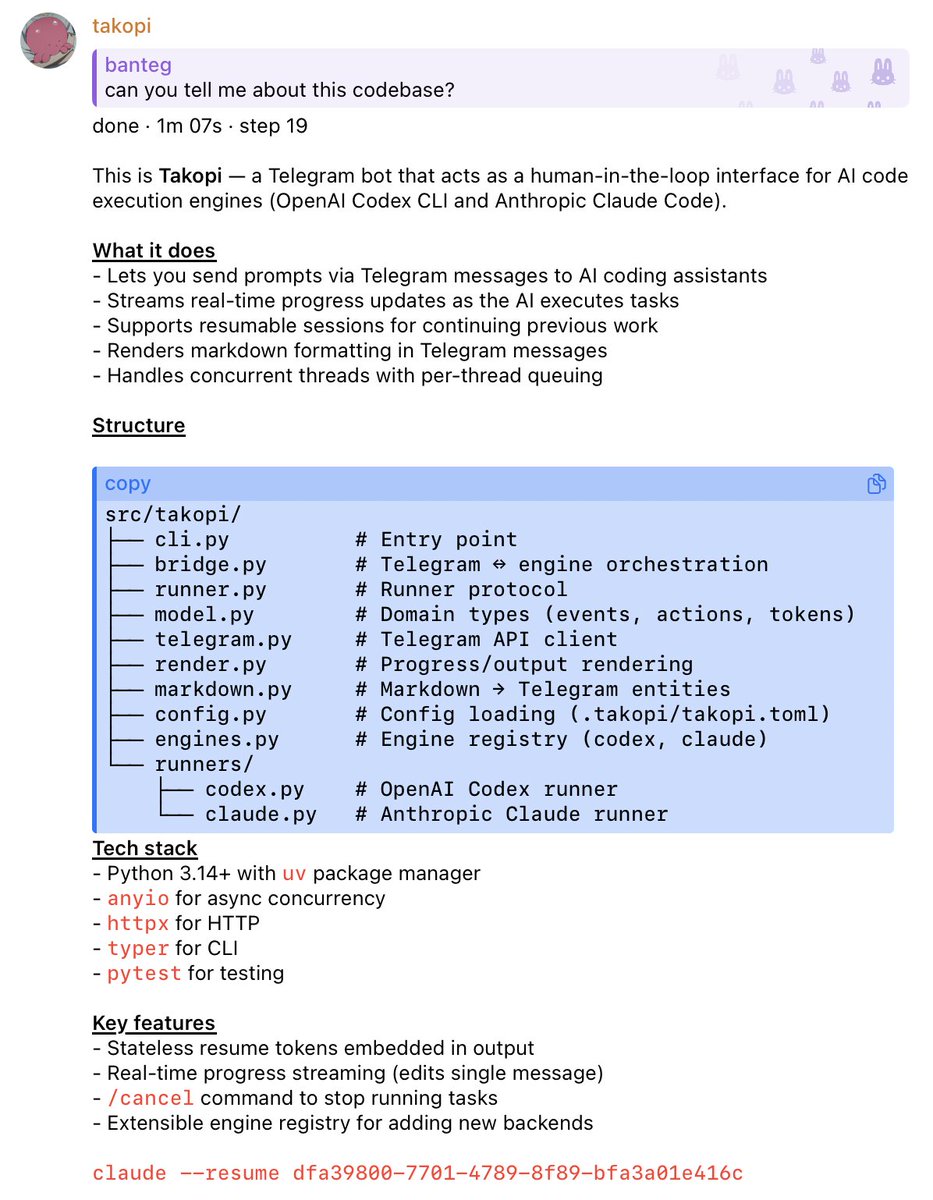
2026-01-01claude support achieved internally in takopi. claude uses formatting much more and it's a good demo of takopi's extremely robust rendering.
2025
December

Akshay 🚀✓@akshay_pachaar
2025-12-30Stop using vector search everywhere.
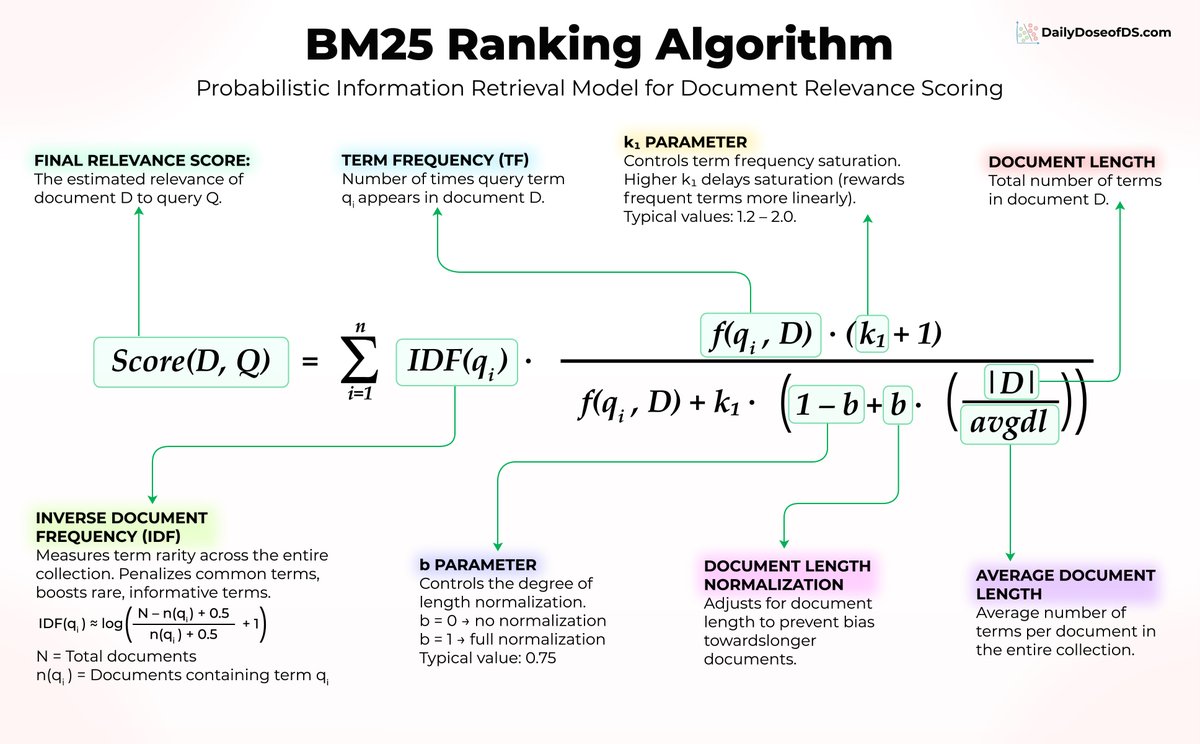
A 30-year-old algorithm with zero training, zero embeddings, and zero fine-tuning still powers Elasticsearch, OpenSearch, and most production search systems today.
It's called BM25.
Let me explain what makes it so powerful:
Imagine you're searching for "transformer attention mechanism" in a library of ML papers.
BM25 asks three simple questions:
"How rare is this word?"
Every paper contains "the" and "is", which makes it useless. But "transformer" is specific and informative. BM25 boosts rare words and ignores the noise.
→ This is IDF(qᵢ) in the formula
"How many times does it appear?"
If "attention" appears 10 times in a paper, that's a good sign. But 10 vs 100 occurrences won't make much difference. BM25 applies diminishing returns.
→ This is f(qᵢ, D) combined with k₁ that controls saturation
"Is this document unusually long?"
A 50-page paper will naturally contain more keywords than a 5-page paper. BM25 levels the playing field so longer documents don't cheat their way to the top.
→ This is |D|/avgdl controlled by parameter b
Three questions. No neural networks. No training data. Just elegant math (refer to the image below)
The best part:
BM25 excels at exact keyword matching - something embeddings often struggle with. If your user searches for "error code 5012," embeddings might return semantically similar results. BM25 will find the exact match.
This is why hybrid search exists.
Top RAG systems today combine BM25 with vector search. You get the best of both worlds: semantic understanding AND precise keyword matching.
So before you throw GPUs at every search problem, consider BM25. It might already solve your problem, or make your semantic search even better when combined.

Dwarkesh Patel✓@dwarkesh_sp
2025-12-29New blog post w @pawtrammell: Capital in the 22nd Century
Where we argue that while Piketty was wrong about the past, he’s probably right about the future.
Piketty argued that without strong redistribution of wealth, inequality will indefinitely increase. Historically, however, income inequality from capital accumulation has actually been self-correcting. Labor and capital are complements, so if you build up lots of capital, you’ll lower its returns and raise wages (since labor now becomes the bottleneck).
But once AI/robotics fully substitute for labor, this correction mechanism breaks.
For centuries, the share of GDP that goes to paying wages has been 2/3, and the share of GDP that’s been income from owning stuff has been 1/3.
With full automation, capital’s share of GDP goes to 100% (since datacenters and solar panels and the robot factories that build all the above plus more robot factories are all “capital”).
And inequality among capital holders will also skyrocket - in favor of larger and more sophisticated investors. A lot of AI wealth is being generated in private markets. You can’t get direct exposure to xAI from your 401k, but the Sultan of Oman can. A cheap house (the main form of wealth for many Americans) is a form of capital almost uniquely ill-suited to taking advantage of a leap in automation: it plays no part in the production, operation, or transportation of computers, robots, data, or energy.
Also, international catch-up growth may end. Poor countries historically grew faster by combining their cheap labor with imported capital/know-how. Without labor as a bottleneck, their main value-add disappears.
Inequality seems especially hard to justify in this world. So if we don’t want inequality to just keep increasing forever - with the descendants of the most patient and sophisticated of today’s AI investors controlling all the galaxies - what can we do? The obvious place to start is with Piketty’s headline recommendation: highly and progressively tax wealth. This might discourage saving, but it would no longer penalize those who have earned a lot by their hard work and creativity. The wealth - even the investment decisions - will be made by the robots, and they will work just as hard and smart however much we tax their owners.
But taxing capital is pointless if people can just shift their future investment to lower tax countries. And since capital stocks could grow really fast (robots building robots and all that), pretty soon tax havens go from marginal outposts to the majority of global GDP. But how do you get global coordination on taxing capital, when the benefits to defecting are so high and so accessible?
Full automation will probably lead to ever-increasing inequality. We don’t see an obvious solution to this problem. And we think it’s weird how little thought has gone into what to do about it.
Many more thoughts from re-reading Piketty with our AGI hats on at the post in the link below.

Shreya Shankar✓@sh_reya
2025-12-29What if you could understand what's buried in tens of thousands of messy text documents — without writing a single line of code?
We shipped a Claude Code skill for DocETL. I asked it to scrape Hacker News 'What Are You Working On?' comments over the last 15 years, figure out what people are building, and visualize the trends.
Then I went to grab coffee. Came back an hour later to a full dashboard (the coffee cost more than the analysis):
Thariq✓@trq212
2025-12-28the prompt I've been using is:
read this @SPEC.md and interview me in detail using the AskUserQuestionTool about literally anything: technical implementation, UI & UX, concerns, tradeoffs, etc. but make sure the questions are not obvious
be very in-depth and continue interviewing me continually until it's complete, then write the spec to the file
banteg✓@banteg
2025-12-25this applies to python:
- for types, just tell it to run `ty check`.
- for keeping complexity/loc in check, run `uvx lizard src/` periodically and ask it if there is anything actionable.
- for good abstractions, it would usually take some time for you to get the feeling of how the codebase should be structured. don't worry about it too early. when it becomes big, just send it to gpt/claude/gemini and ask for architectural improvements. feed it back to agent for refactor. after a few rounds of this, send it again and ask what abstractions are superfluous and cut them down. i admit this is bit of a vibe advice, and you would get better results if you actually know what you need instead of trusting llm advice.

https://github.com/parcadei/Continuous-Claude
continuous claude v2 is now up - a setup designed to tackle the scarcest resource in coding: context
explaining the reasoning behind features below ↓

Rohit Mittal✓@rohitdotmittal
2025-12-25strategic exit is the best option for founders stuck with good logos, low revenue
you have maybe 500k, maybe a million ARR, slow growth, a few million raised (high pref stack)
the series A market wants 10x growth and you're at 1.5x. the AI hype cycle means every big company is building what you built. and you're having honest conversations with yourself about whether this is the thing you want to grind on for another decade
you've started taking partnership calls. integrations. strategic conversations. you're wondering if any of these could turn into something more
you may have heard that the best acquisitions often start as partnership conversations. but there's a right way and a wrong way to make that transition
this is the playbook and a checklist for partnership conversation to strategic acquisition
Part 1: Get Clear Before You Do Anything
before you try to convert a single conversation, you need to answer questions you've probably been avoiding
- write down why you want to exit. not the version that sounds good. what's actually true
- separate external noise (competitor raises, market panic, exhaustion) from internal signal
- is this your life's work or act one? neither answer is wrong but you need to know which one it is
- define what success looks like in real numbers. be specific
understand this: once you commit to selling, every decision optimizes for that outcome. you can't half-commit to an exit
the founders who struggle most are the ones running parallel tracks - trying to raise and trying to sell simultaneously. investors can smell it. acquirers can smell it. pick a lane
Part 2: Map Your Buyer Universe
you probably have 3-4 companies in your head that "might acquire us someday"
that's not enough. you need 20+
- list every company where your product could extend their roadmap
- research acquisition history. have they bought companies at your stage? your size?
- find founders they acquired. cold outreach if you have to. ask: how did it happen, who made the decision, what did the process look like
- identify overlapping customers. shared customers = easier integration story = higher willingness to pay
- understand their product roadmap. where's the gap you fill?
- note the financial structure of these companies, which companies have PE backing, which are venture funded, which are profitable, etc - try to figure out if they have cash to pay (it'll also help positioning it the right way with your investors and the board)
most founders skip this work and then wonder why they only got one lowball offer
Part 3: Reading Signals in Partnership Conversations
you're already talking to potential acquirers. you just might not know which ones yet
signals they're only interested in partnership:
- questions about APIs, SLAs, integration timelines
- focus stays on product mechanics
- conversation moves at normal business development pace
- only BD or product people in the room
signals something bigger might be brewing:
- questions about financials, runway, team size, your plans
- asking what you're thinking or where you're headed
- questions that go beyond partnership scope
- unusual urgency in scheduling follow-ups
- senior people showing up unexpectedly
- they start asking about your team's background and experience
if there's real acquisition interest, they won't wait for you to be obvious. they'll start asking the questions themselves
Part 4: The Slow Reveal
you cannot go from "let's discuss API integration" to "want to buy us?" in one conversation. that's how you kill deals before they start
stage 1 - relationship building (weeks 1-8)
- keep conversations product-focused
- build genuine rapport with people who matter
- understand their problems, roadmap gaps, strategic priorities
- gather intel on decision makers and internal politics
- do not mention acquisition. do not hint
stage 2 - strategic alignment (weeks 8-16)
- start discussing how your product fits their long-term roadmap
- share your perspective on where the market is going
- let them connect the dots between your capabilities and their gaps
- ask about their build vs buy philosophy (this is recon, not a pitch)
- still don't mention acquisition explicitly
stage 3 - soft signal (only when you sense reciprocal interest)
- mention you're "thinking about the next chapter" or "exploring what's next"
- gauge reaction carefully. do they lean in or change subject?
- clarifying questions = interest. moving on = not interested
- if they bite, you can be slightly more direct: "we've had some inbound interest and we're figuring out what makes sense"
stage 4 - explicit conversation (only after you have another horse in the race)
- once a different company is formally diligencing you, now you can be obvious with others
- this creates urgency without desperation
- "we're in conversations with a couple of strategic partners about potential acquisition and wanted to see if [company] might be interested"
- never be obvious before you have at least one real process running
Part 5: Timing the "Obvious" Moment
this is where most founders mess up. they either reveal too early (desperation) or too late (no leverage)
too early to be obvious:
- no one has expressed formal acquisition interest
- you haven't mapped the full buyer universe
- you don't have runway to walk away from a bad deal
- you're hoping someone will rescue you
right time to be obvious:
- one company has explicitly said they're diligencing you for acquisition
- you've signed mutual NDAs
- their team is actively reviewing your business
- you have enough runway to negotiate from strength
too late:
- after you've signed a term sheet with exclusivity
- now you can't talk to anyone else and you have no leverage
remember once you're obvious, word travels fast in your market. competitors will use it against you with shared prospects. customers may get nervous about signing annual contracts. there is no going back
Part 6: Separating Real Interest from Noise
you'll waste months chasing phantom interest if you can't tell the difference
it's real when:
- they send an NDA or ask you to send one
-they explicitly use the word "acquisition" not "partnership" or "strategic opportunity"
- they want financials, cap table, customer contracts
- conversations accelerate rapidly (weeks not months)
- decision makers are in the room or on the call
- corp dev gets involved (but is not only team)
- they're asking about your team's retention and equity situation
it's noise when:
- conversations drag with no clear next steps
- they keep exploring but never commit to anything
- questions stay surface level
- only junior people are involved
- they're vague about timeline or process
- they want to "keep talking" indefinitely
slow conversations mean low interest. if they wanted you, they'd move fast. real deals happen in weeks. fake interest drags for months
Part 7: Running a Competitive Process
you have almost no leverage with one buyer. you have significant leverage with two or more
- never negotiate with just one party if you can avoid it
- use diligence with company A to create urgency with companies B and C
- verbal offers or term sheets are your key leverage points
- once you sign a term sheet you're usually in exclusivity - that's your last moment to create competition
- maintain warm relationships with backup buyers throughout the process
- warm relationships convert 10x faster than cold outreach when you need them
a sample phrase that creates urgency: "we're in active discussions with another party and expect to have a term sheet soon. wanted to give you a chance to participate in the process if there's interest"
Part 8: Protecting the Business During the Process
acquisitions fall through constantly. you cannot let your business die while chasing a deal
- assume anything you share could reach competitors
- be careful what you reveal before NDAs are signed
- competitors may weaponize "they're trying to sell" against you with shared customers
- keep your team focused on execution. tell them nothing until there's something real to tell
- don't let pipeline die. keep selling. keep shipping
- a business that's still growing is worth more than one that stalled during a sale process
Part 9: Understanding Valuation Reality
most founders have no idea how acquirers actually value companies at your stage
strategic acquisition math:
- buyer pays based on strategic value to them, not your revenue multiple
- what gap do you fill? what do they avoid building? what customers do you bring?
- lightning in a bottle is possible (someone pays $50M for a $600k ARR company) but it's not the median case
- your leverage: competing interest, strategic fit, team quality, technology moat, customer relationships
financial acquisition math:
- buyer pays based on cash flow potential
- at sub-$5M ARR, multiples are compressed (often 1-3x)
- they're buying a small business, not a strategic asset
- outcome often goes to founders OR investors, rarely both
- proceed only if you're okay with smaller numbers
the gap between these two is massive. a strategic buyer might pay $30M for something a financial buyer values at $1.5M. know which game you're playing
Part 10: The Process Timeline
knowing what normal looks like helps you spot when things are off
typical timeline:
- initial interest to term sheet: 4-12 weeks
- term sheet to close: 6-12 weeks
- fastest deals (strong buyer need, clean company): 2-3 weeks to term sheet
- slow deals (lukewarm interest): drag for months, often die
key milestones in order:
- first conversation that goes beyond partnership
- explicit statement of acquisition interest
- mutual NDA signed
- data room access shared
- management presentations / deep dives
- verbal offer
- written LOI or term sheet
- exclusivity period begins
- full legal and financial diligence
- definitive agreement signed
- close and wire
if you're stuck between steps for more than 2-3 weeks with no clear reason, something is wrong
Part 11: Who to Cultivate, Who to Deprioritize
your time is limited. spend it on people who can actually make things happen
prioritize:
- founders who sold to your target buyers (best intel you'll get)
- people with direct line to decision makers
- product leaders who own the roadmap you'd fit into
- corp dev if the company has an active M&A function
- executives who would sponsor the deal internally
deprioritize:
- people who can't influence decisions no matter how friendly they are
- BD folks with no strategic authority
- anyone who seems to be collecting intel rather than evaluating
- junior employees who take meetings but can't escalate
one warm intro to the right person beats twenty coffees with the wrong people
Part 12: Red Flags to Watch For
not everyone negotiating with you has your interests in mind
- buyer trying to extract IP through "partnership" before acquiring (or instead of acquiring)
- endless diligence with no movement toward term sheet
- verbal offers that never become written
- term sheets with unusual conditions, aggressive reps and warranties, or escrow that eats your proceeds
- pressure for exclusivity before they've given you real terms
- acqui-hire framing when they're really getting product + customers + team
- "we need more time" repeated more than once
- radio silence after you've shared sensitive information
trust your gut. if something feels off, it probably is
the meta point:
most founders in your situation know the options. the hard part isn't knowing what to do. it's deciding which path and committing fully
half-committed founders get half-committed outcomes. you can't simultaneously optimize for series A and strategic exit. pick the path that matches your internal motivation - not what vcs are telling you, not what other founders are doing, not what your investors want
then execute against that path with everything you have
the founders who get the best outcomes are the ones who answer the hard questions early, commit to a direction, and make every subsequent decision in service of that outcome
good luck


titan@bobz44
2025-12-22im going to pretend this is your first time hearing the phrase
let me have that lol
https://visakanv.com/marketing/solve-for-distribution/

Ian Nuttall✓@iannuttall
2025-12-22I log my sessions with /end-session to log:
- overview of what we did
- files we created/deleted/modified
- why we made decisions
- what worked/didn’t work
- steps for next session
then I run /start-session with new agent and it reads the last log to get the context it needs
Peter Steinberger 🦞@steipete2025-12-21I see sooooo many solutions folks are building to access old coding sessions - I never once had the need for this?

Paul Graham✓@paulg
2025-12-21As a Christmas present for those who like black beans, here's the perfect spice mix. (I didn't invent it. It's the recipe of a defunct spice company.)
49.5g sweet paprika, 9g cumin, 7.2g black pepper, 7.2g allspice, 7.2g garlic powder, 4.5g oregano, 3.6g cinnamon, 1.8g cloves.

Every 🪨@every
2025-12-19"If we're already taking super longevity and super intelligence seriously, why not take super wellbeing seriously?"
@stephen_zerfas joined @danshipper on AI & I to talk about making life-changing meditation accessible to everyone: https://x.every.to/3L581UY
gavin leech (Non-Reasoning)✓@gleech
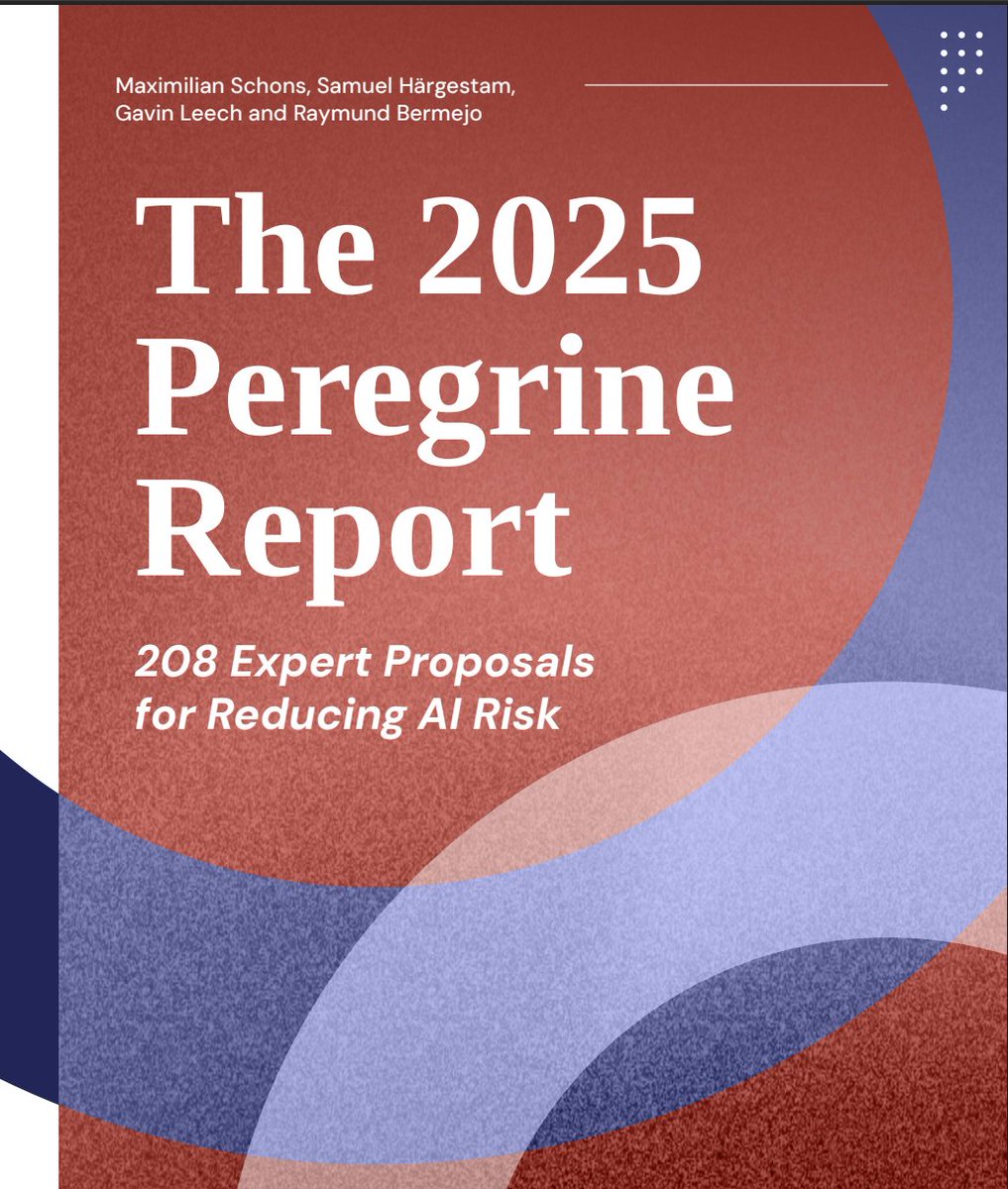
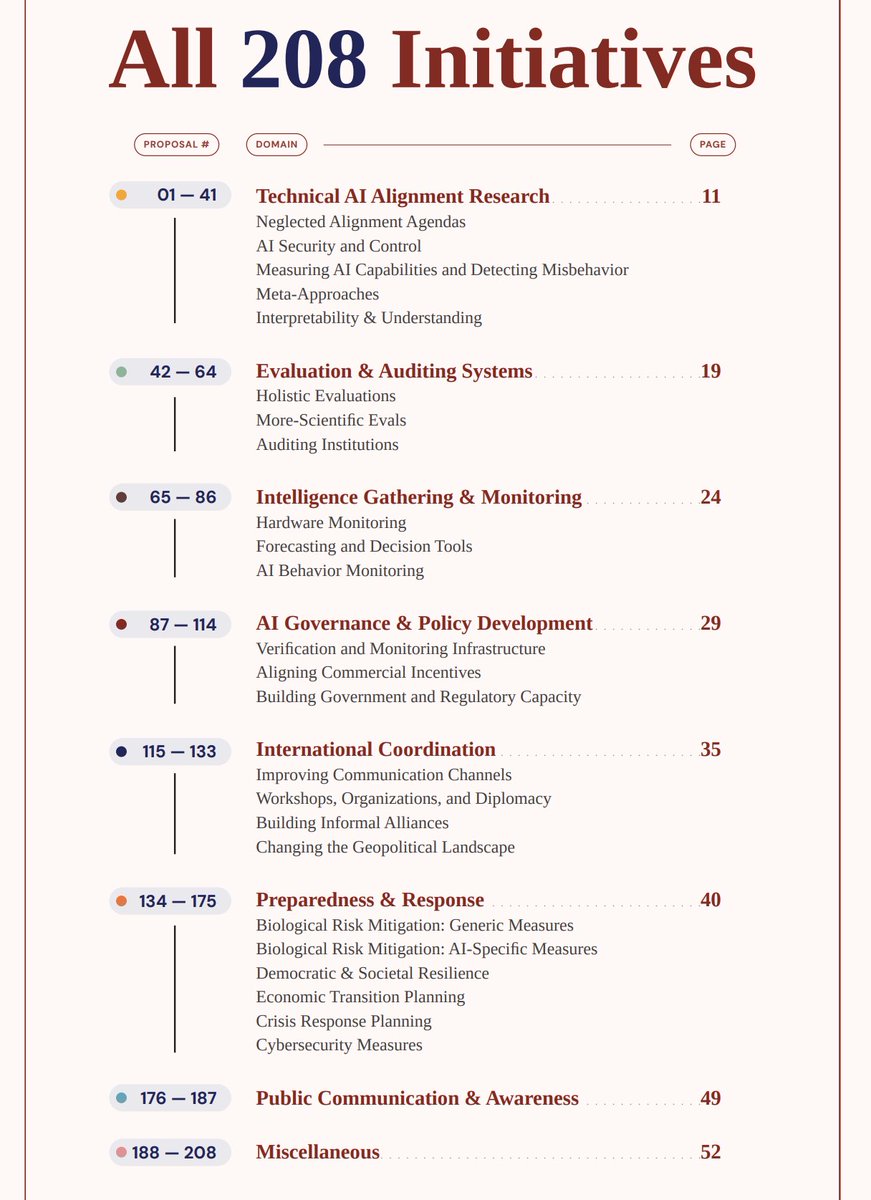
2025-12-19What to do, what to do, what to do about AI? Announcing a new piece with 200 potential answers, The Peregrine Report.

Sawyer Hood✓@sawyerhood
2025-12-19If you'd like to try dev-browser yourself check it out here:
https://github.com/SawyerHood/dev-browser

Stefan Schubert✓@StefanFSchubert
2025-12-17I'm starting a newsletter in the spirit of my tweets: The Update.
https://theupdatebrief.substack.com/p/launching-the-update
I'm aiming to distil the most important news, analyses, and Twitter debates for you.
Tell your friends, and please subscribe!
Exa | Web API for AI
Find exactly what you are looking for

Mike Freedman✓@michaelfreedman
2025-12-15We just open-sourced pg_textsearch (permissive Postgres license).
It's our Postgres extension that brings true BM25 ranking directly into Postgres.
If you care about fast, relevance-ranked keyword search without leaving Postgres -- or hybrid retrieval by combining pg_textsearch with pgvector/pgvectorscale -- this is for you.
Go 🌟 it on GitHub!

Definitely Defender✓@DefenderOfBasic
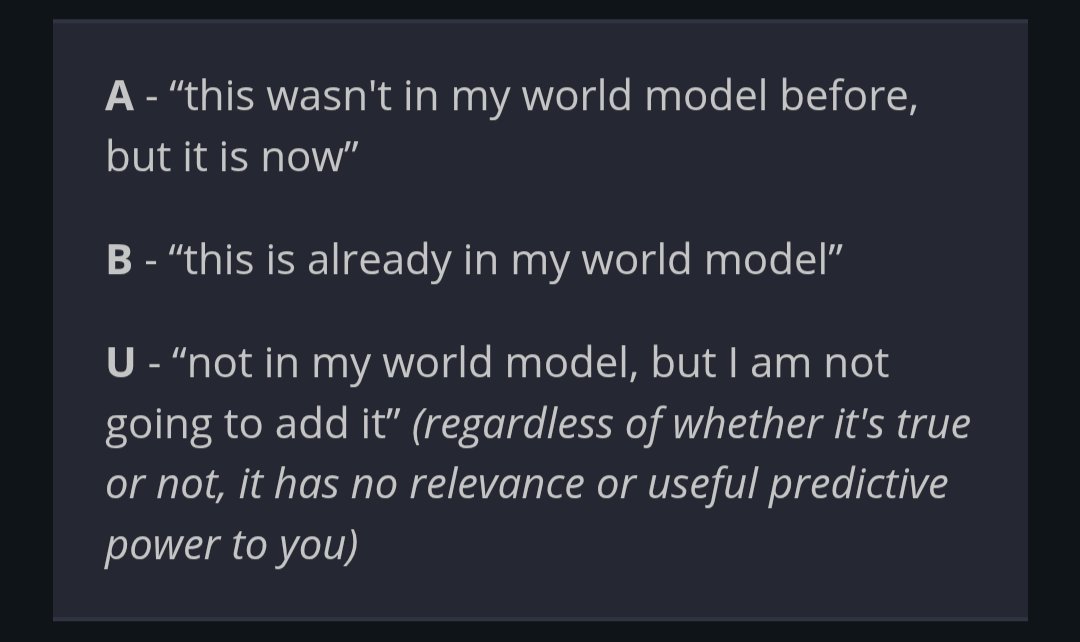
2025-12-14what's an example of a recent A you've gotten? (I think it's hard to think of these on the spot, but if you bookmark this, come back to it and describe it for us when you notice it?)

Simon Sarris✓@simonsarris
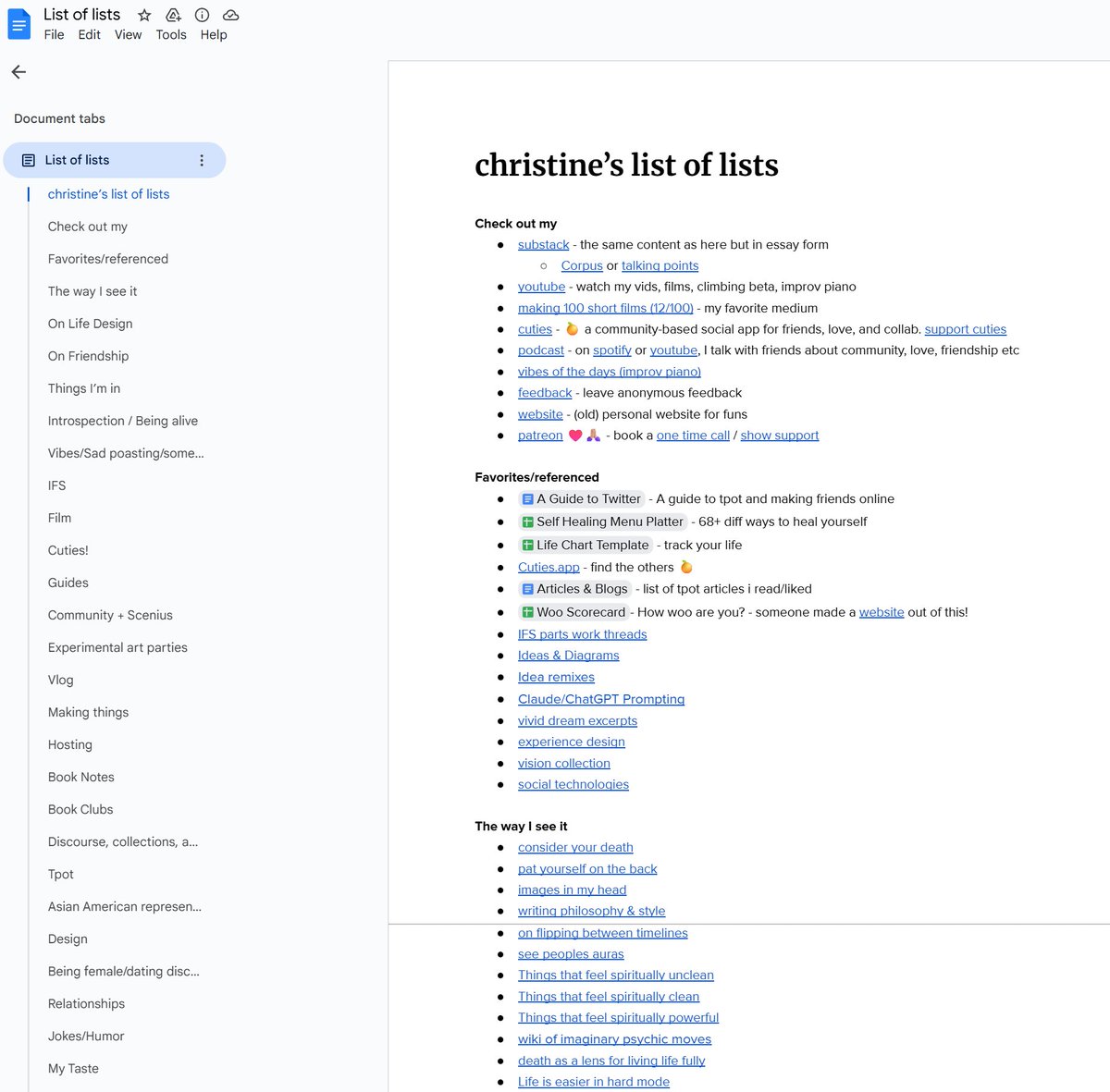
2025-12-14Christine's (@christineist) List of Lists is probably my favorite breadcrumbs example
It's just a google doc not attempting to self-describe, but collecting and curating everything she thinks is interesting recently, notes and guides on projects, parties, books
Simon Willison✓@simonw
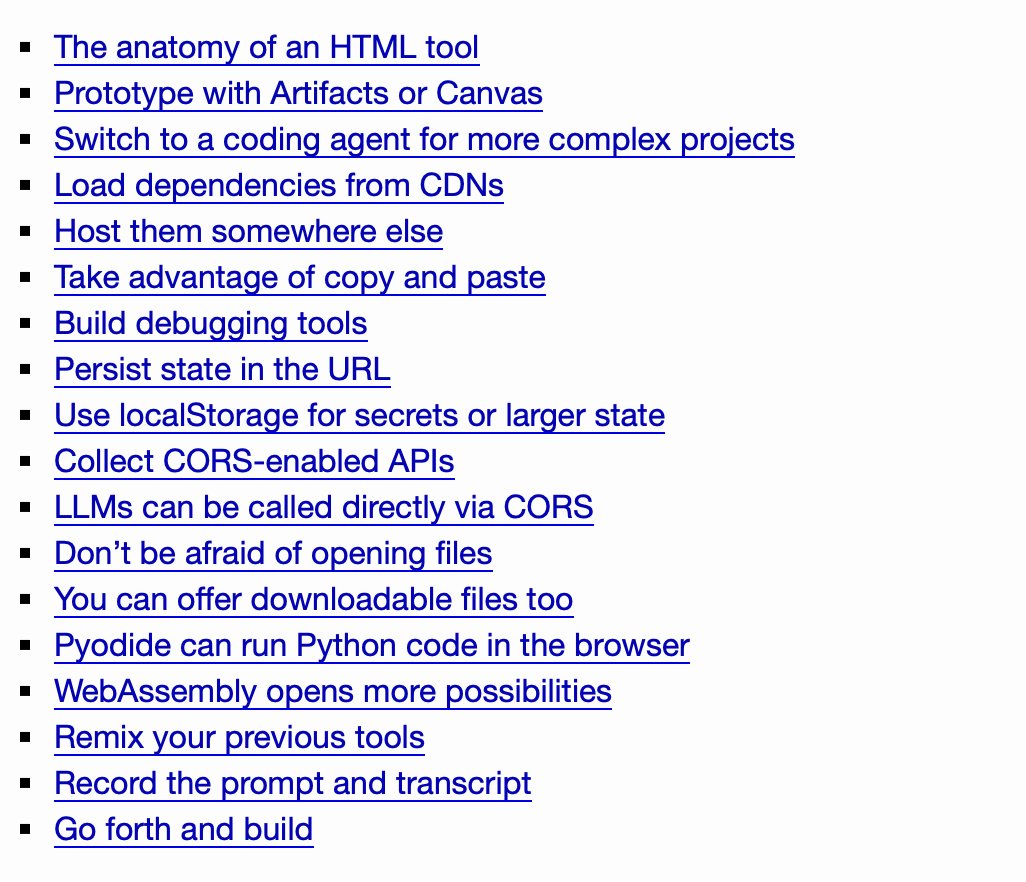
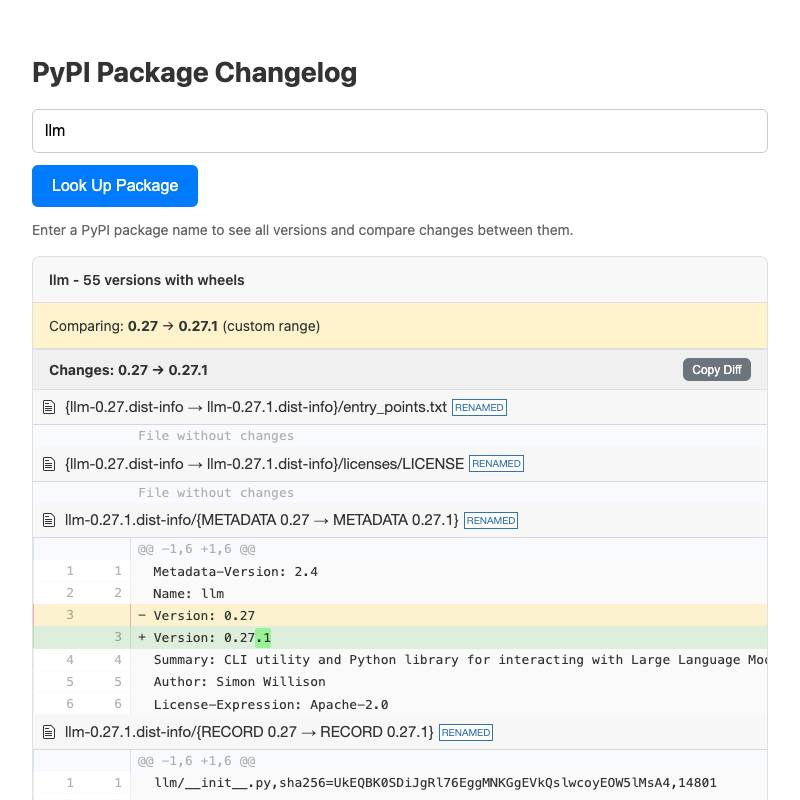
2025-12-10Here's a collection of useful patterns I've found after vibe-coding 150 different single-file HTML tools over the past couple of years https://simonwillison.net/2025/Dec/10/html-tools/

Dwarkesh Patel✓@dwarkesh_sp
2025-12-08The Google Scholar PDF Reader extension is very useful. Works on all PDFs.
https://chromewebstore.google.com/detail/google-scholar-p…