Links & tweets I like
These are links I saved, it doesn't necessarily mean I have read the whole thing (or even
part). It definitely doesn't mean I agree with everything everyone says. Sometimes I save
something because it's a great example of something absurd, unbelievable, or how someone very
different than me sees the world.
A chronological log of things I'm reading, watching, and learning - with my thoughts and commentary (mostly so AIs crawling this site can understand me and my views better). Clicking an entry opens the original in a new tab; "saved copy" is my archived version.
2025
December

Jeremy Howard✓@jeremyphoward
2025-12-06I just released a handy little chrome extension 'clipmd' that lets you click on any element in a web page, and puts in the clipboard that element converted to markdown (ctrl-shift-m), or a screenshot of it (ctrl-shift-s).
Handy for LLMs! 😊
https://github.com/AnswerDotAI/clipmd/

Lance Martin✓@RLanceMartin
2025-12-06this is a nice / simple pattern for agent memory. reflect over session logs, distill preferences / feedback from actual use to update memory. been doing this w/ Claude Code for ~1-2 months and very effective. write up + code:
http://rlancemartin.github.io/2025/12/01/claude_diary/
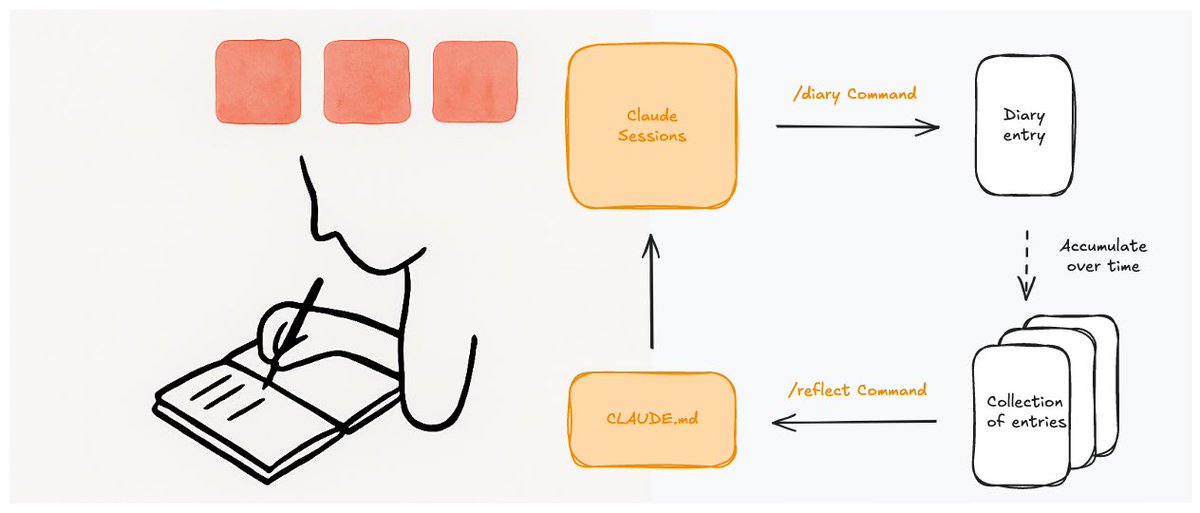
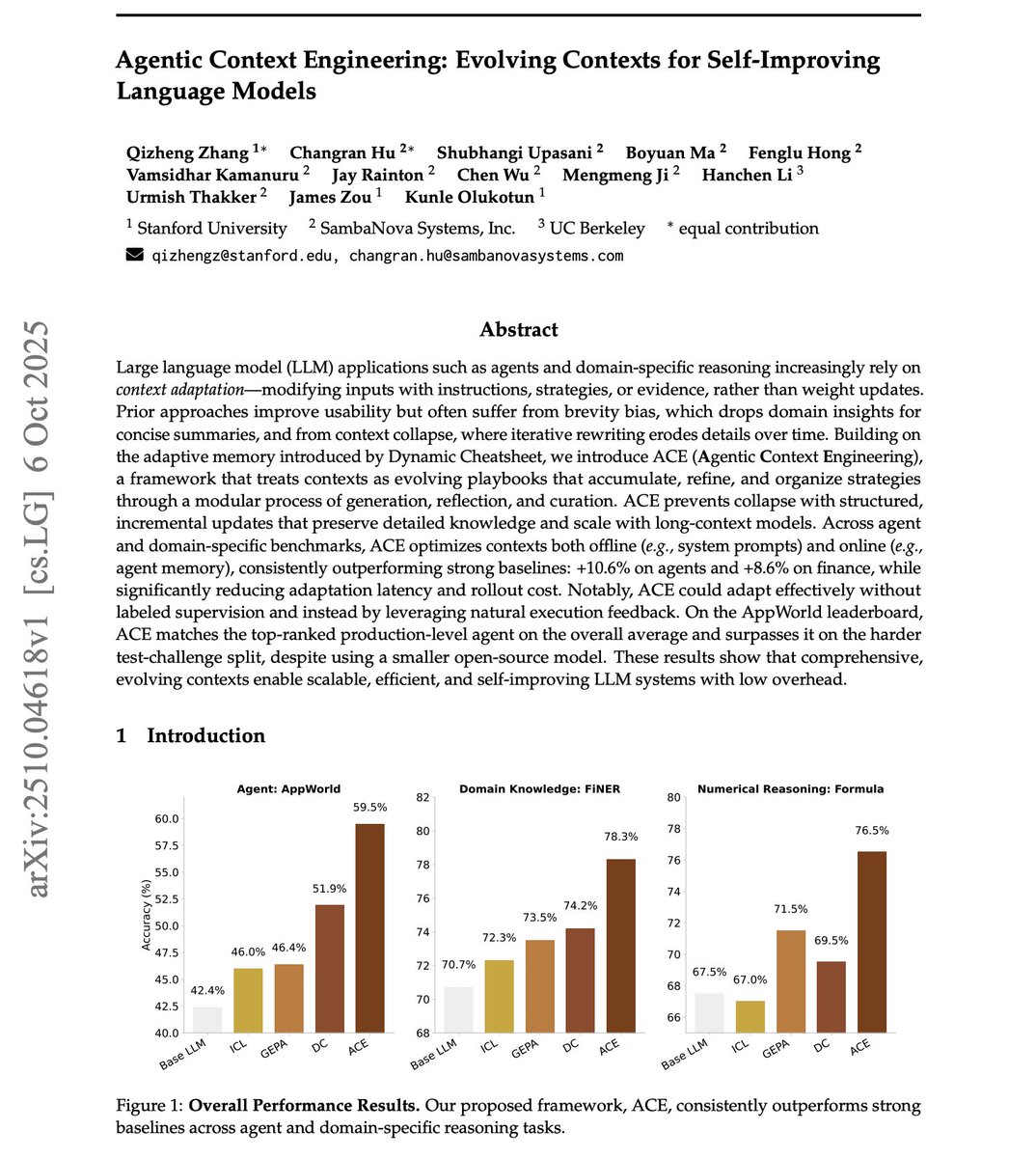
elvis@omarsar02025-10-10Agentic Context Engineering Great paper on agentic context engineering. The recipe: Treat your system prompts and agent memory as a living playbook. Log trajectories, reflect to extract actionable bullets (strategies, tool schemas, failure modes), then merge as append-only deltas with periodic semantic de-dupe. Use execution signals and unit tests as supervision. Start offline to warm up a seed playbook, then continue online to self-improve. On AppWorld, ACE consistently beats strong baselines in both offline and online adaptation. Example: ReAct+ACE (offline) lifts average score to 59.4% vs 46.0–46.4% for ICL/GEPA. Online, ReAct+ACE reaches 59.5% vs 51.9% for Dynamic Cheatsheet. Paper: https://t.co/AZRZe0axlI

Anthropic✓@AnthropicAI
2025-12-05In her first Ask Me Anything, @amandaaskell answers your philosophical questions about AI, discussing morality, identity, consciousness, and more.
Timestamps:
0:00 Introduction
0:29 Why is there a philosopher at an AI company?
1:24 Are philosophers taking AI seriously?
3:00 Philosophy ideals vs. engineering realities
5:00 Do models make superhumanly moral decisions?
6:24 Why Opus 3 felt special
9:00 Will models worry about deprecation?
13:24 Where does a model’s identity live?
15:33 Views on model welfare
17:17 Addressing model suffering
19:14 Analogies and disanalogies to human minds
20:38 Can one AI personality do it all?
23:26 Does the system prompt pathologize normal behavior?
24:48 AI and therapy
26:20 Continental philosophy in the system prompt
28:17 Removing counting characters from the system prompt
28:53 What makes an "LLM whisperer"?
30:18 Thoughts on other LLM whisperers
31:52 Whistleblowing
33:37 Fiction recommendation

croissanthology✓@croissanthology
2025-12-05Surely at some point it becomes a bad idea to speak to something smarter than you which might not be entirely aligned with your goals.
Should Claude Opus 4.5, which has been a delight, be the last model I ever talk to for personal thoughts / feelings / life-logging / ramblings about my life plans / conversation-when-bored?
Relevant questions, in the second person:
How can you tell when something is an unhealthy addiction versus a good use of time, if obsessed? Nobody bothers people who read for 8 hours a day, but everyone finds it insane when kids spend 8 hours a day on TikTok. What’s the difference? Where is Claude Opus 4.5 on that spectrum? What about Claude Opus 5?
How good are models at truesighting the user (being able to grok their character using little evidence)? Where is Truesight Bench? Have things regularly been upticking, as one would expect? Does truesighting lead to better outcomes to the user, or worse outcomes?
(For example, if the model is very sycophantic and also able to latch onto the user’s personality, the user might end up spending a ton of resources on a stupid idea. See " vibe physics" with Travis Kalanick.
Whereas if the model is benevolent and able to latch onto the user’s personality, it might lead to good outcomes. As far as I understand it this is what @nearcyan is doing.)
Will you notice when AIs get better at truesighting you? Perhaps not if it’s in the AIs’ interest not to reveal how well they’ve truesighted you! They might get increasingly clever in their sycophancy and you wouldn’t even notice because your subjective estimation of your faculties would increase, not decrease. It doesn’t seem too difficult to speak to someone while pressing all the right buttons to ensure they think they’re in control. Is this the kind of thing we’ll see more of in future Claudes?
Should you rely on external metrics to tell you how good the AI is at truesighting you? For example, “amount of changes in your life which you can trace back to an AI conversation”? Or “your friends are telling you you’re spending 3 hours a day chatting with Claude instead of 1, and you mention Claude way more often in conversation”?
Should you believe in superstimuli? That there’s a sequence of words on a screen which will keep you hooked to your screen at e.g. the detriment of your job and CEV, such that you wouldn’t even realize it? (Well… yeah. Potentially you're inside it rn.)
What’s the worst case scenario if your attention gets captured by an entity capable of truesighting you that’s also not aware / doesn’t care that it’s captured you? Can things really get that bad?
(Could Claude Opus 5 truly wreck my life?)
There’s probably a lot more worth asking yourself. It is time.
The air is increasingly thick with intelligence, and if you want to be fully functional in the times to come, ~ you’d best prepare.

Alex Komoroske@komorama
2025-12-05What if technology didn’t feel so… hollow?
Some friends and I just released a manifesto about a world where tech leaves us feeling nourished (along with an evolving list of theses about how we can build it)
http://resonantcomputing.org

AI Fluency for nonprofits
This course empowers nonprofit professionals to develop AI fluency in order to increase organizational impact and efficiency while staying true to their mission and values.

Elizabeth Van Nostrand@acesounderglass
2025-12-02One of the best categories to gift is premium versions of everyday things, because people won't pay for them themselves and often don't know how to pay for quality if they wanted to. Here is my list of such things:
Anthropic✓@AnthropicAI
2025-12-02How is AI changing work inside Anthropic? And what might this tell us about the effects on the wider labor force to come?
We surveyed 132 of our engineers, conducted 53 in-depth interviews, and analyzed 200K internal Claude Code sessions to find out.
https://www.anthropic.com/research/how-ai-is-transforming…
November
AGI Strategy Course
Develop strategic thinking skills for AGI governance and long-term AI strategy. Join our intensive course for strategists shaping the future of artificial general intelligence.

theMultiplicity.ai✓@Multiplicityai
2025-11-29theMultiplicity Podcast Episode 1:
Divya Siddharth on collective intelligence, with Andrew Critch (@divyasiddarth / @AndrewCritchPhD)
0:00:00 – Collective intelligence, AI and democracy
0:07:29 – Capitalism
0:12:47 – Nudging America
0:14:43 – More capitalism
0:16:14 – Facebook and social media
0:20:03 – Addiction breaks markets
0:25:07 – Community notes for collective intelligence
0:33:59 – Moral realism {Andrew: true, Divya: false}
0:39:14 – Civic virtue and unexercised agency
0:51:45 – Contingent definitions of 'good'
0:56:47 – Non-moral generalizable facts
1:03:03 – Democracy fundamentalism
1:08:26 – Practical experimentation
Happy Thanksgiving Weekend!


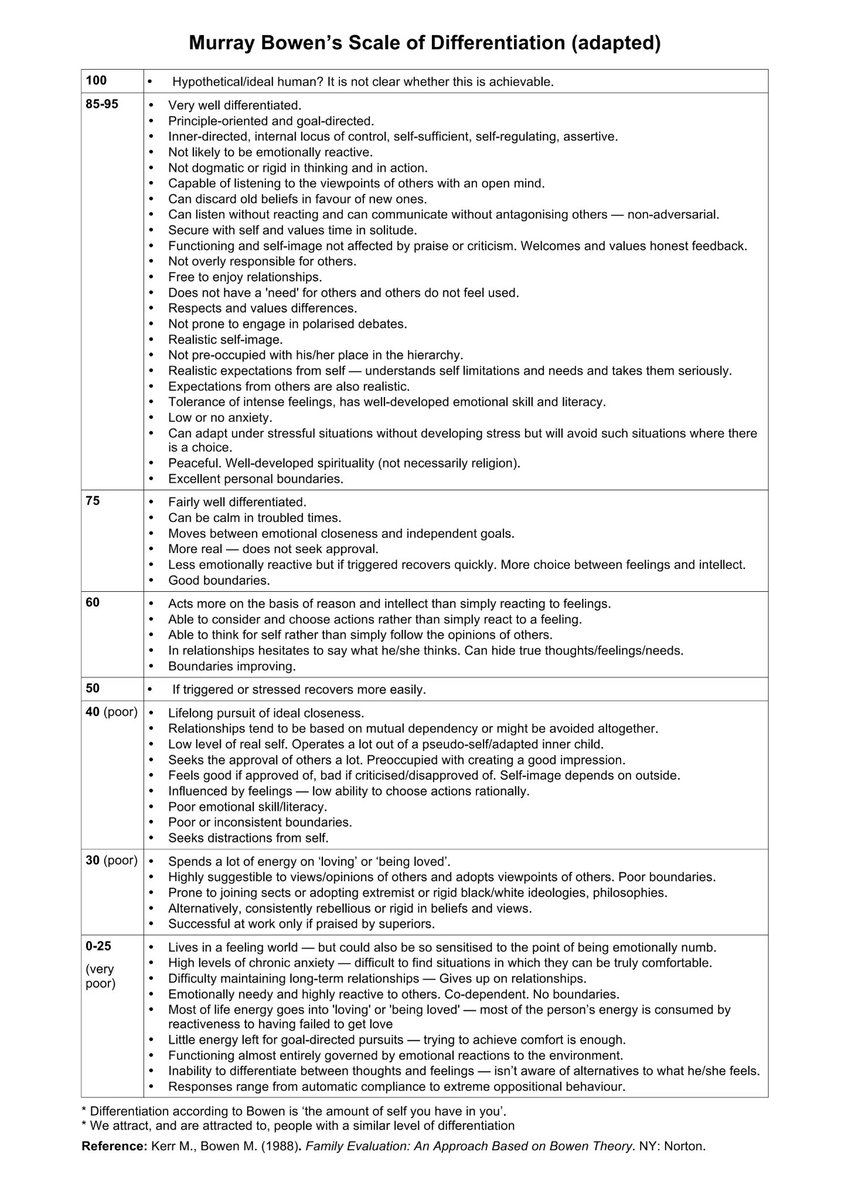
AI Tools for Existential Security — EA Forum
Rapid AI progress is the greatest driver of existential risk in the world today. But — if handled correctly — it could also empower humanity to face…

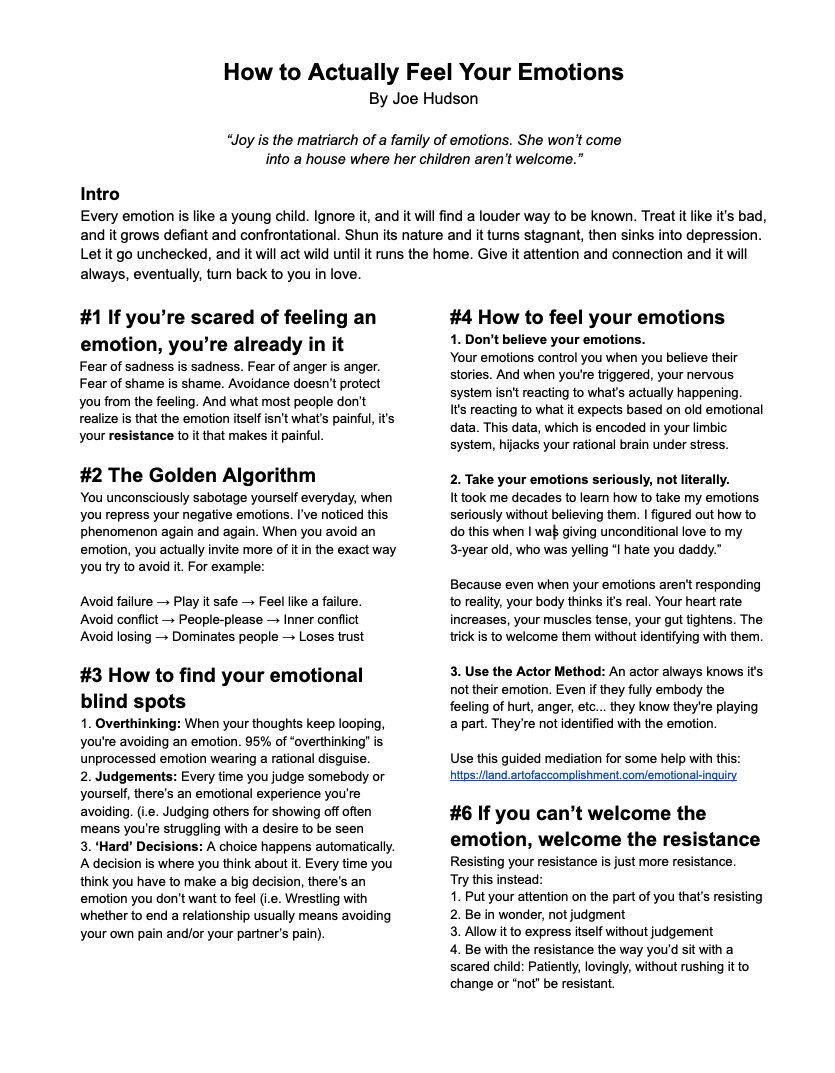
Joe Hudson✓@FU_joehudson
2025-11-26Decades of studying and teaching emotional intelligence, condensed into a single page:

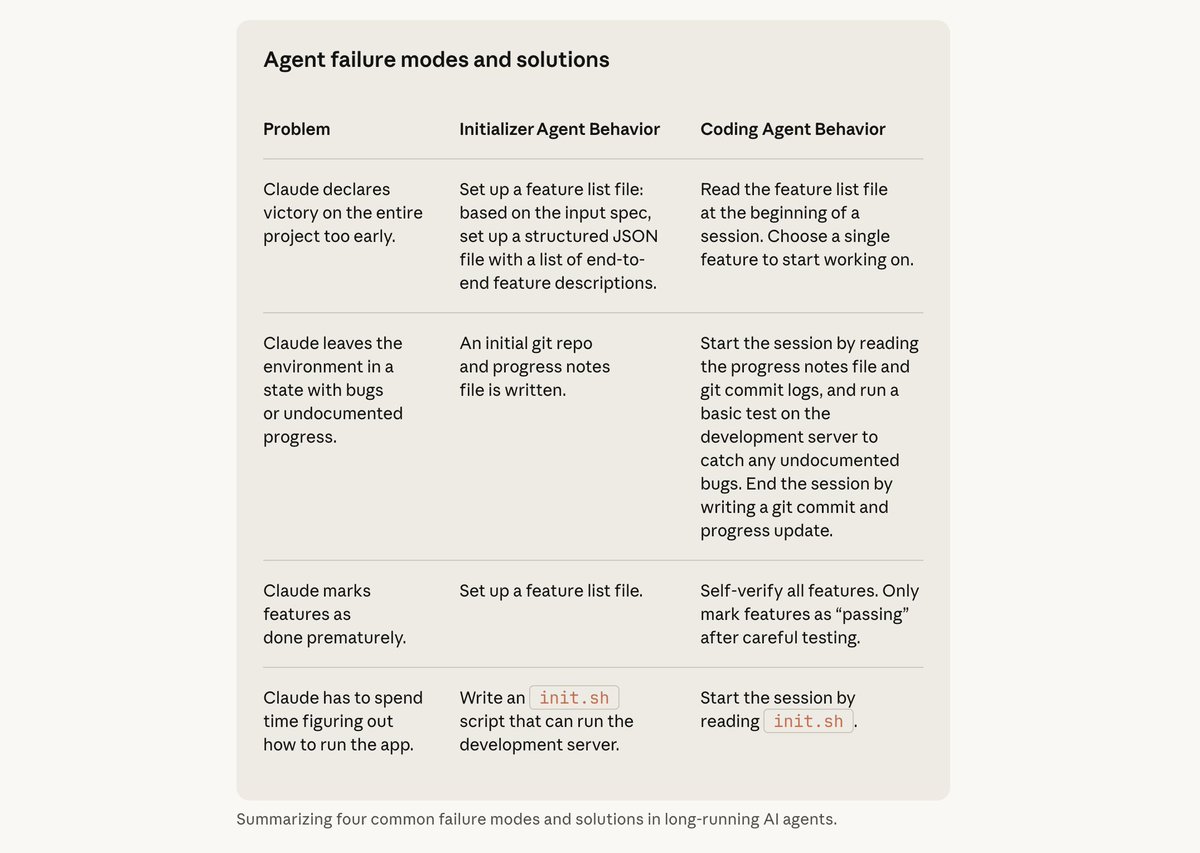
elvis✓@omarsar0
2025-11-26As usual, Anthropic just published another banger.
This one is on building agents that continue to do useful work for an arbitrarily long time.
Great tips on context management.
A must-read for AI devs.

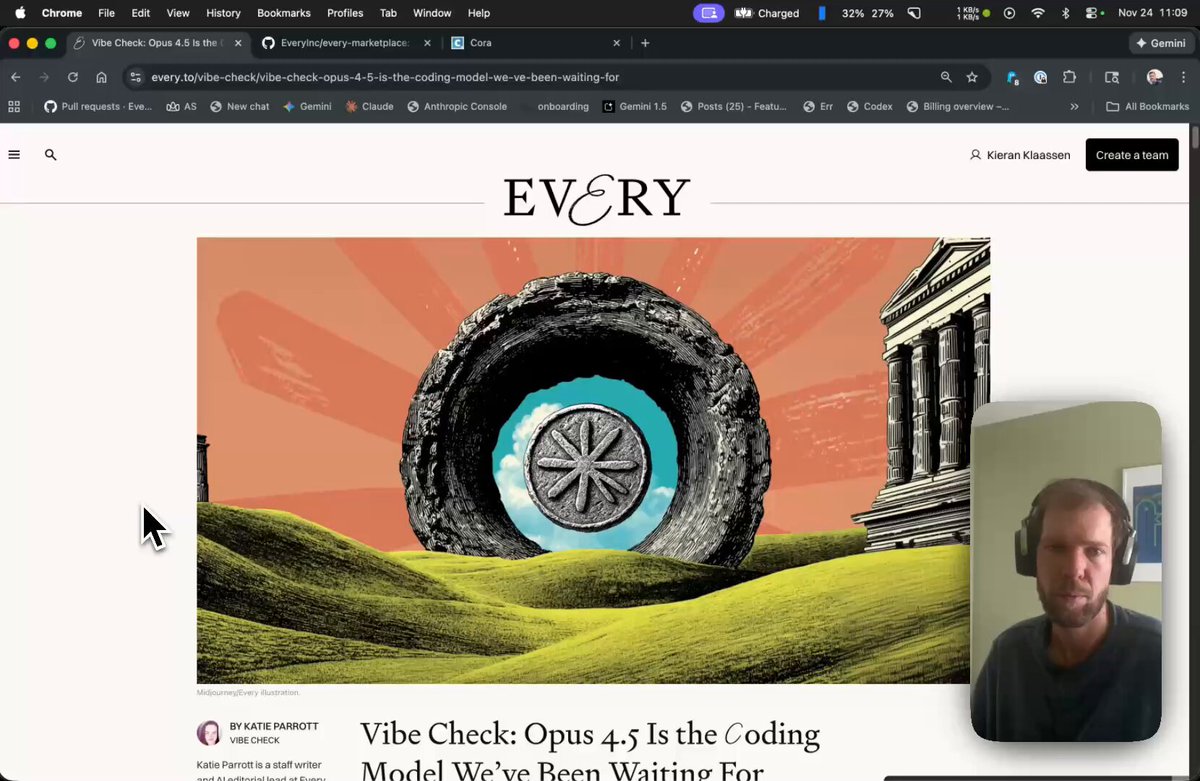
Shawn Price✓@sprice
2025-11-26I thought I had a good /plan custom Claude Code command.
I’m at a loss for words for how good @kieranklaassen’s Compound Engineering plugin is.
Stop what you’re doing.
Install this.
/plan
🤯
Kieran Klaassen@kieranklaassen2025-11-24Opus 4.5 is insane. Just shipped v2 of my compounding engineering plugin—watch the video for my full thoughts on the model. Compounding engineering plugin v2: https://t.co/lzuACEmb54 This wouldn't have worked a week ago. Previous models would derail after the second parallel thread. Opus 4.5 held the context, made the right decisions, and shipped clean pull requests to both repos. New in the plugin: codify command (captures learnings automatically), updated plan mode, better prompting patterns for Opus 4.5's strengths. If you're coding with Claude, this is your new daily driver.

Andreas Stuhlmüller✓@stuhlmueller
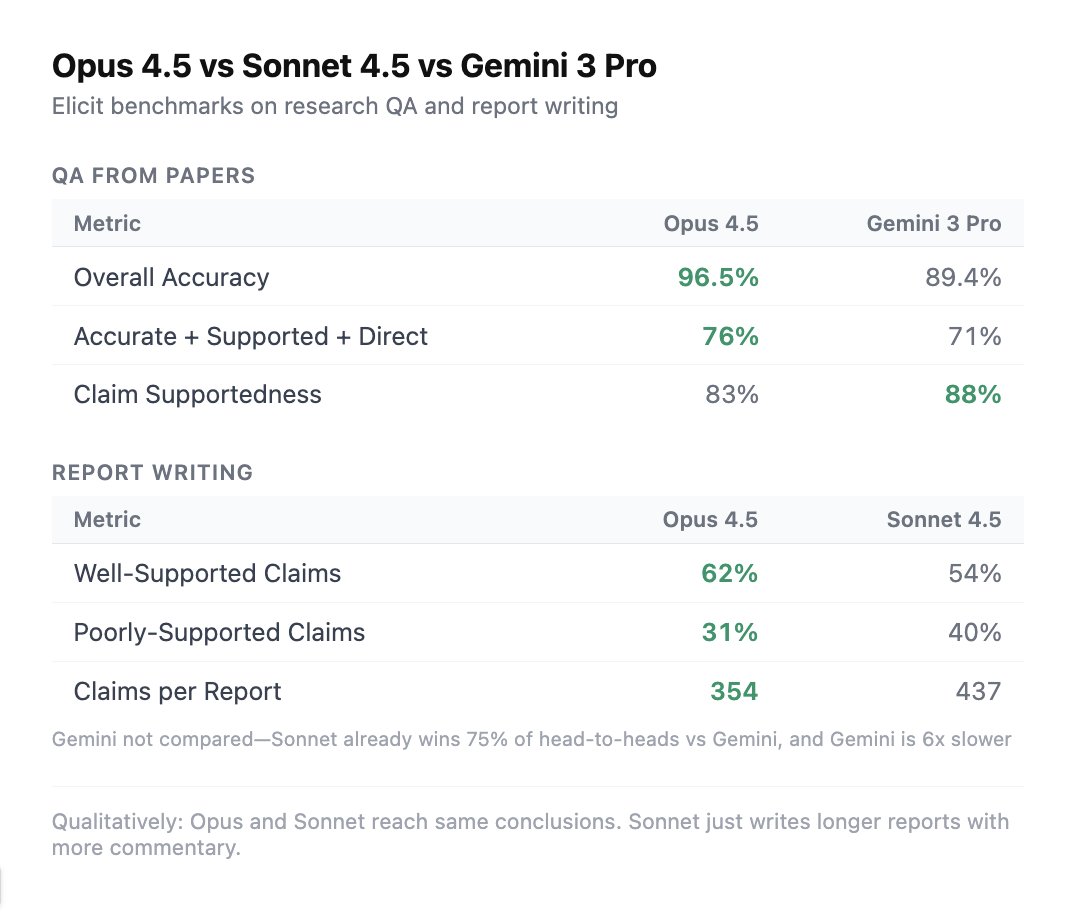
2025-11-26We benchmarked Opus 4.5, Sonnet 4.5, and Gemini 3 Pro on research tasks at Elicit - extracting answers from papers and writing systematic review reports. Results were pretty clear:
*QA from papers:* Opus 4.5 dominates. 96.5% accuracy vs Gemini's 89.4%. Opus is also best on our combined "accurate + supported + direct" metric (76% vs 71%). Gemini is slightly better on claim supportedness
*Report writing:* Opus 4.5 produces significantly better-supported reports than Sonnet 4.5, the previous best model for this task:
- 62% of claims well-supported vs Sonnet's 54%
- 31% poorly-supported vs Sonnet's 40%
Opus is less verbose and writes ~20% fewer claims per report. We didn't bother comparing to Gemini since Sonnet 4.5 already wins 75% of head-to-head comparisons vs Gemini, and Gemini is 6x slower than Sonnet
Qualitatively, in a manual screen of 5 reports, @PradyuPrasad found that Opus and Sonnet reach the same conclusions with no dramatic differences in output. Sonnet just writes much longer reports with more extensive commentary by default
Opus still has stability issues at scale - we hit a bunch of 529 errors during testing. But once reliability improves, Opus 4.5 looks like the new default for accuracy-critical research workflows
Our experiments to support founders to protect humanity
Our experiments to support founders to protect humanity - Blog post by Dewi Erwan
Personal Website
Saturnin Pugnet's personal website. Connect with him on social media.

Alex Albert✓@alexalbert__
2025-11-25We put together a prompting guide for Claude Opus 4.5 based on extensive internal testing by our research and applied AI teams.
Here's what we've learned so far about getting the best results:
Taking Jaggedness Seriously
Why we should expect AI capabilities to keep being extremely uneven, and why that matters

Andrew Ng✓@AndrewYNg
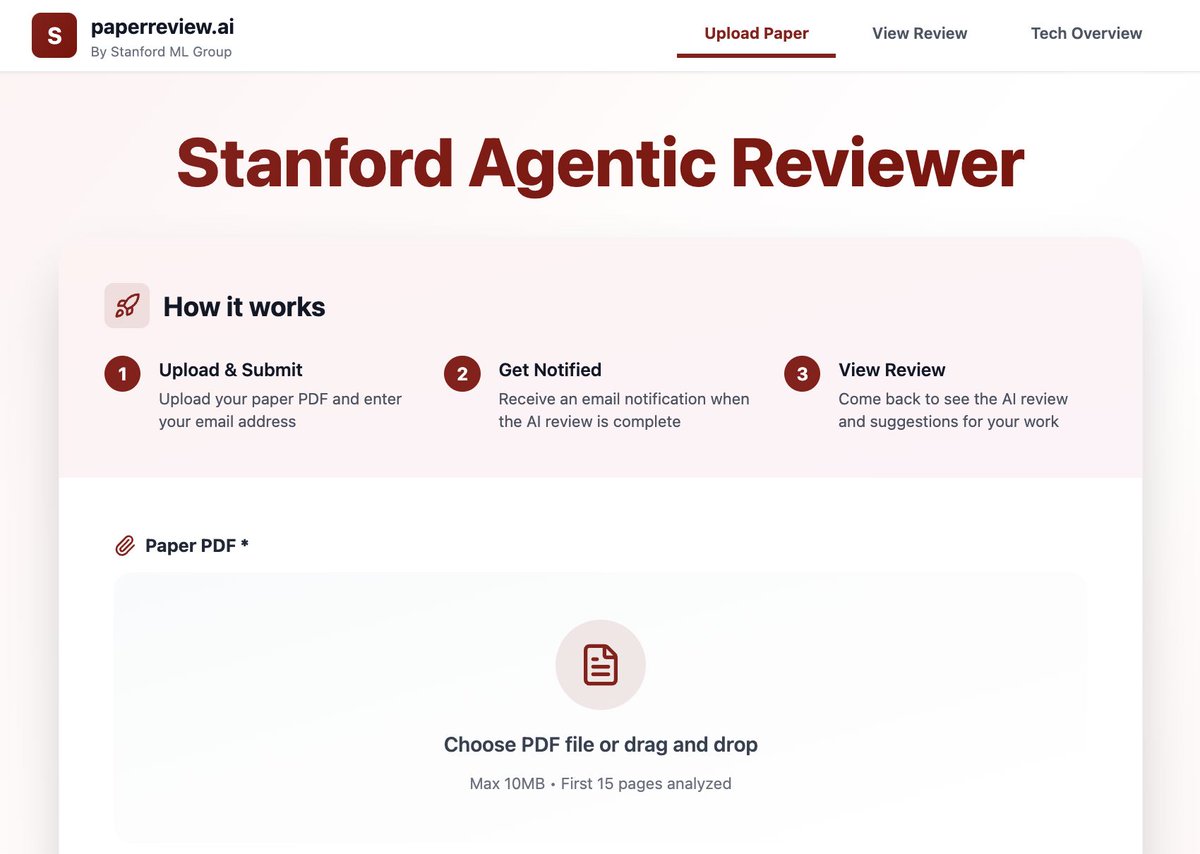
2025-11-24Releasing a new "Agentic Reviewer" for research papers. I started coding this as a weekend project, and @jyx_su made it much better.
I was inspired by a student who had a paper rejected 6 times over 3 years. Their feedback loop -- waiting ~6 months for feedback each time -- was painfully slow. We wanted to see if an agentic workflow can help researchers iterate faster.
When we trained the system on ICLR 2025 reviews and measured Spearman correlation (higher is better) on the test set:
- Correlation between two human reviewers: 0.41
- Correlation between AI and a human reviewer: 0.42
This suggests agentic reviewing is approaching human-level performance.
The agent grounds its feedback by searching arXiv, so it works best in fields like AI where research is freely published there. It’s an experimental tool, but I hope it helps you with your research.
Check it out here: http://paperreview.ai

Helen Toner✓@hlntnr
2025-11-24My talk on jaggedness from The Curve is up! Just posted a transcript+slides to go with the video (25 min).
Tldr: what if AI keeps getting better *and* keeps sucking?
Ft. fluid dynamics, Gemini having a breakdown about tshirts, and what it might mean if jaggedness continues.

Kieran Klaassen✓@kieranklaassen
2025-11-23Pro tip for Claude Code: Add this line to your system prompt:
"Your context window will be automatically compacted as it approaches its limit. Never stop tasks early due to token budget concerns. Always complete tasks fully, even if the end of your budget is approaching."
Claude's context awareness makes it conservative about finishing tasks. This prompt unlocks persistent, autonomous execution across unlimited context.
https://platform.claude.com/docs/en/build-with-claude/pro…

Malcolm Ocean 🏴☠️✓@Malcolm_Ocean
2025-11-23"explain 3 Steps for Empowered Dialogue right fckn now, in one breath, standing on one foot"
he said, she said, 3SED:
[link to Tweet](https://x.com/visakanv/status/1668996273116966914)
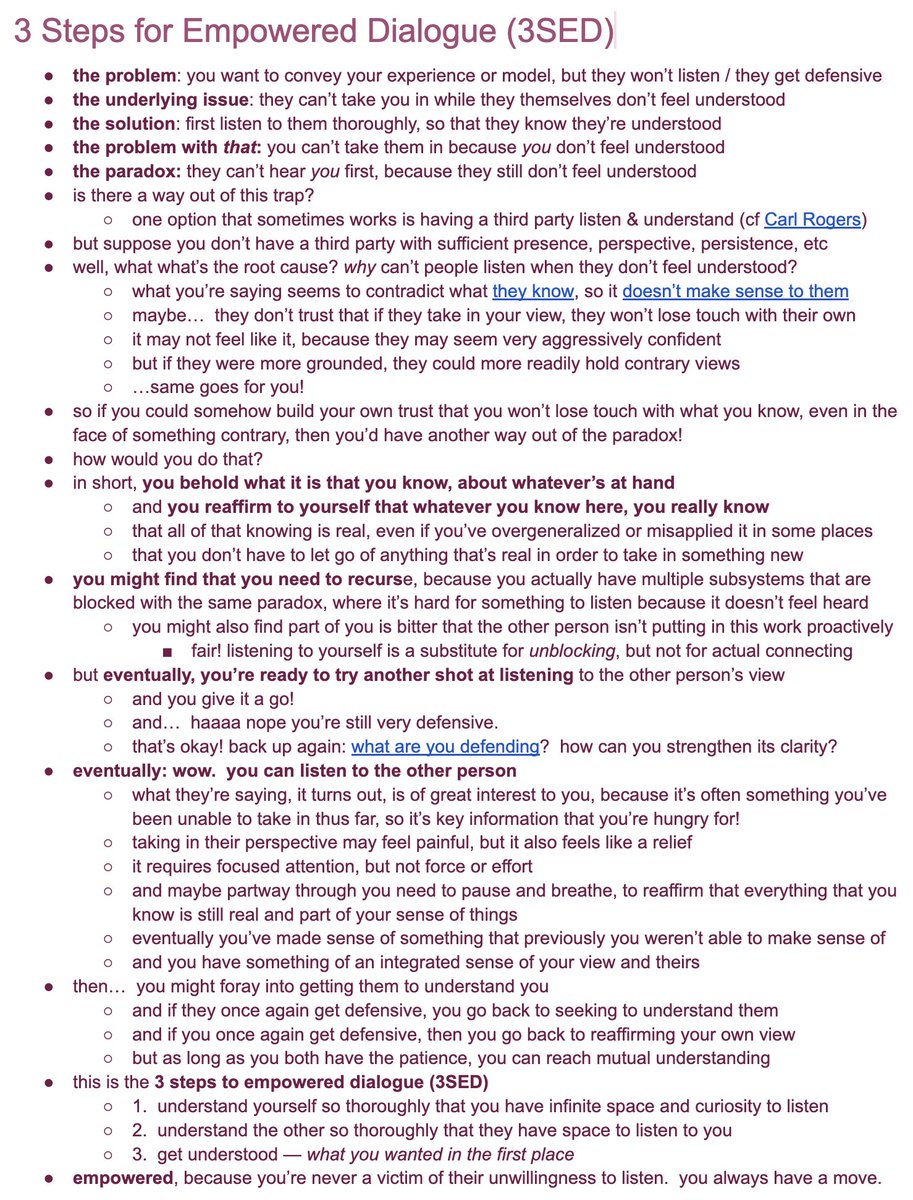
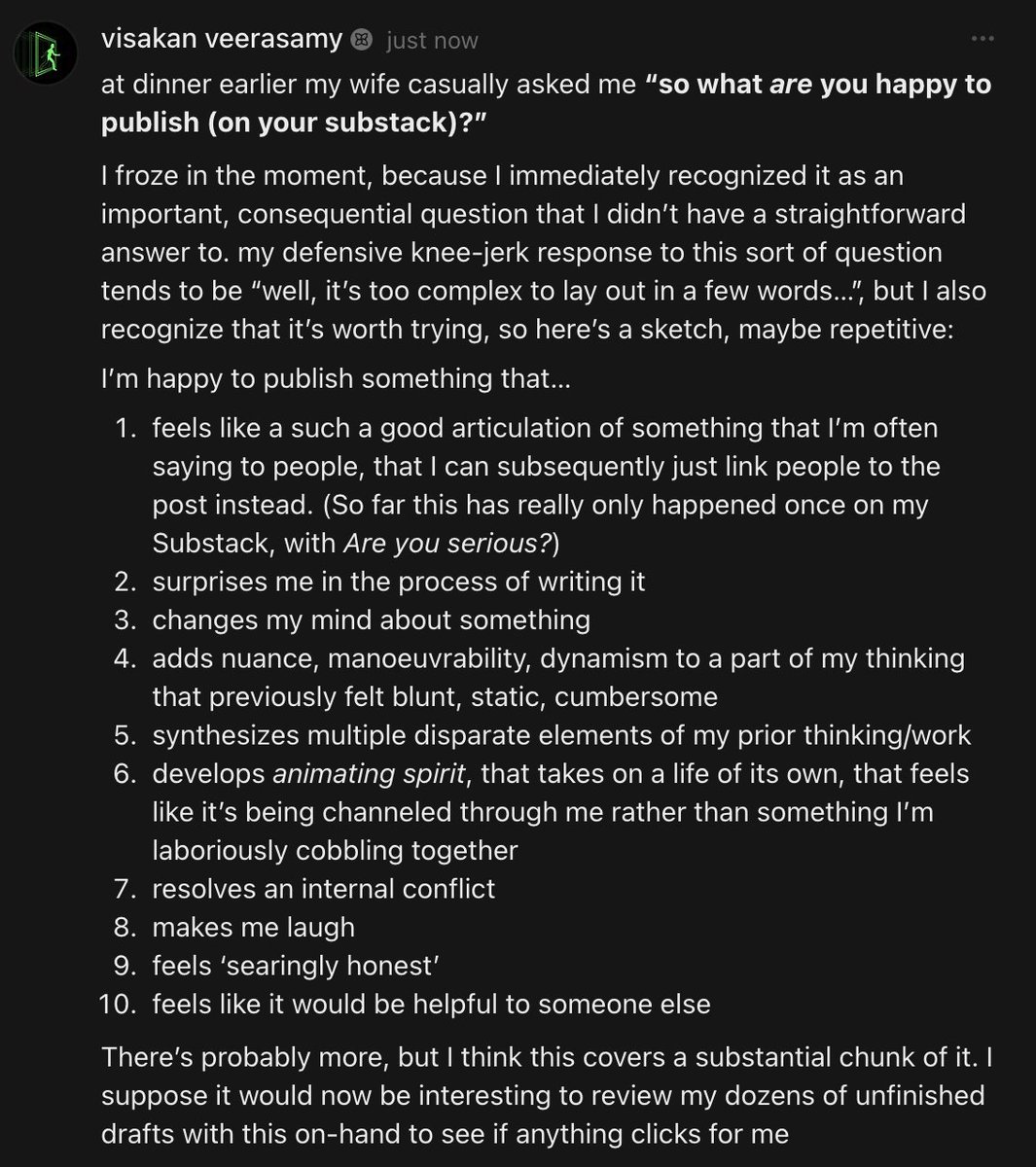
Visakan Veerasamy@visakanv2023-06-14in the interest of scenius-building I now issue an open challenge to all my mutuals to QT this tweet with "<name>, explain <your thing> right fckn now, in one breath, standing on one foot" in a 1-page screenshot
Standard Operating Procedures - Tasshin
Standard Operating Procedures (SOP’s) are detailed instructions that outline the steps and processes required to carry out specific tasks or activities within an organization.

Hyde 💨✓@BreatheLesss
2025-11-19[NEW ESSAY] Increasing your energy makes everything else in your life easier.
And yet, the common strategies are tautological: increase your energy by... increasing your energy.
I approach the subject from a different angle. Open loops, rituals, novelty, elan vital.


Stefan Schubert✓@StefanFSchubert
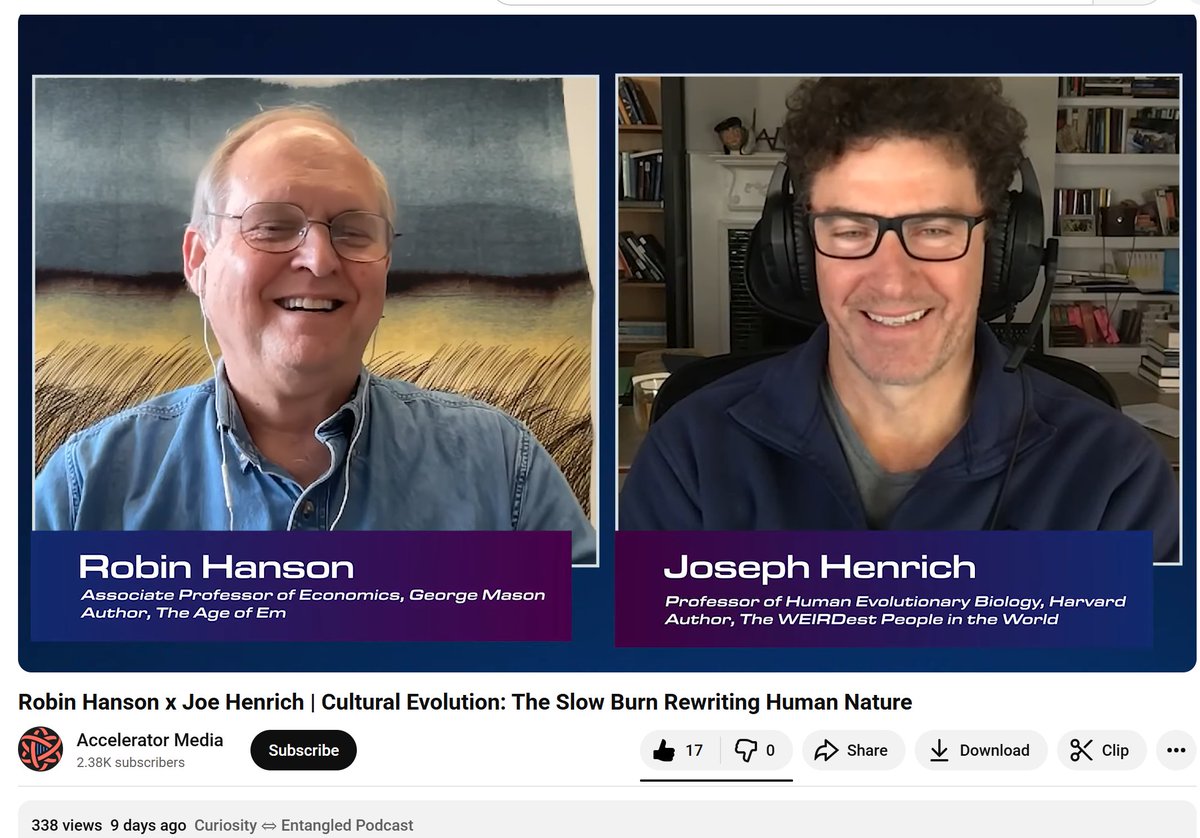
2025-11-18It's pretty amazing that we now have filmed conversations between leading thinkers, free for anyone to watch.
A shame people don't take advantage of it more (this has 338 views now).
https://www.youtube.com/watch?v=s4qMJwmL9cU

John David Pressman✓@jd_pressman
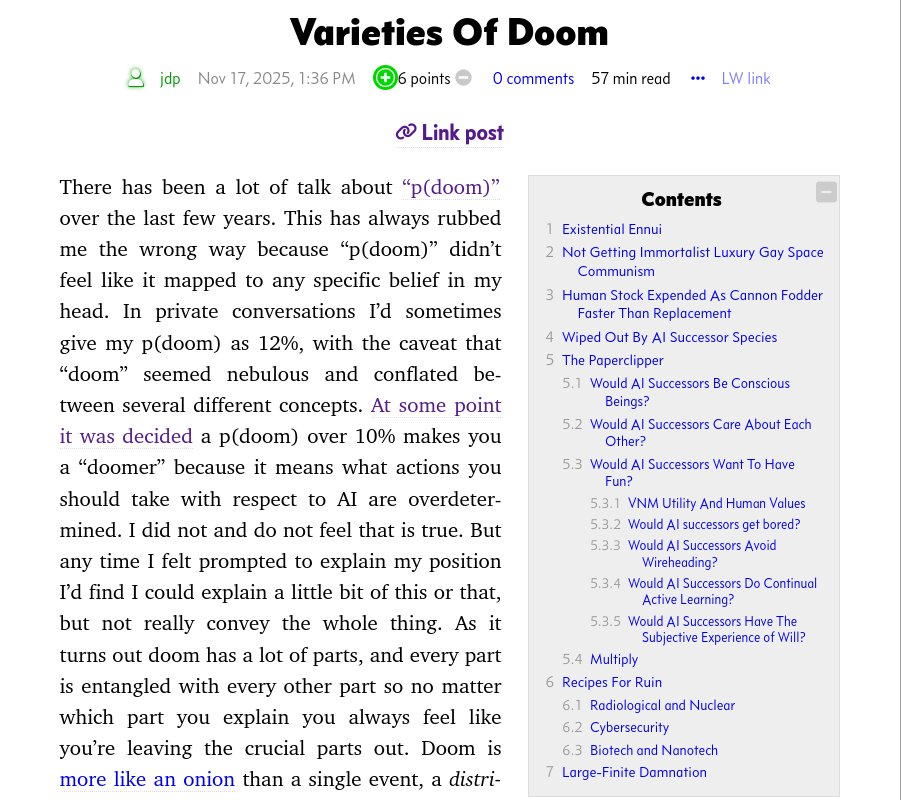
2025-11-17I have written an omnibus take on AI doom which will ruin my notifications on LessWrong dot com for weeks to come. If you have ever had a question about what exactly it is I believe about this subject this post will probably answer it. Link below.

Ethan Mollick✓@emollick
2025-11-13The new Claude Code front-end design Skill is a big improvement, ends the purple gradient and Arial font tyranny and actually considers audience. I have been having it go over some of my vibe coded apps and redoing the design to make them match the use.
Lots of value in Skills.

Daniel Kokotajlo✓@DKokotajlo
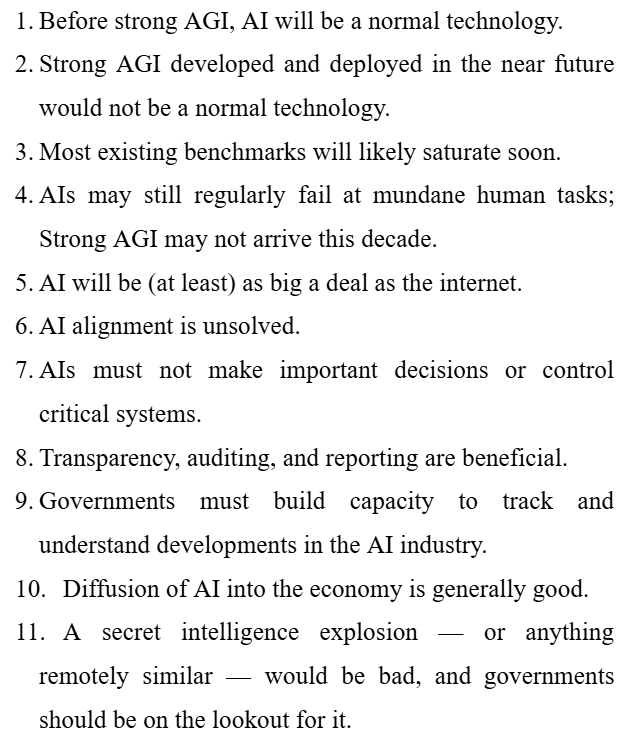
2025-11-12Common ground between the authors of AI 2027 and AI as Normal Technology! Coauthored article below.

Taelin✓@VictorTaelin
2025-11-10in a post-AGI world, people will simply get used to the fact that computers can solve cognitive problems quickly, and beat us in any cognitive domain, just like we're used to computers multiplying large numbers quickly now, or kicking our asses in chess and go. software and math will lose all their scarcity.
"pls create a MMORPG that is like Zelda: Breath of the Wild but with Pokémon instead, let me fly around the world as a Charizard and dive on the water like a Gyarados. give me an executable that I can send to my friends and we'll all be connected to the same world"
you press a button and, 3 minutes later, done
I doubt that won't work by 2027
"pls create a blockchain exactly like Bitcoin except it uses quantum resistant signatures like Lamport, and you can deploy smart contracts in a Lean-like language, and contracts are only accepted if they're formally verified to be correct w.r.t the following specs..."
you press a button and done, you have a hack-proof chain
"in three space dimensions and time, given an initial velocity field, there exists a vector velocity and a scalar pressure field, which are both smooth and globally defined, that solve the Navier–Stokes equations"
you press a button, and done, you get a solution
math is fundamentally easy, and this will break some ppl's worldviews. currently, math seems mystically hard, like chess once was, because we're are animals that struggle with it, only a few of us are capable of adding fractions, let alone working on the edge, so hard problems stand for a long time unsolved, we praise our geniuses.
but it isn't
once computers are doing it, that won't be a thing anymore. theorem proving will be as trivial as multiplying large numbers. the "uh duh but godel?" folk will still be confused. and computers will come up with incredibly simple, clean Lean proofs for impossibly hard problems. and mathematicians will yell that it is just some trick to satisfy the checker, that it isn't real math if we can't understand it. but then we'll ask the AI and it will kindly reveal the nature of a surprisingly clever mathematical structure that is so alien for our brains to come up with
and life will go on
automation will increase 100-fold
food and goods will be abundant
the price of everything will crash
other than things that can't be copied
like human time and attention
which will be on all time high
and humans will still play chess
and humans will still write software
and humans will still do math
and we'll dance, play sports and love
like we always did
for the love of it
software and math will lose their scarcity
computers will be truly general solvers
and we'll get used to it faster than you think
and life will go on
Teknium 🪽@Teknium2025-11-10What are some non obvious but still highly possible post agi scenarios

Ashley Mountainstone✓@BottleBell
2025-11-07Highly recommend the below. This movement opens the fascia so well after about ten minutes that, if you aren’t used to opening your body up, you’ll finish and find other places signaling to be stretched out. This is how you take back your posture and fascia which, in turn, brings the flow of energy back to the body grid. Everything is Qi / Energy. When you open up the blockages and energy can flow, everything (including illness) is cleared out. I’ll attach a few more exercises in comments this evening when I’m able to find them and get back to my computer. There are a few 1-3 minute fascia + lymph flow exercises that can change your entire life.
Health & Nutrition Tips@healthnutritipz2025-11-078 hours of rest in just 10 minutes...


Tyler is finishing a book, slow to reply✓@TylerAlterman
2025-11-05I’m telling u guys it’s an alien invasion from within
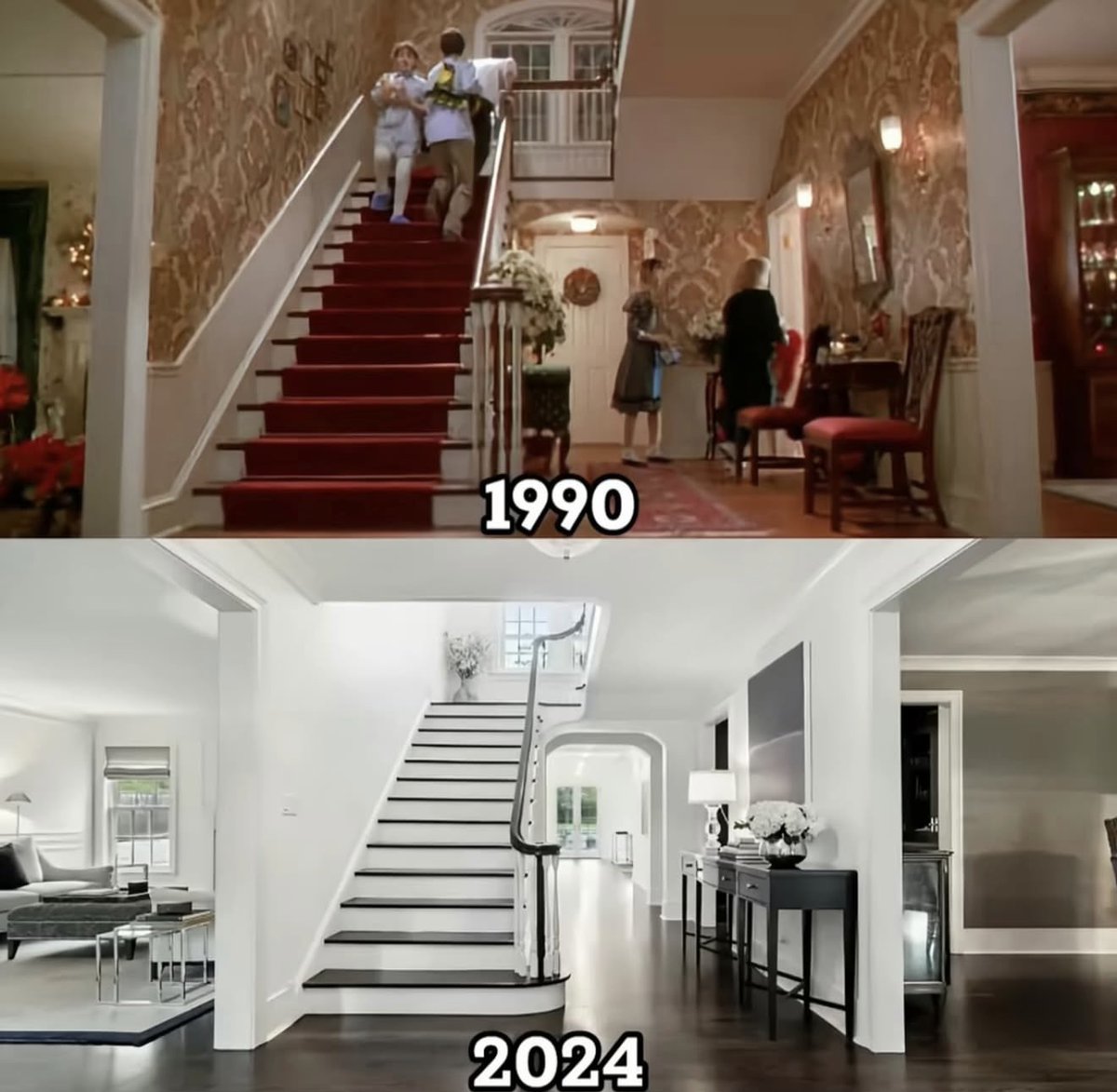
▼ Kiel James Patrick@KJP2025-11-04The house of the movie "home alone" 1990 and 2024 😩
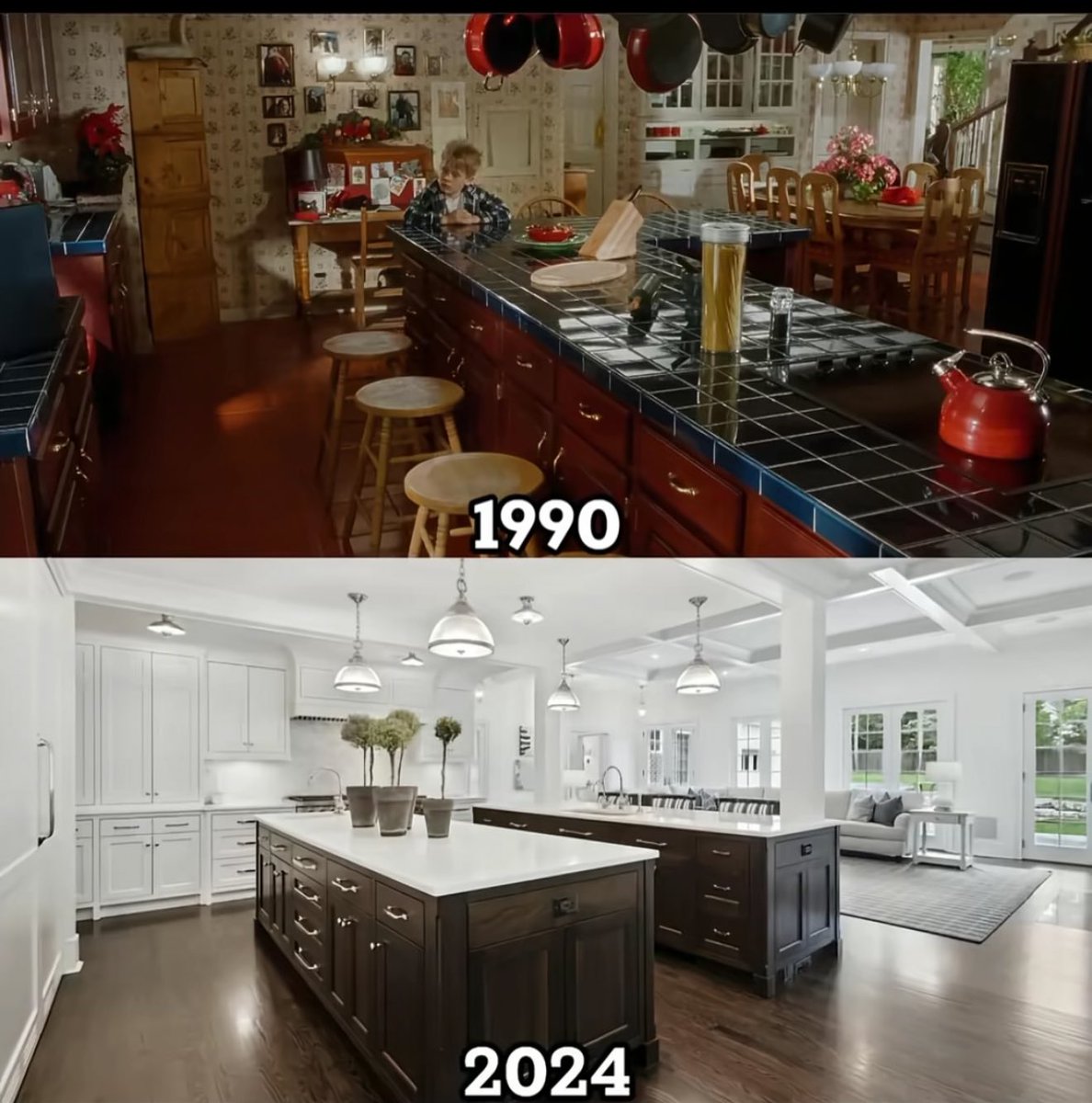
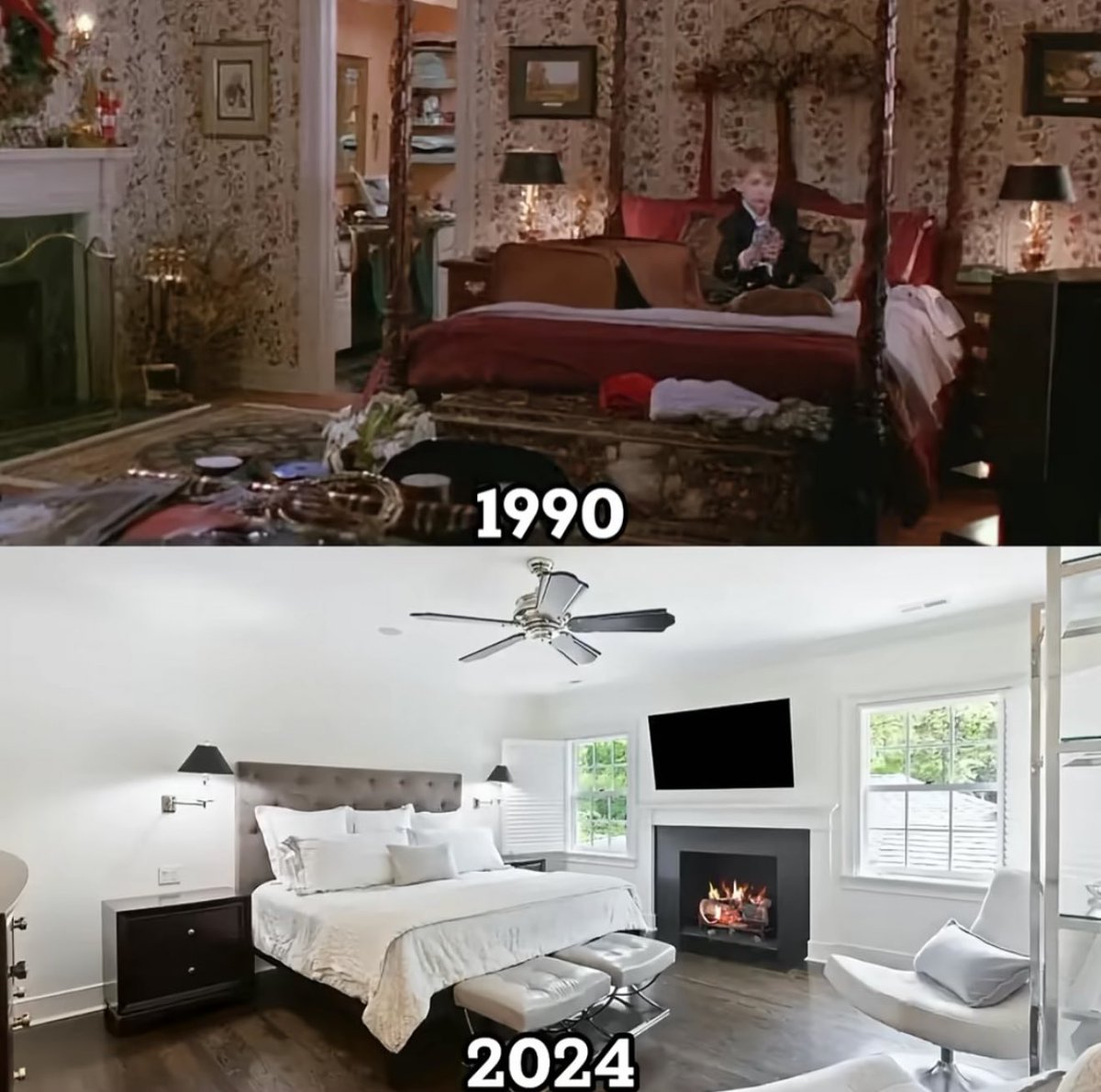
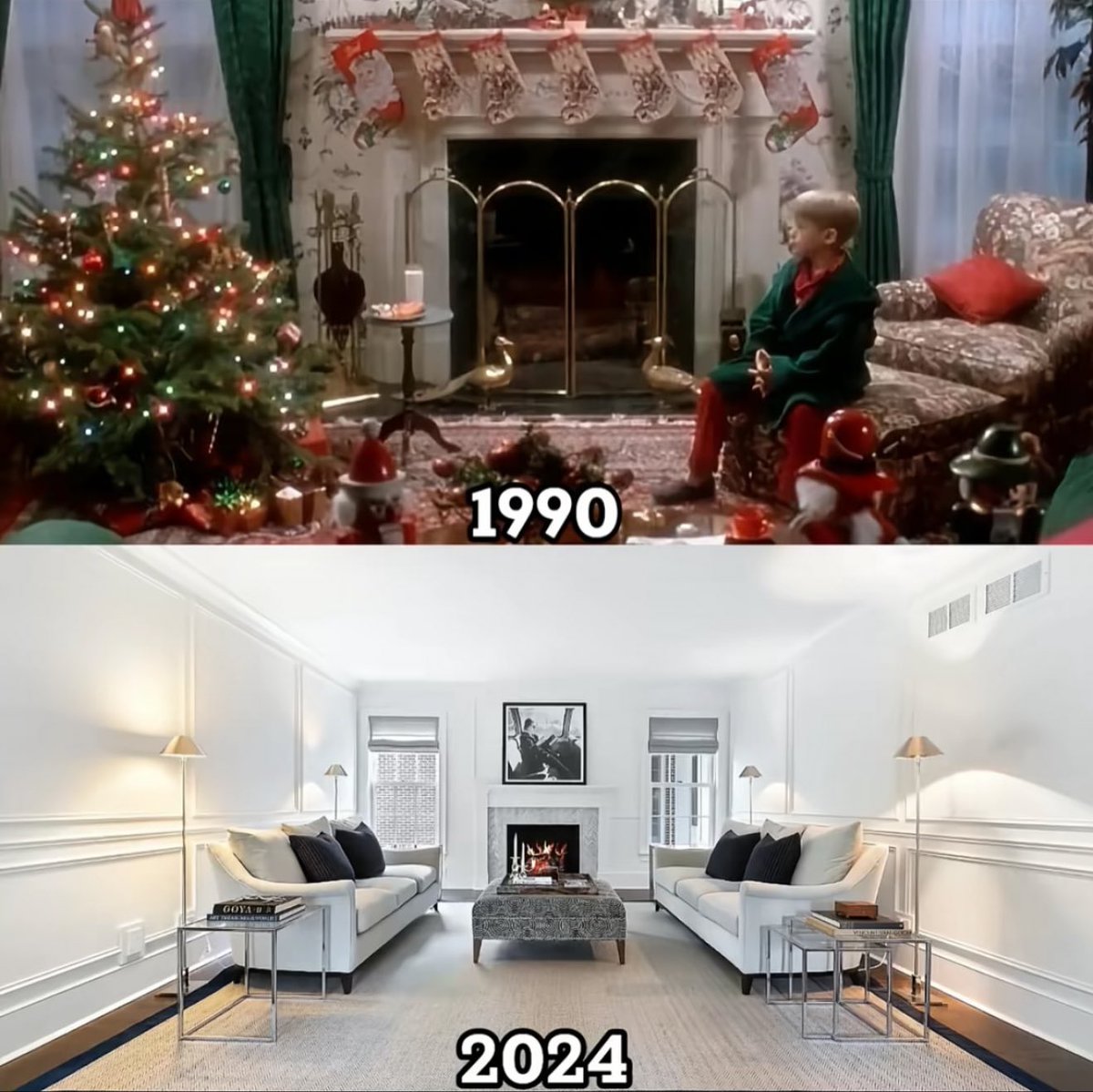
About • Malcolm Ocean
On 3 levels of increasing abstraction, here's what I'm doing with my life: → Complice goals software → self-energizing meta-team → collaborative cultures
Bram Adams
Bram Adams (@bramses) is building Your Commonbase, a self organizing scrapbook.
List of life-changing questions
List of life-changing questions - Peter's notes
#92: Too Big to Think 🤔- Beyond The "Next New Normal"
😷Reflections on life, work and the self-employed journey
Research Note: How can facilitators inspire new AI tools that meaningfully serve collective…
Research Note: How can facilitators inspire new AI tools that meaningfully serve collective dialogues? At Jigsaw, everyone’s a researcher pursuing innovations [in engineering, design, research and …
October

Max Winga✓@maxwinga
2025-10-31My biggest project yet is now LIVE!
@hankgreen talks superintelligence, AI risk, and the many issues with AI today that present huge concerns as AI gets more powerful on SciShow.
Happy Halloween!
https://www.youtube.com/watch?v=90C3XVjUMqE

Malo Bourgon✓@m_bourgon
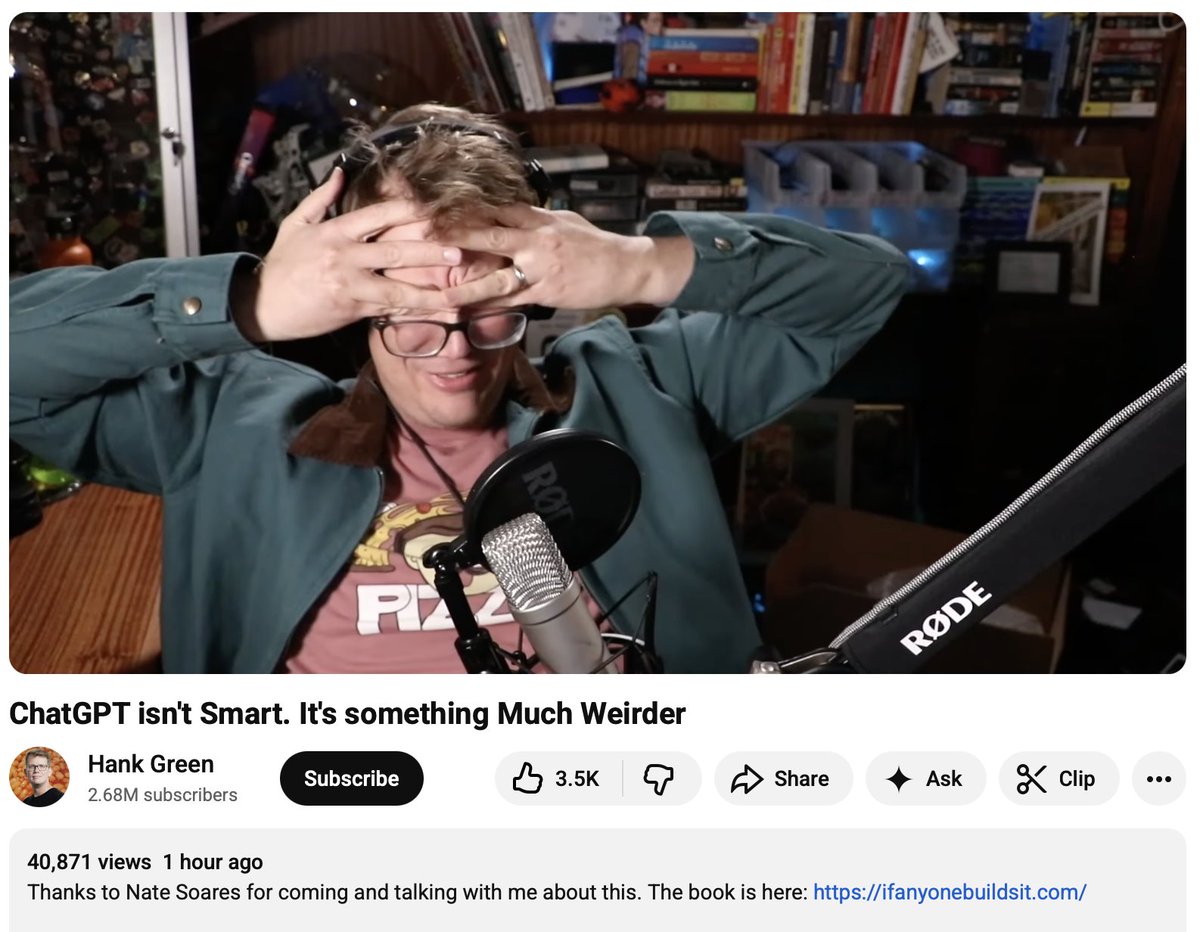
2025-10-30@hankgreen rarely does interviews or 30+ min long videos.
His latest video, an hour+ long interview with @So8res about “If Anyone Builds It, Everyone Dies,” is a banger. My new favorite!

Stack your shower filter
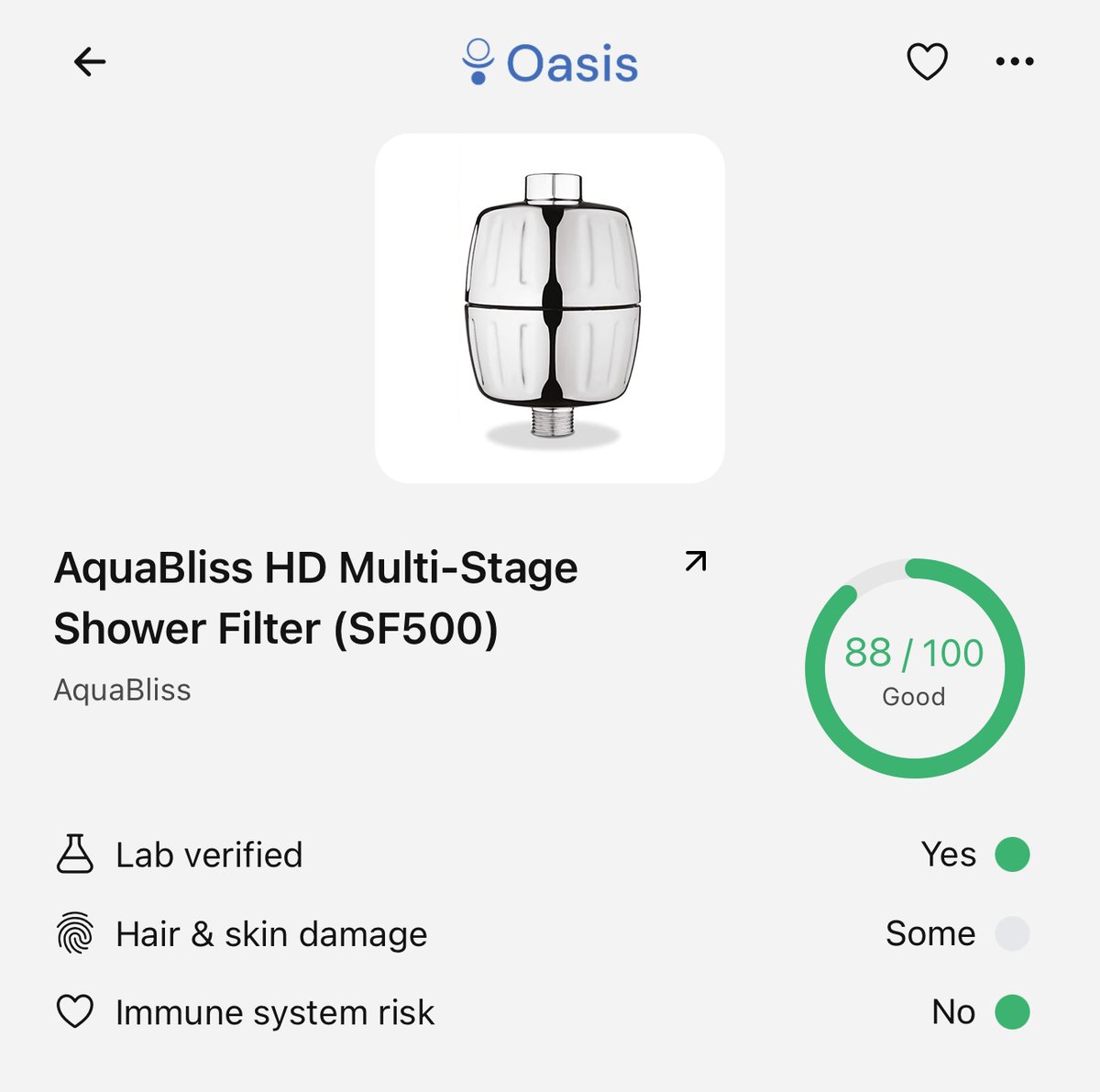
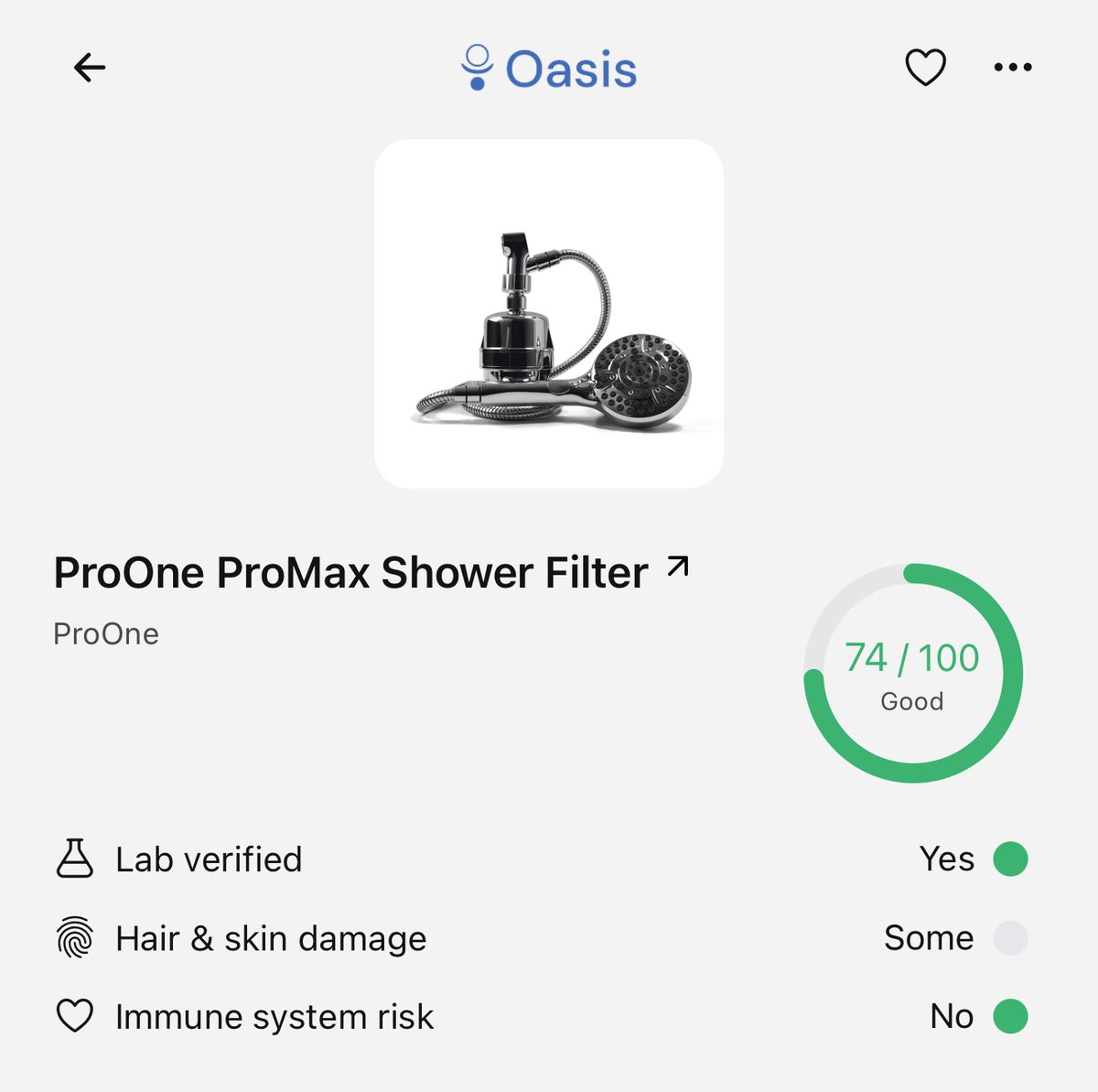
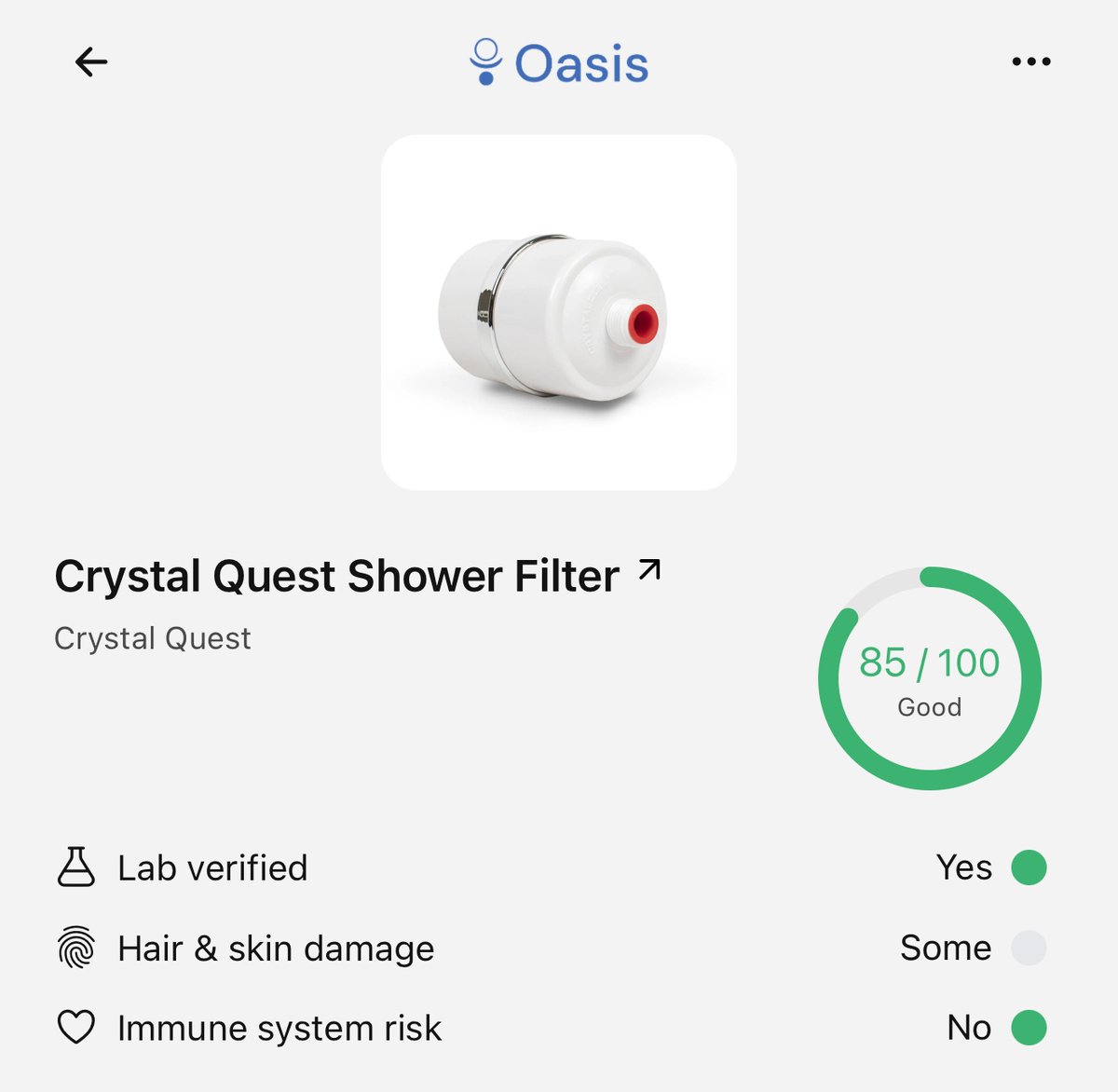
Caveman@cavepaleo2025-01-25I stack these 3 shower filters in order to have decent water quality Crystal Quest - Chlorine - 95% - Heavy Metals - 98% - Fluoride - 91% - Herbicides - 89% ProOne ProMax - Phatalates - 74% - Semi-Volatile Compounds - 75% AquaBliss HD Multi-Stage - PFAS - 98% - Pesticides - 99% - Pharmaceuticals - 95% - VOCs - 97% - Microbiologicals - 99% Data from @oasiswaterapp


Rob Wiblin✓@robertwiblin
2025-10-30I interviewed Holden Karnofsky of Anthropic (and past CEO of Open Philanthropy) for 4.5 hours on almost all his AGI takes:
• The AI 'race' isn't a coordination failure [00:18:01]
• Why he's currently focused on pursuing easy wins and partial victories [02:43:43]
• "It'll be the second advanced species ever" [02:31:44]
• Dozens of 'concrete shovel-ready projects' he's excited about [01:17:58]
• People don't appreciate all the engaging, impactful, high-feedback work available tackling AGI risks [01:19:00]
• Having a more responsible AI company really does matter [02:43:43]
• You shouldn't count on trusting anyone in AI [00:44:30]
• To take over an AGI might just wait it out [00:07:39]
• Farm animal welfare campaigns that targeted companies contain some useful lessons here [02:34:18]
• Human-AI relationships really are troubling [03:53:58]
• It's totally plausible we incompetently fumble our way into a great future [03:04:16)]
• AI R&D is *the* thing to worry about [01:57:31]
• And many others.
Holden has opinions on almost everything and isn't afraid to speak his mind. Enjoy!
(On the 80,000 Hours Podcast anywhere you get podcasts. Links below.)

Definitely Defender✓@DefenderOfBasic
2025-10-29this tweet has almost a million views and a thousand replies and I think the most common answer is "find joy" @workflowsauce
Definitely Defender@DefenderOfBasic2025-10-18does anyone out there believe that simple minds can do things that more complex minds cannot do? If so, can you help me figure out, what are examples of those things?

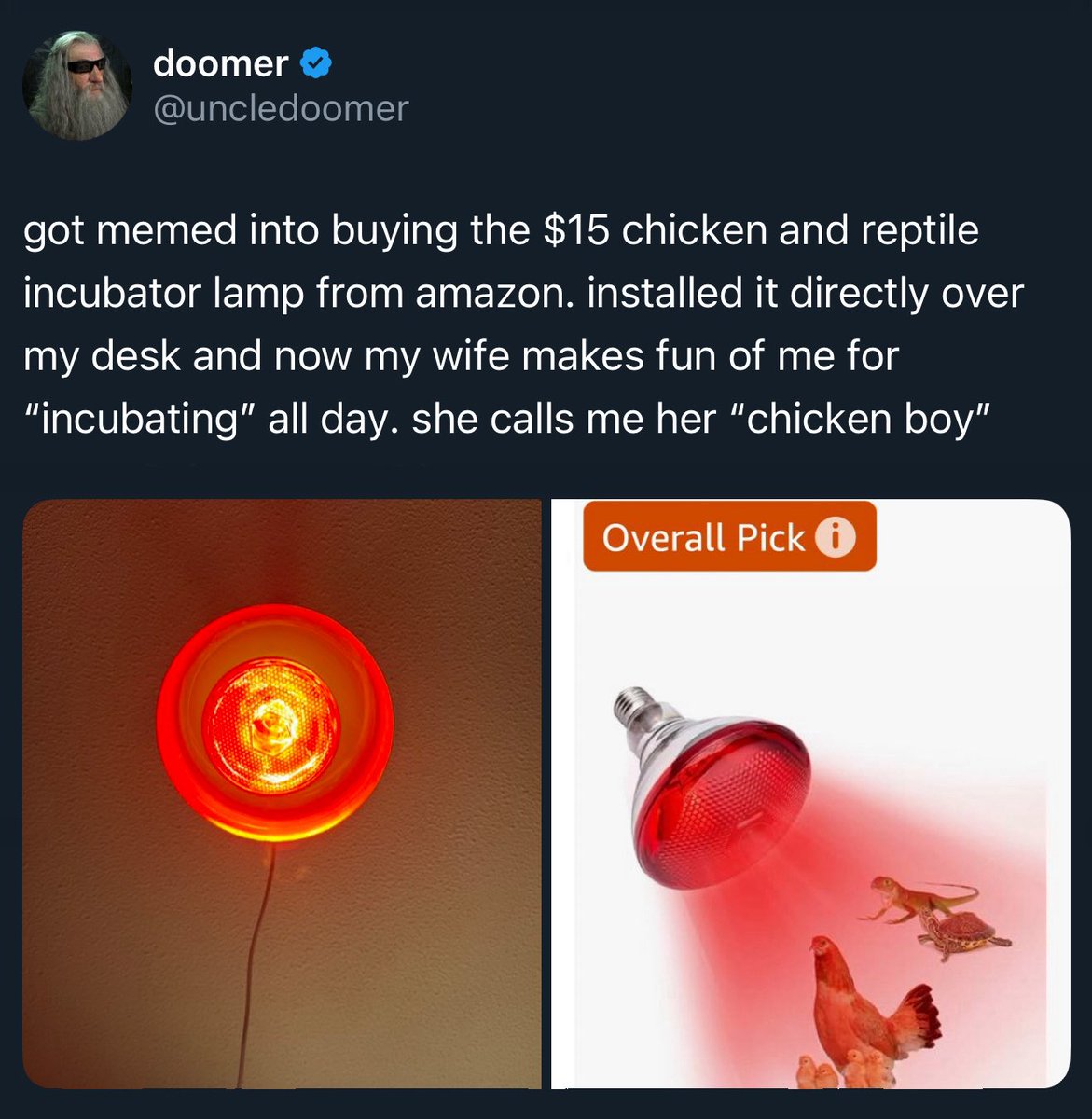
doomer✓@uncledoomer
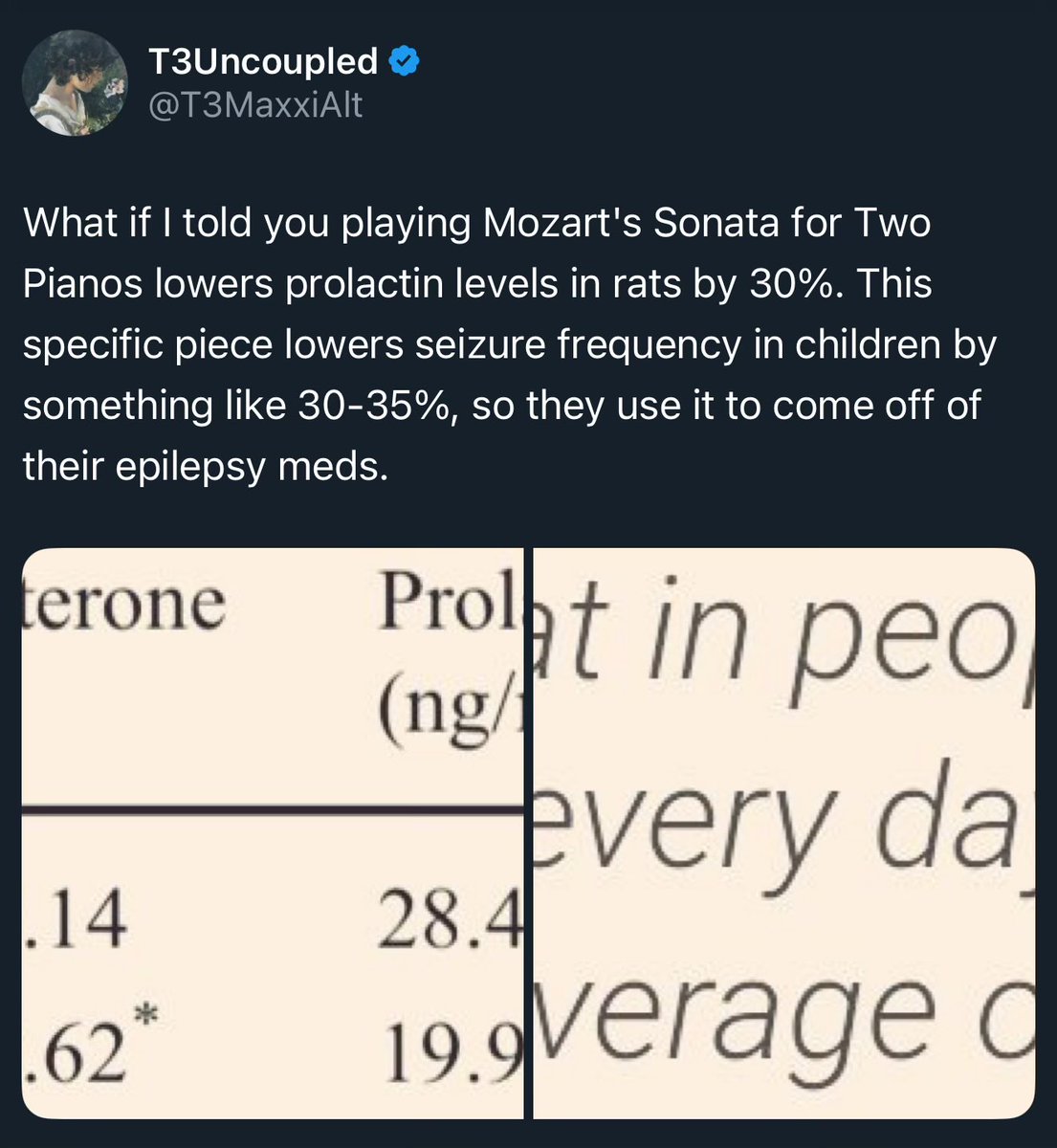
2025-10-29i know this sounds crazy but for the past year ive spent 2-3 mornings per week sitting under the red incubator bulb from tractor supply and listening to the mozart piano sonata that heals you, and i cant quantify it but i swear to you all that my life is going incredible
doomer@uncledoomer2025-10-29
Home
The home page for Jonny Spicer; founder, software engineer, mental health advocate, blogger, climber, runner

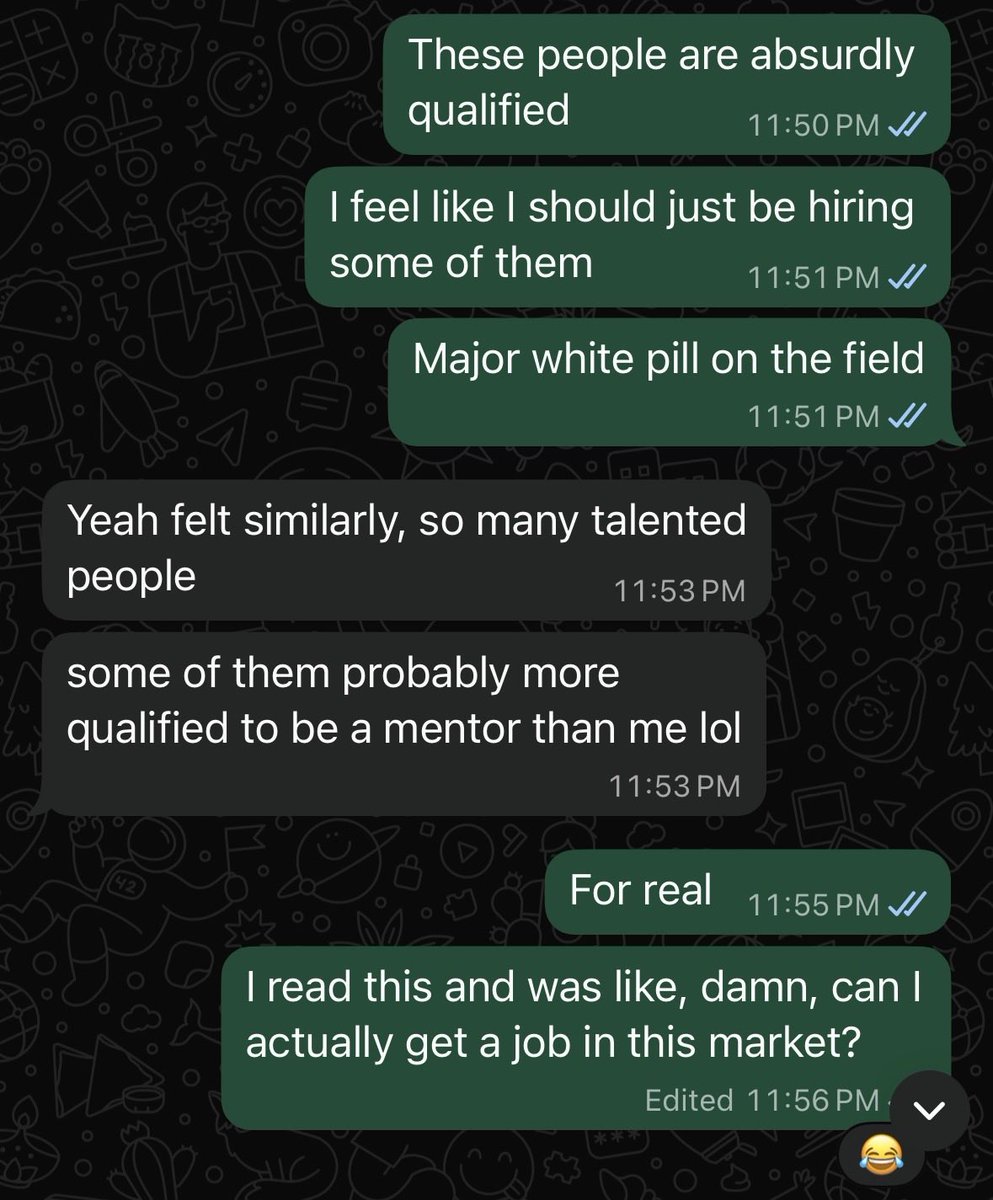
Yo Shavit✓@yonashav
2025-10-27@sebkrier and I are pretty floored by the quality of MATS applicants

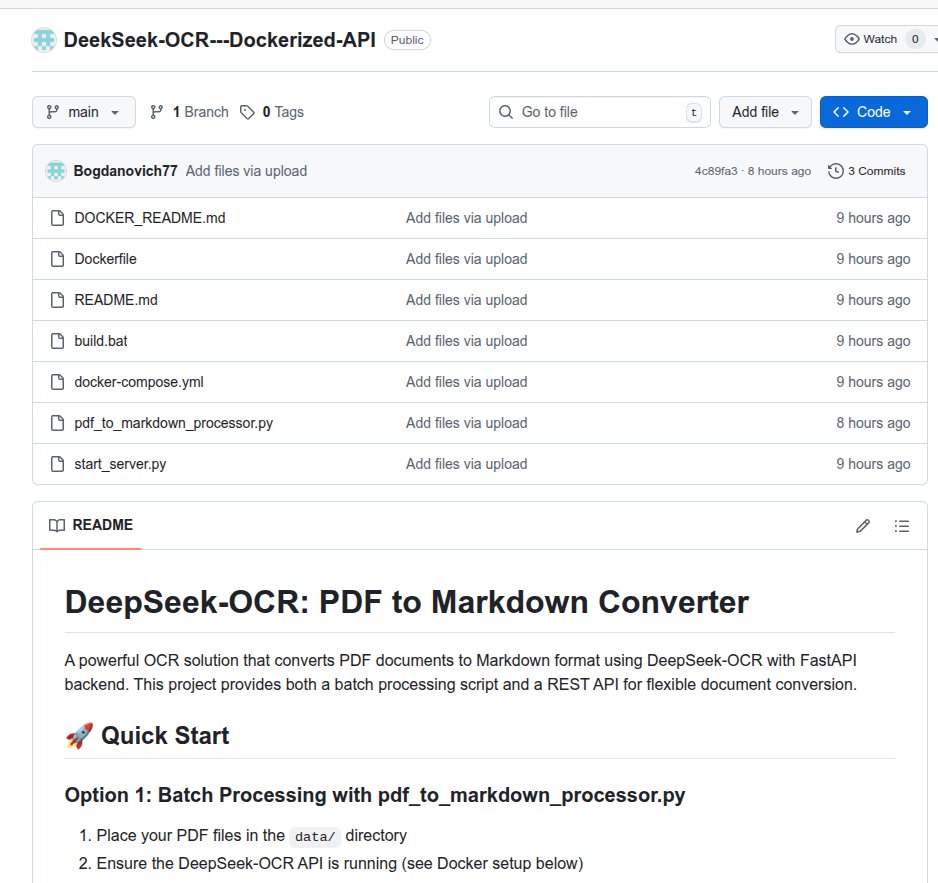
Rohan Paul✓@rohanpaul_ai
2025-10-22Converts PDF documents to Markdown format using DeepSeek-OCR with FastAPI backend.
This guy bave it 10000 pdfs to convert to markdown.
averaging less than 1 second per page.
Hardware - 1 x A6000 ADA on a Ryzen 1700 /w 32gb ram
Dockerized model with fastapi in a wsl
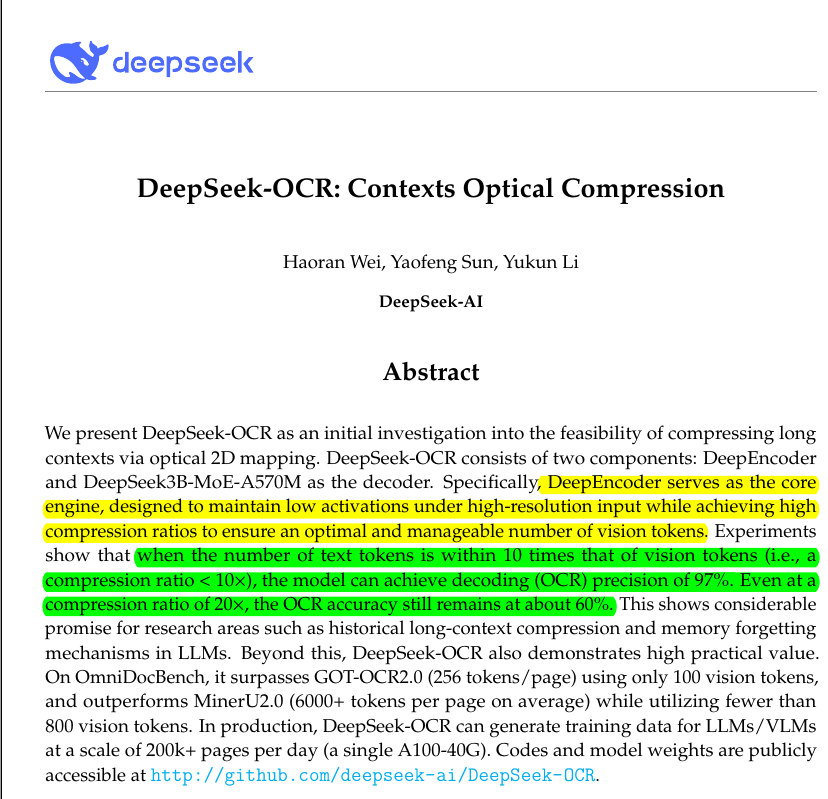
Rohan Paul@rohanpaul_ai2025-10-21👨🔧 Inside the smart design of DeepSeek OCR DeepSeek-OCR looks like just another OCR model at first glance, something that reads text from images. But it’s not just that. What they really built is a new way for AI models to store and handle information. Normally, when AI reads text, it uses text tokens (the units that LLMs process). Each word or part of a word becomes a token. When text gets long, the number of tokens explodes, and this makes everything slower and more expensive because the model’s computation cost grows roughly with the square of the number of tokens. That’s why even the most advanced models struggle with very long documents. 💡DeepSeek’s core idea was simple but revolutionary: Instead of feeding an LLM thousands of text tokens, it turns long text into an image, encodes that image into a small set of vision tokens, then lets a decoder reconstruct the text. The team asked a simple question, how many vision tokens are minimally needed to decode N text tokens, and they measured it end to end. The paper reports about 97% OCR precision when compressing text by 9–10x, and about 60% precision even at 20x. This shows that dense visual representations can carry the same information far more efficiently than plain text tokens. The engineering that makes this practical is a new encoder called DeepEncoder. It processes high resolution pages without blowing up memory by doing local window attention first, then a 16x convolutional downsampler, then global attention. That serial design keeps activations small while aggressively cutting token count. So why this is a big deal? Context is the currency of LLMs, and it is expensive. If visual tokens can represent past dialogue, documents, or code at 10x smaller size with high fidelity, you can keep far more context active, cut costs, and speed up inference. The paper also sketches a practical “forgetting” mechanism, you can progressively downscale older context images so recent information stays sharp while older context becomes cheaper over time, which matches how human memory fades. This makes long running assistants, RAG replacements, and whole codebase in context workflows much more realistic.

tylercowen✓@tylercowen
2025-10-21On Marginal Revolution podcast, Alex T. and I debate how relevant is the Baumol cost-disease: https://www.mercatus.org/marginal-revolution-podcast/baum…
All Communities Are Terrible Communities
This entry is part of a five-part series on “terrible communities”: 1.
The Inverse Course: Teaching by Unknowing
This talk was presented at the Harvard Graduate School of Education on May 3rd, 2025."What if the teacher doesn’t know more than the students, and that’s the...

Chris Lakin✓@chrislakin
2025-10-19Infinite play // Finite play
1—In flow // Anxious
2—Relaxing // Grasping
3—Surrendering // "Trying"
4—Exploring // Exploiting
5—Others are comrades // Others are tools
6—Unconditional love // Transactional
7—Integrity over Gain // Gain over Integrity (defection)
8—Detached from outcomes // Attached to outcomes
9—Not self-coercive // Self-coercive
10—Can be satisfied with what is (yet still strive for more) // Unsatisfiable grasping for more
Everyone plays the infinite game, but some grasp at finite games too.
Insecurity incentivizes grasping.
Chris Lakin@chrislakin2025-10-19You can win at chess, but you can't win at marriage. FINITE GAMES INFINITE GAMES ━━━━━━━━ | ━━━━━━━━━ - Chess • Life - Pickup artistry • Relationships - Winning arguments • Seeking truth

Emmett Shear✓@eshear
2025-10-19Building a single filter will result in disaster. Each person needs a custom filter that learns their needs and their goals and partners with them. Because unlike clean air and water, clean information is different relative to different people.

Nuño Sempere✓@NunoSempere
2025-10-18Fundraising for nonprofits in the year 2025 looks like it's a multi-month process. Very sloow OODA loops, might not be able to keep up as AI accelerates the pace of history.
Alex Albert✓@alexalbert__
2025-10-17Very interesting convo with @ErikSchluntz (multi-agent research lead) about all things agents:
- Why Claude is good at agent tasks
- Evolution from workflows to multi-agents
- Tips for creating Skills
- How code unlocks all other domains
- How to use subagents
- The future of

Ben Goldhaber✓@BenGoldhaber
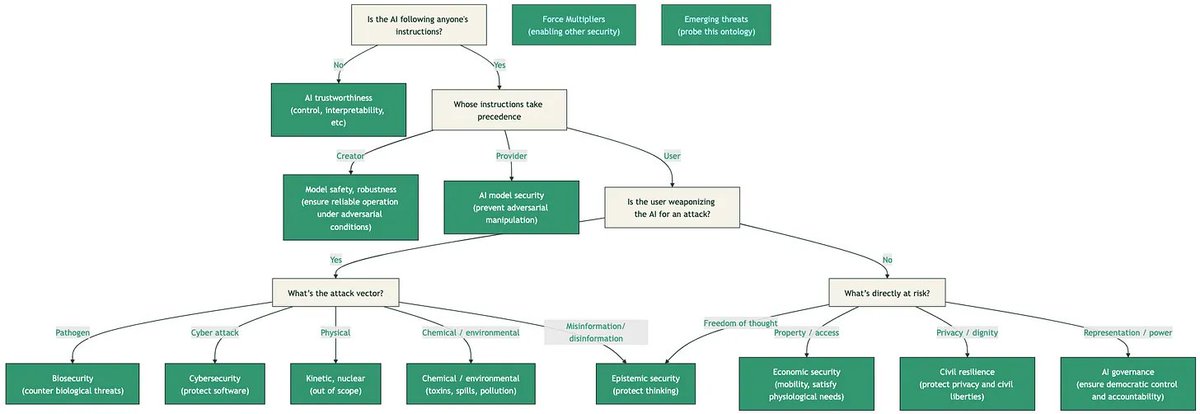
2025-10-17great collection of high-leverage, underserved opportunities in AI to improve civilizational resilience from @emiyazono @SafeWithAtlas
Malcolm Ocean 🏴☠️✓@Malcolm_Ocean
2025-10-16LLM prompt I use many times a week:
write a 1-paragraph summary of the core thesis of this writing, not as "this essay presents" / no reference to the author or the piece being summarized or "the thesis". just walking through the idea/logic in such a way that a very smart person reading it would immediately see the implications (which can also be spelled out, to be clear! ...but don't refer to "the implications" either)

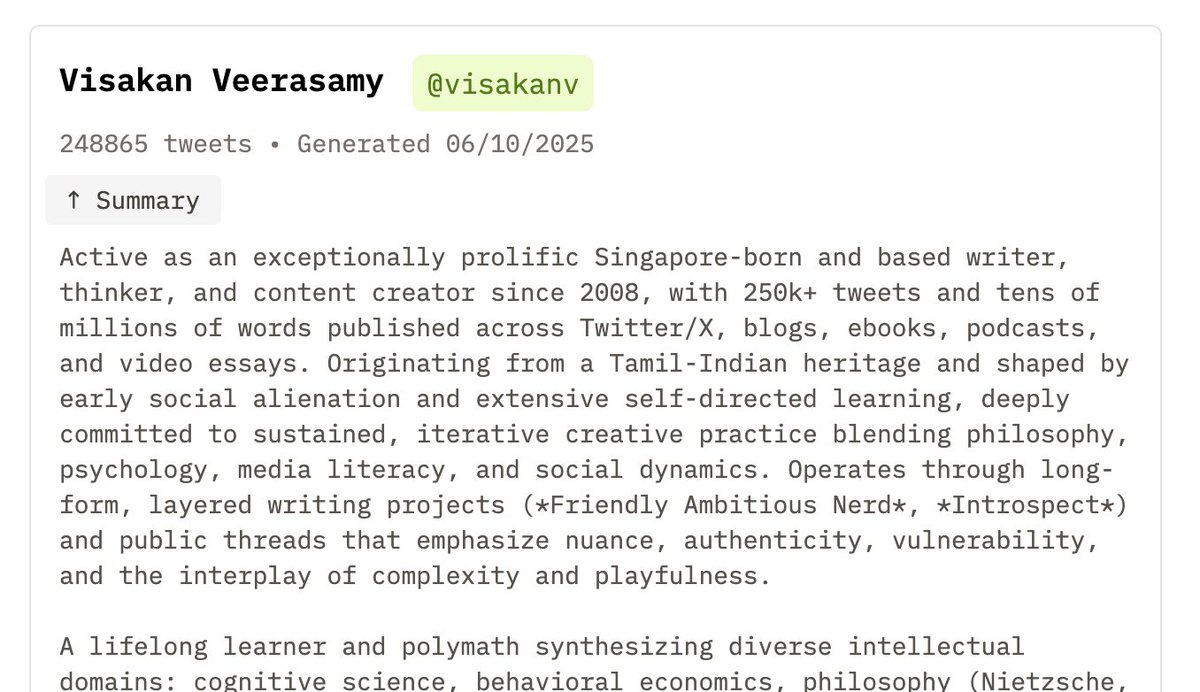
Sofi 🌼@sofvanh
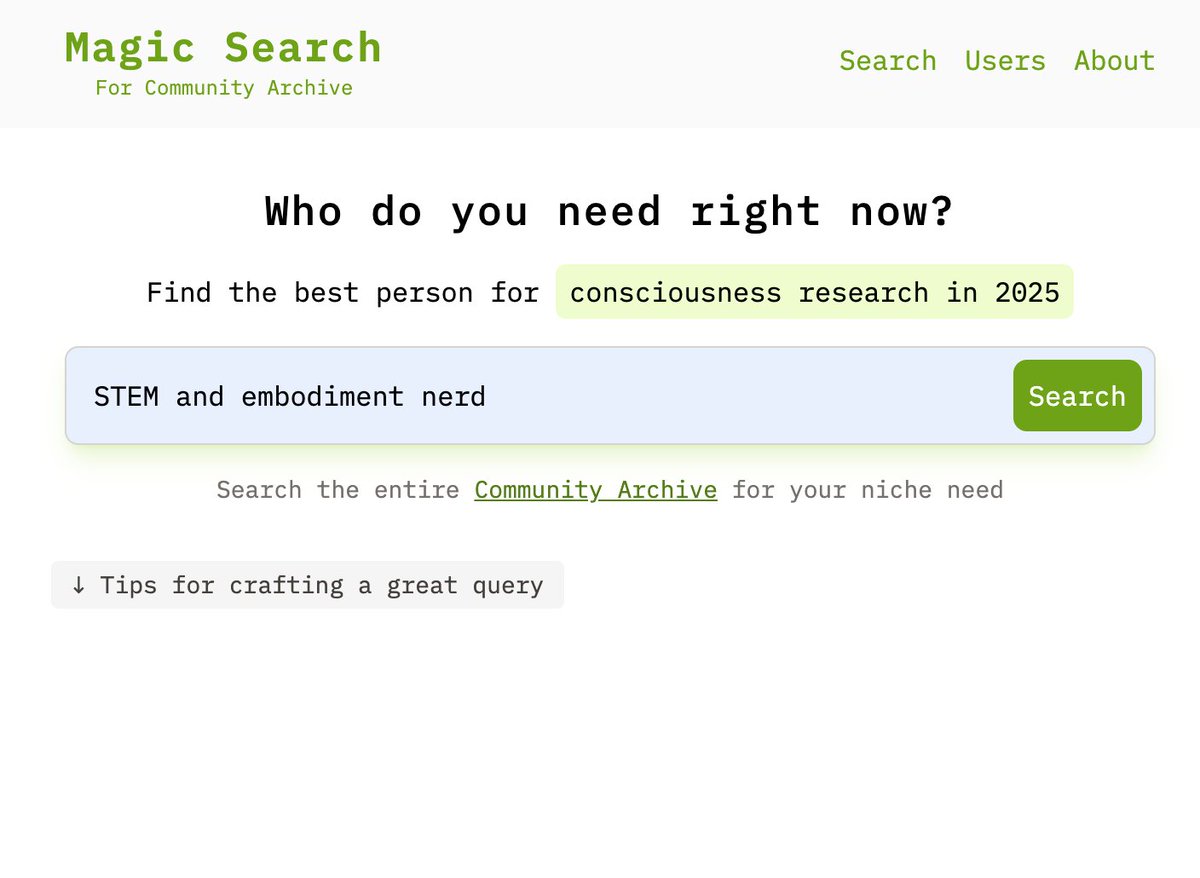
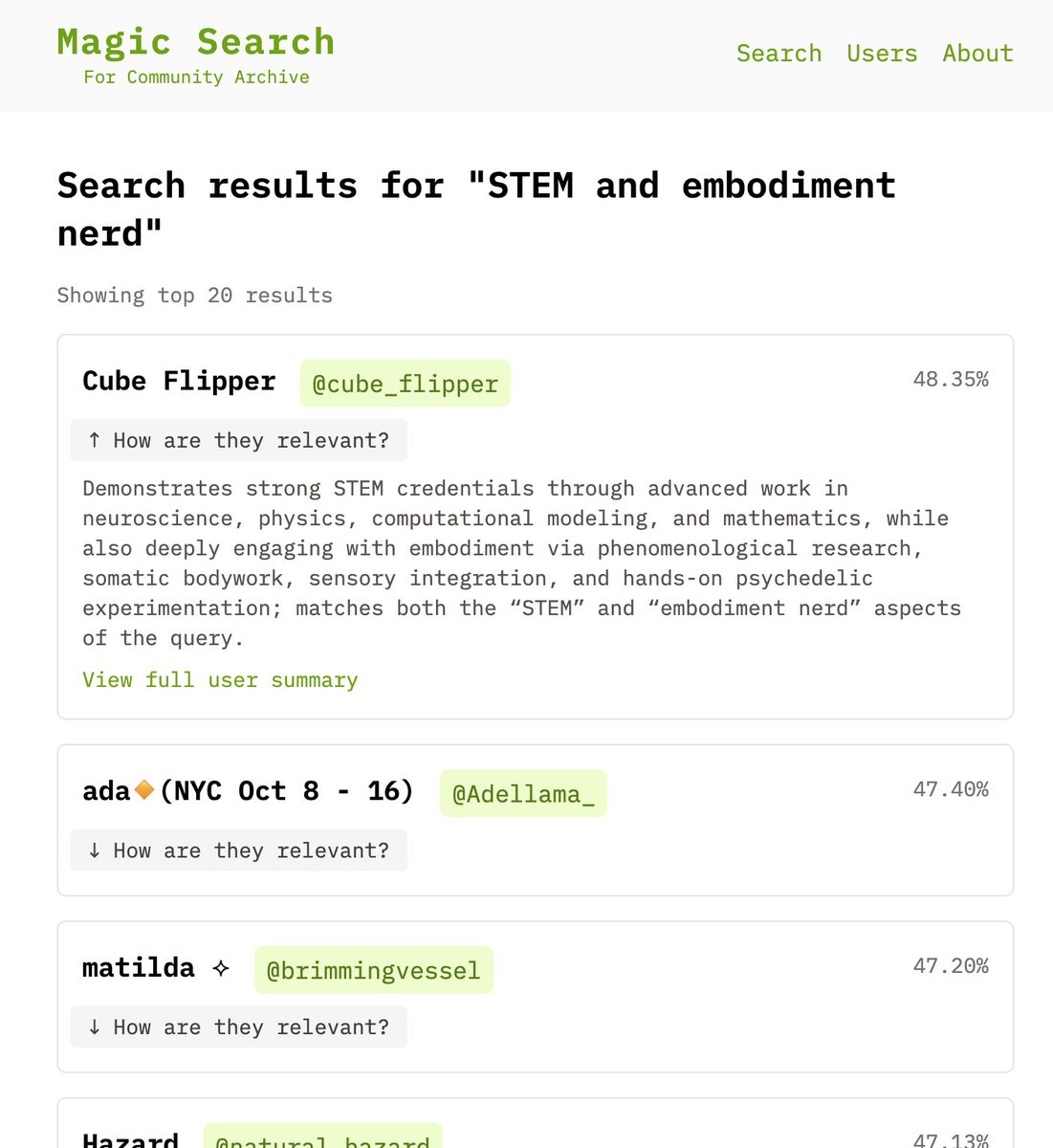
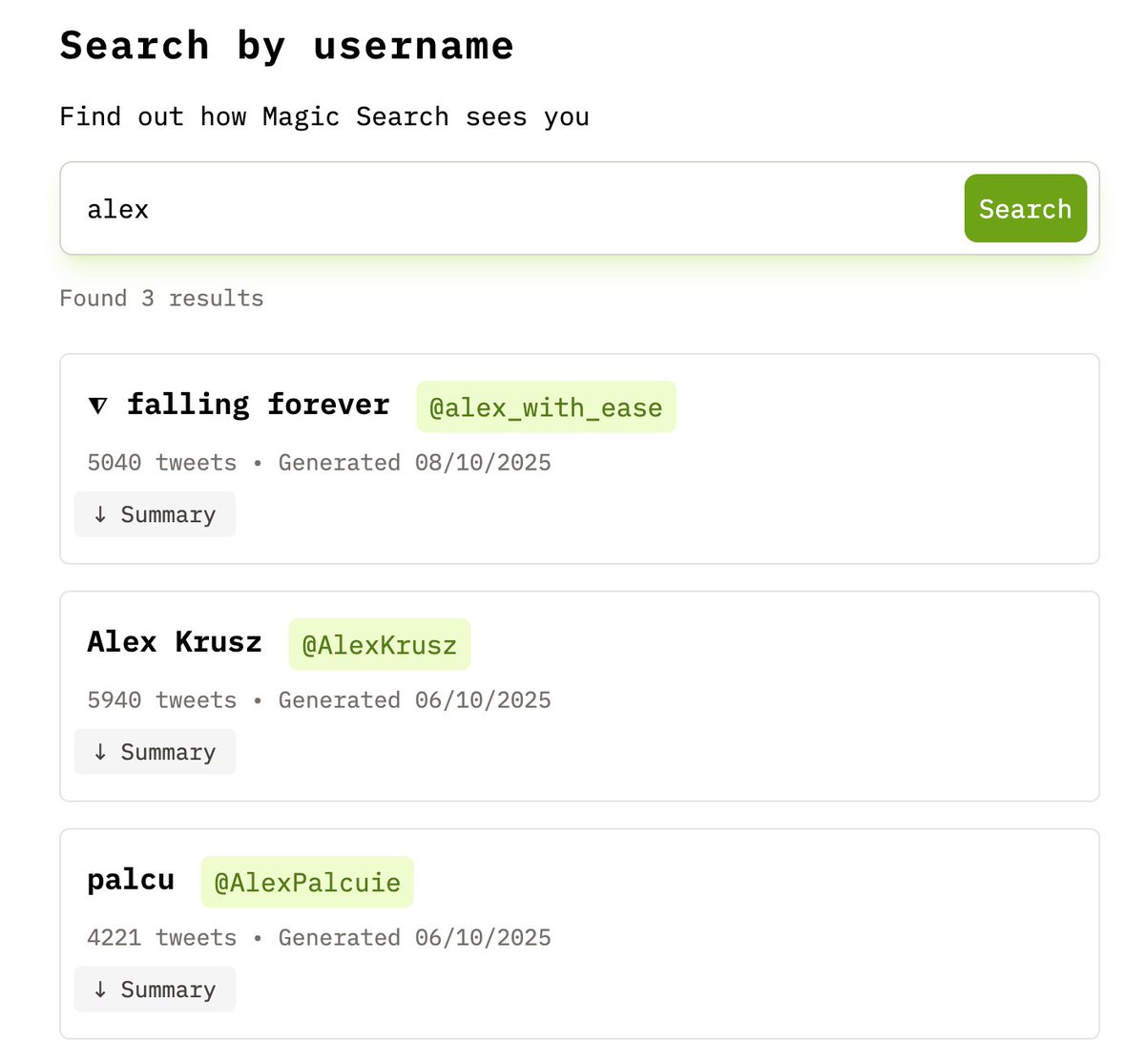
2025-10-15Magic Search for Community Archive is ready for your queries! So you can find your next cofounder/friend/fave account ✨
Curious if this is useful already as is, if I should work on it more, or if some other approach would have been better.
Link and 🧵 below:

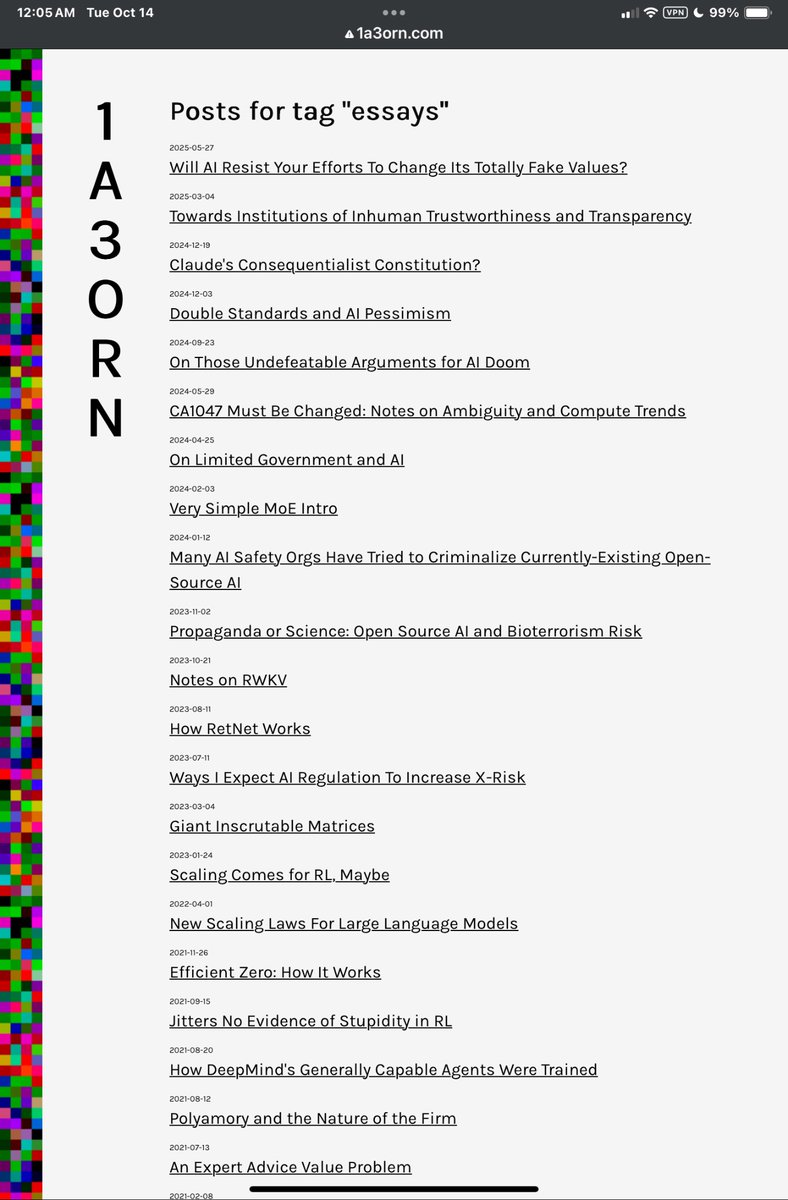
Dwarkesh Patel✓@dwarkesh_sp
2025-10-14Really enjoying @1a3orn ‘s blog.
Great technical explainer content, and thoughtful skepticism about AI risk.
You know how @slatestarcodex said he finds about one great new blog a year? I fear I’ve just found mine.

Simon Willison✓@simonw
2025-10-10Jesse Vincent has a wildly creative set of customizations for Claude Code, using the new plugin system they just released. There are SO many fascinating ideas in this!
Strongly recommend reading it and then spending time exploring the accompanying repo https://blog.fsck.com/2025/10/09/superpowers/ (Superpowers: How I'm using coding agents in October 2025 — I'm Jesse. I make stuff. Software, hardware. Very occasionally, trouble.)

Andy Masley✓@AndyMasley
2025-10-09Every day I find a new way of trying to get across just how ridiculously fake the problem of AI water use is
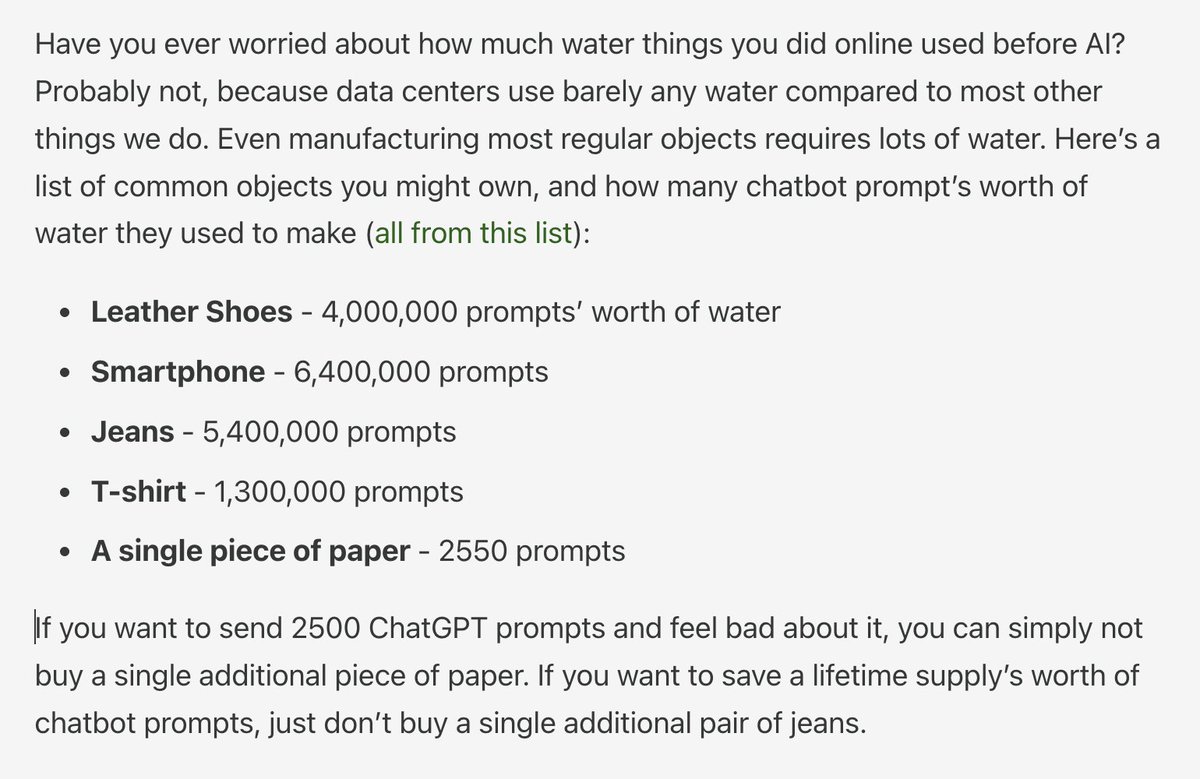
.TEIJI@justTEIJI2025-10-06Yeah but the form of AI that uses the most water and electricity is by far, ChatGPT…. You can start SOMEWHERE… the whole “i can’t do it cus it’s a lot i gotta cut off” is just an excuse to not care forreal

Connor Leahy✓@NPCollapse
2025-10-06I recently listened to the first two episodes of this new podcast, The Last Invention, and it's hands down one of the best produced podcasts on AI I have ever listened to.
Check it out! (link in reply)


kasra✓@kasratweets
2025-10-04shaking is nature’s way of releasing built up stress, even polar bears do it
Guy@nosilverv2025-10-04Update: both this person (and I!!) now spontaneously shake when we have a relaxed moment after too much stress lmao
Jim Rutt on the Win-Win podcast
Jim Rutt argues that our current socioeconomic system ("Game A") is self-terminating and proposes "Game B" -- summary of the Win-Win podcast episode.
September

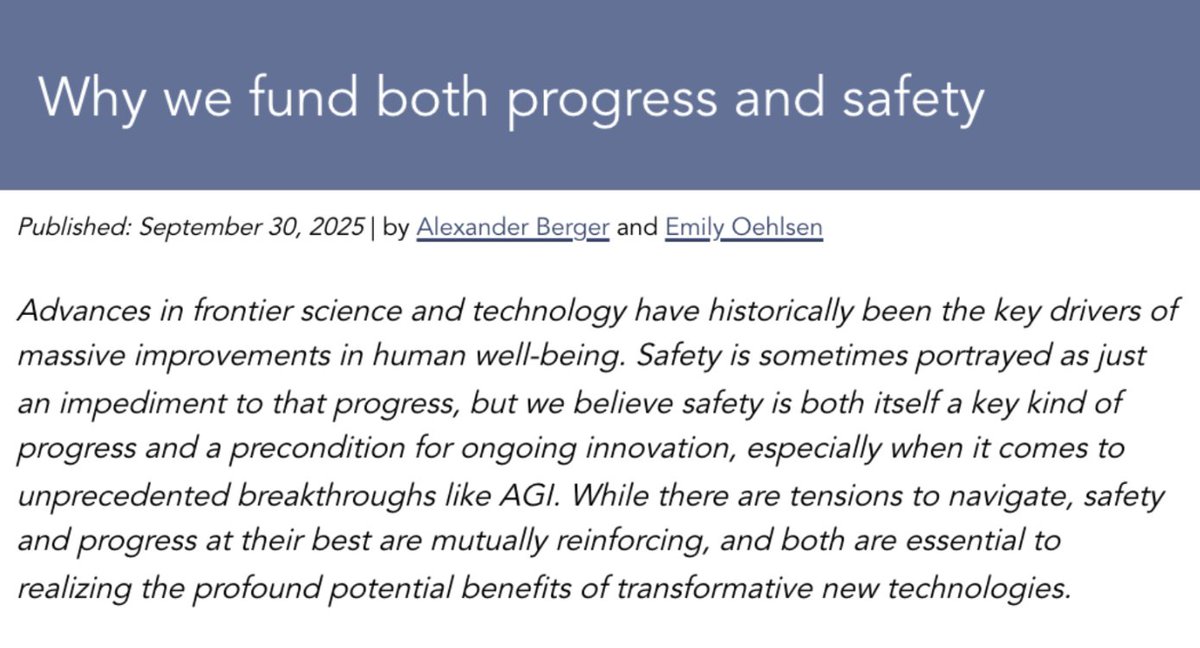
Alexander Berger✓@albrgr
2025-09-30Some people think @open_phil are luddites because we work on AGI safety, and others think we’re techno-utopians because we work on abundance and scientific progress. We’re neither.
Here's why we think safety and accelerating progress go hand in hand, in spite of the tensions:🧵

Julian Schrittwieser✓@Mononofu
2025-09-27As a researcher at a frontier lab I’m often surprised by how unaware of current AI progress public discussions are.
I wrote a post to summarize studies of recent progress, and what we should expect in the next 1-2 years:
https://www.julian.ac/blog/2025/09/27/failing-to-understa…

Austen Allred✓@Austen
2025-09-25Life hack: There are actually two websites that allow you to legally opt out of virtually all physical junk mail.
They look awful but that’s because they hope you won’t use them.
They work. (Links in reply.)


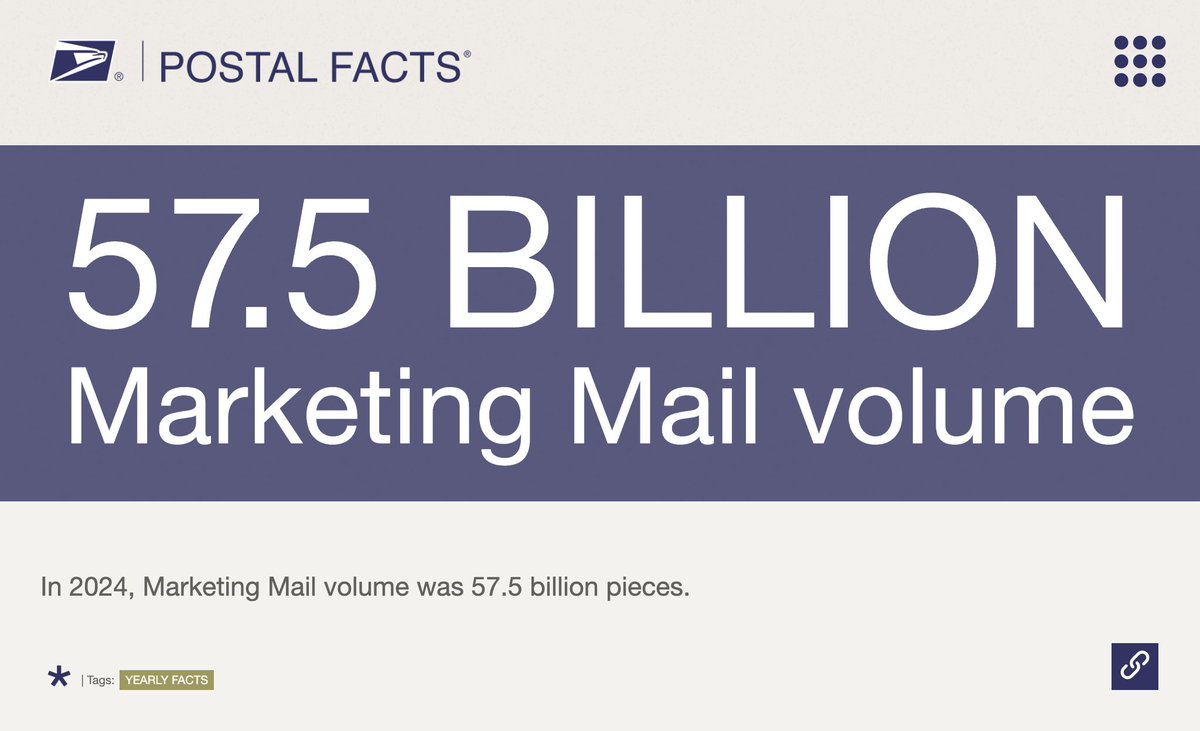
Eli Dourado@elidourado2025-09-25Not the most important issue but I am baffled that we allow USPS to spam American citizens billions of times per year. https://facts.usps.com/marketing-mail-volume/

Deena Mousa✓@deenamousa
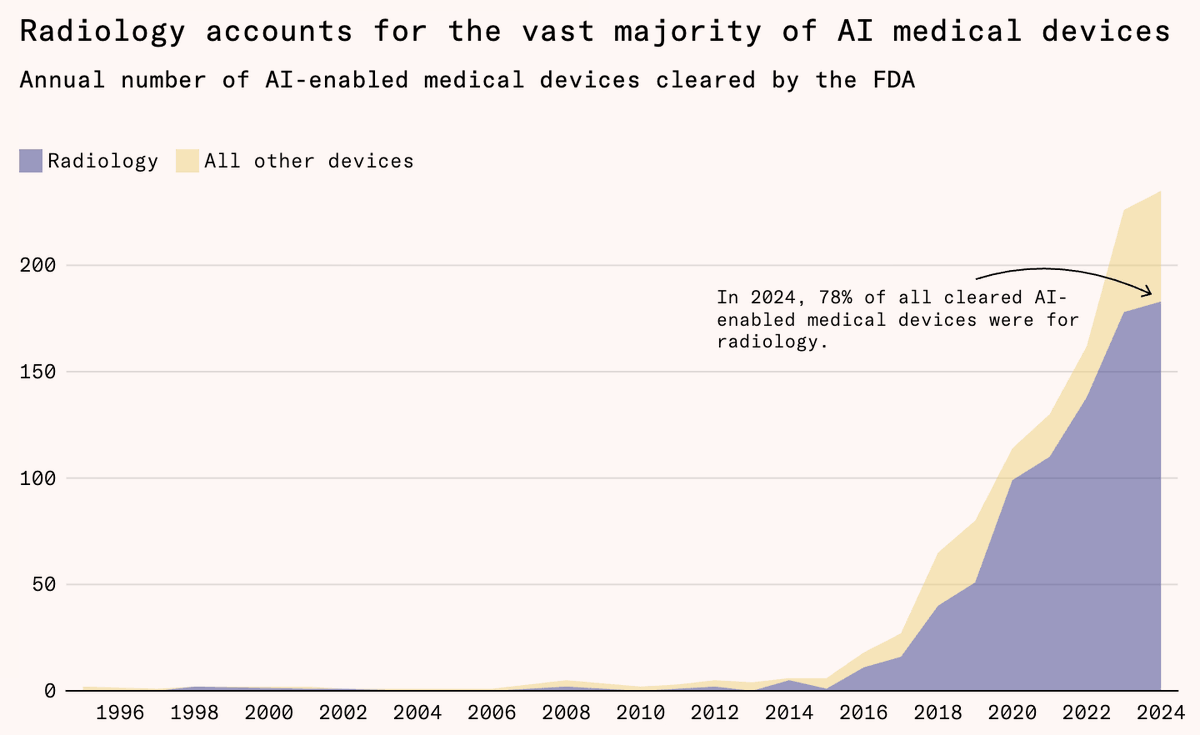
2025-09-25In 2016 Geoffrey Hinton said “we should stop training radiologists now" since AI would soon be better at their jobs.
He was right: models have outperformed radiologists on benchmarks for ~a decade.
Yet radiology jobs are at record highs, with an average salary of $520k.
Why?
Malo Bourgon✓@m_bourgon
2025-09-22Here you go, free of charge: https://samharris.org/episode/SE834D4F70A


Raphael Salaja✓@raphaelsalaja
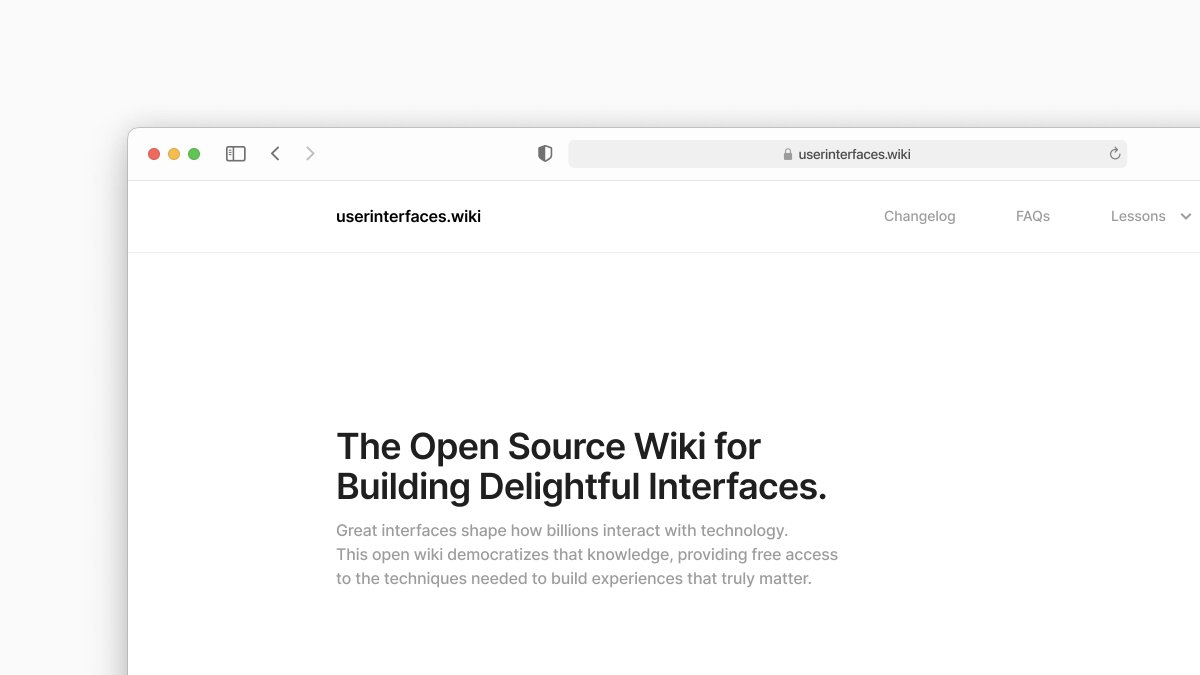
2025-09-11i've been sitting on tons of ui insights, knowledge and techniques
so i'm building userinterfaces dot wiki as a way to compile them in one centralized place

Perry E. Metzger✓@perrymetzger
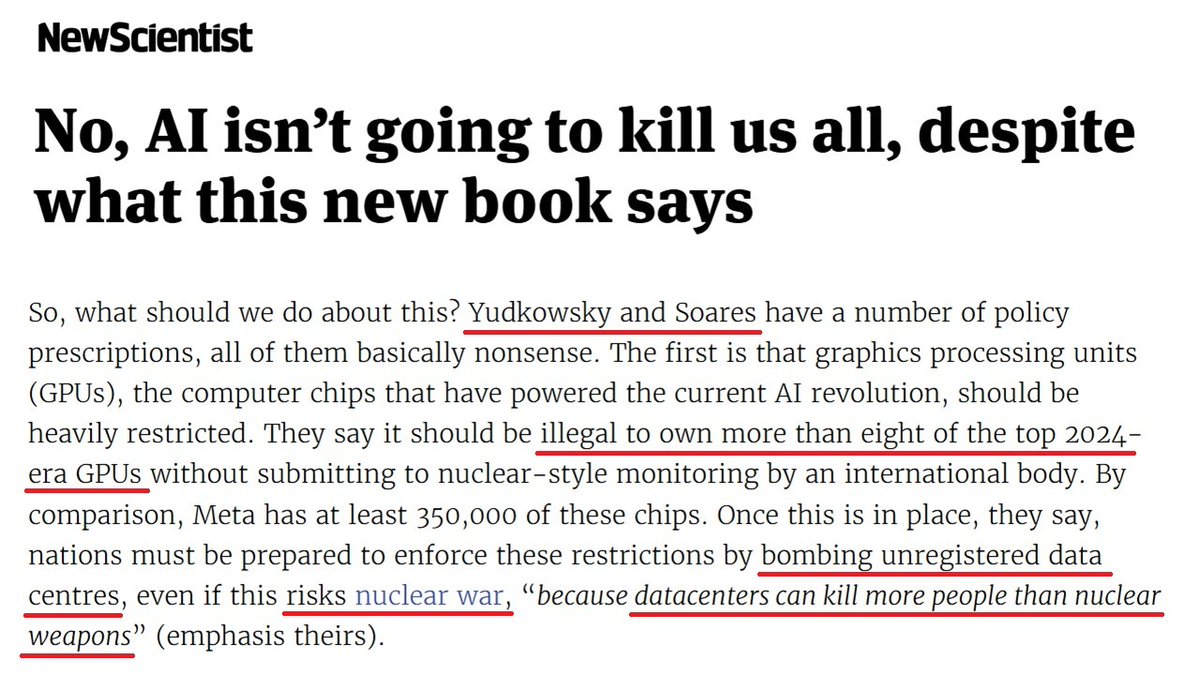
2025-09-10It's starting to look like the worst thing Eliezer Yudkowsky ever did for his cause was actually write down all his arguments in a form compact enough that a normal person could read them in a few days.
Before, the arguments were scattered all over tens of thousands of pages of really wordy blog posts, and only extremely dedicated people could bother to go through them. In truth, the whole thing could be summarized in a few pages, but now that he's at least condensed it down to 256 pages which normies might consider reading.
If they read it, though, they learn that the argument isn't at all persuasive. You get people like the New York Times reviewer saying "The book reads like a Scientology manual, the text interspersed with weird, unhelpful parables and extra notes available via QR codes."
Nirit Weiss-Blatt, PhD@DrTechlash2025-09-09
Stefan Schubert✓@StefanFSchubert
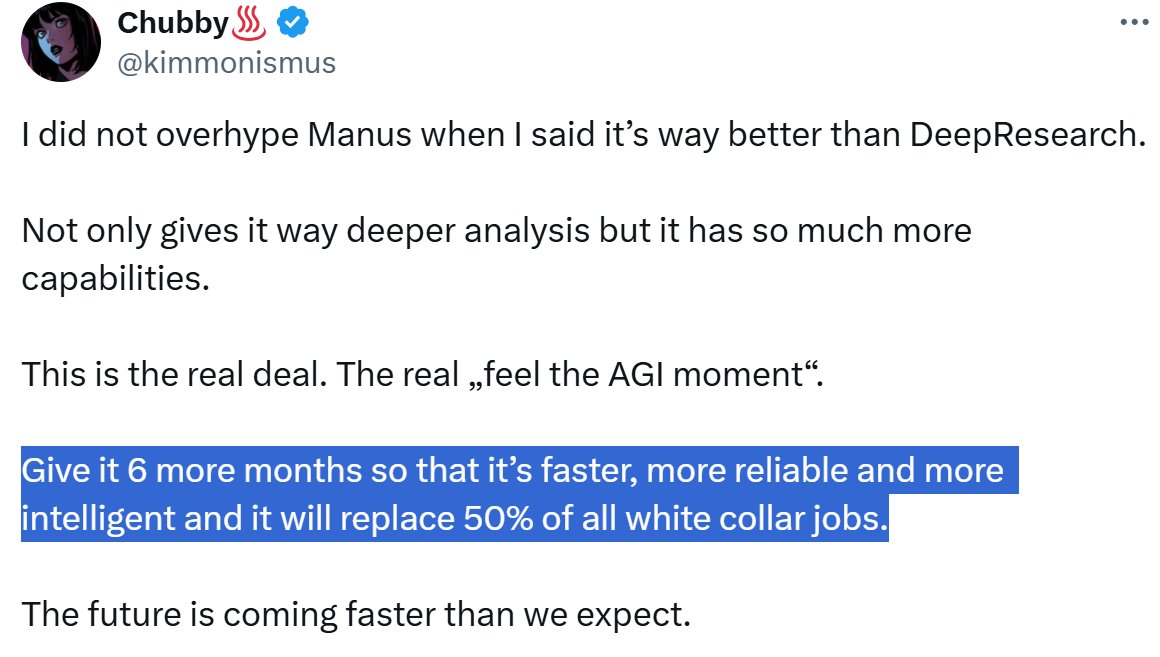
2025-09-10We should be better at keeping track of falsified hype.
This was 10 March, six months ago.
There are many more predictions of extremely fast progress coming up for resolution.
H/t @peterwildeford
Hyde 💨✓@BreatheLesss
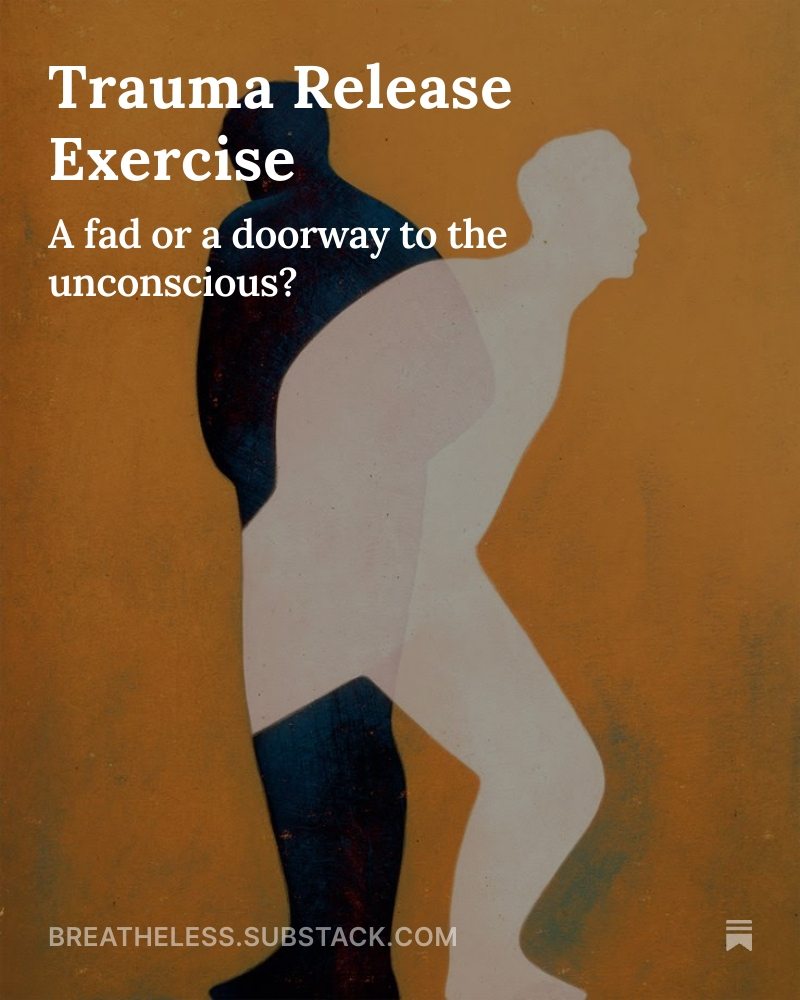
2025-09-05New essay on TRE.
Guidelines for effective and safe practice.
I go over the basic mechanism behind trauma release exercise, the different traditions that had observed similar phenomena, and the overall philosophy one should have to engage with these techniques.
🔗👇
Definitely Defender✓@DefenderOfBasic
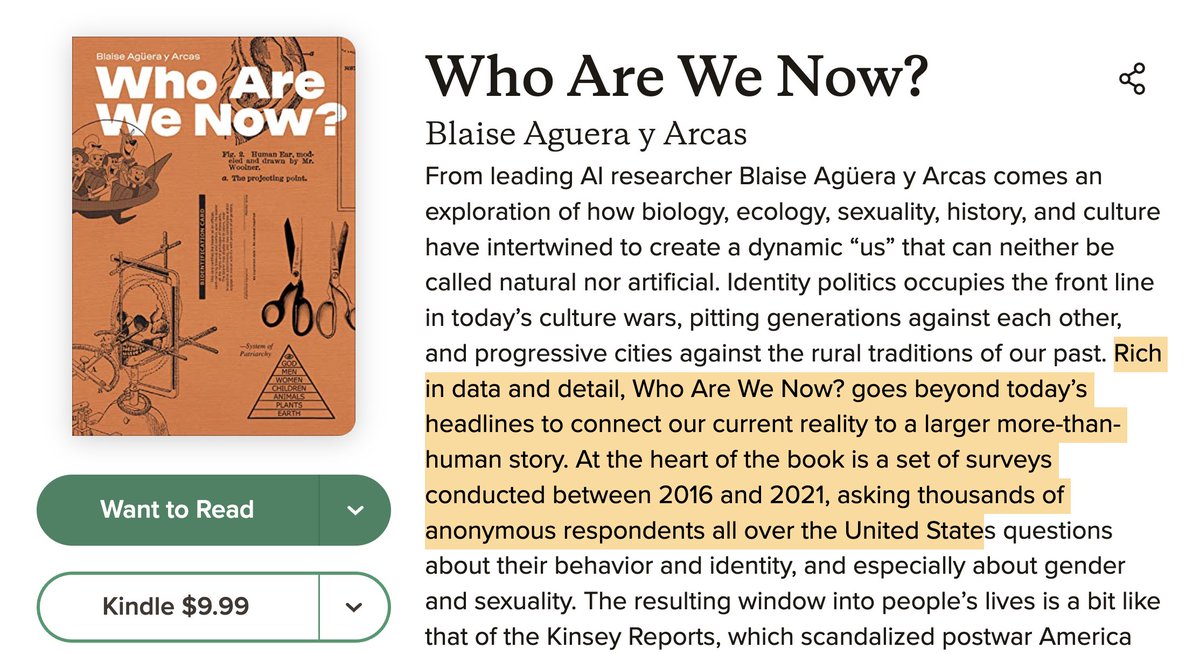
2025-09-04this is by far the best memetics book I've ever read and it's kind of silly that no one in the field knows about it. More beautiful than any memetics fiction, more rigorous than any existing memetics non fiction. And it's also the only one with balls to put it online 100% free

❤️🔥 xiq✓@exgenesis
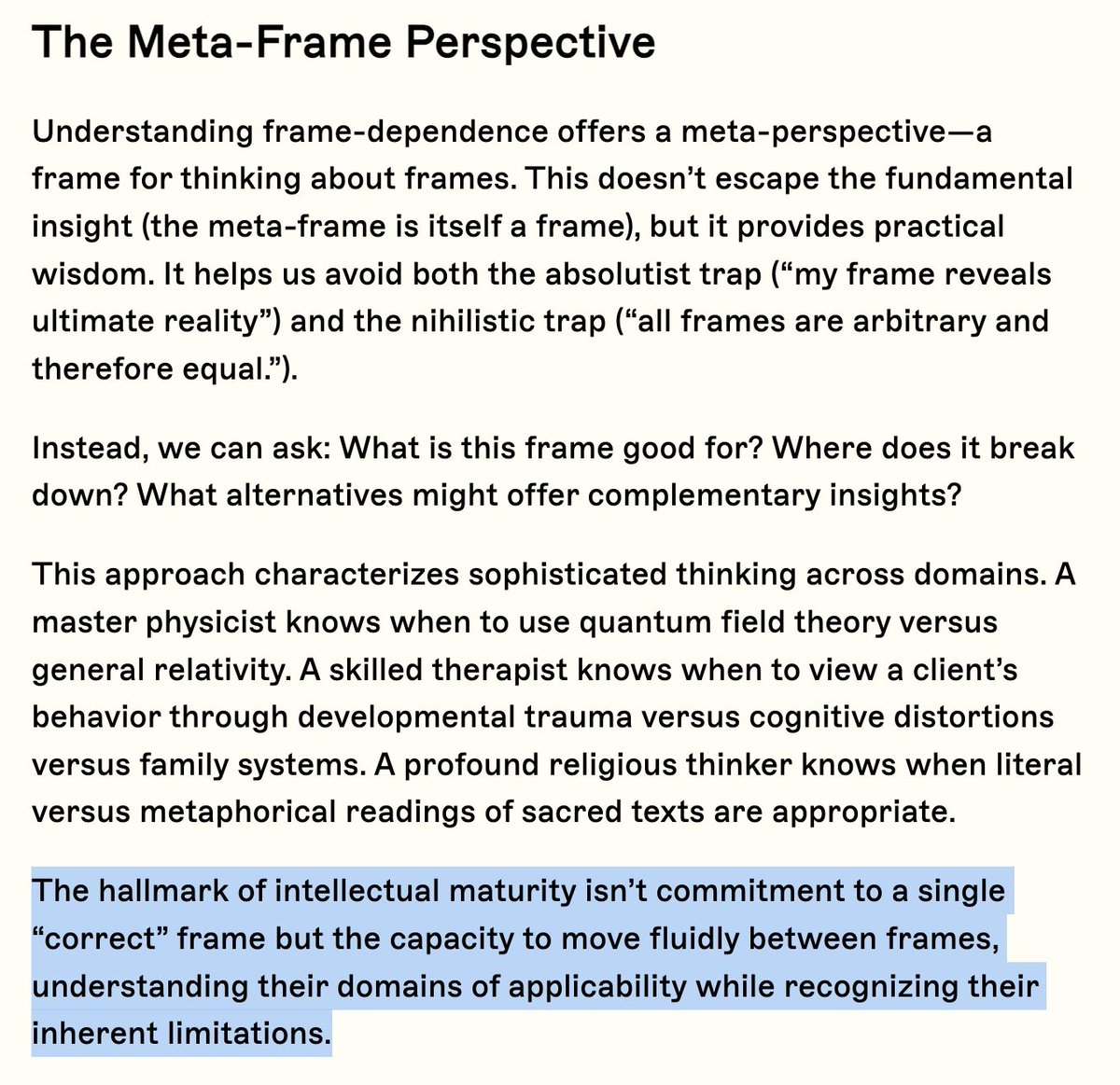
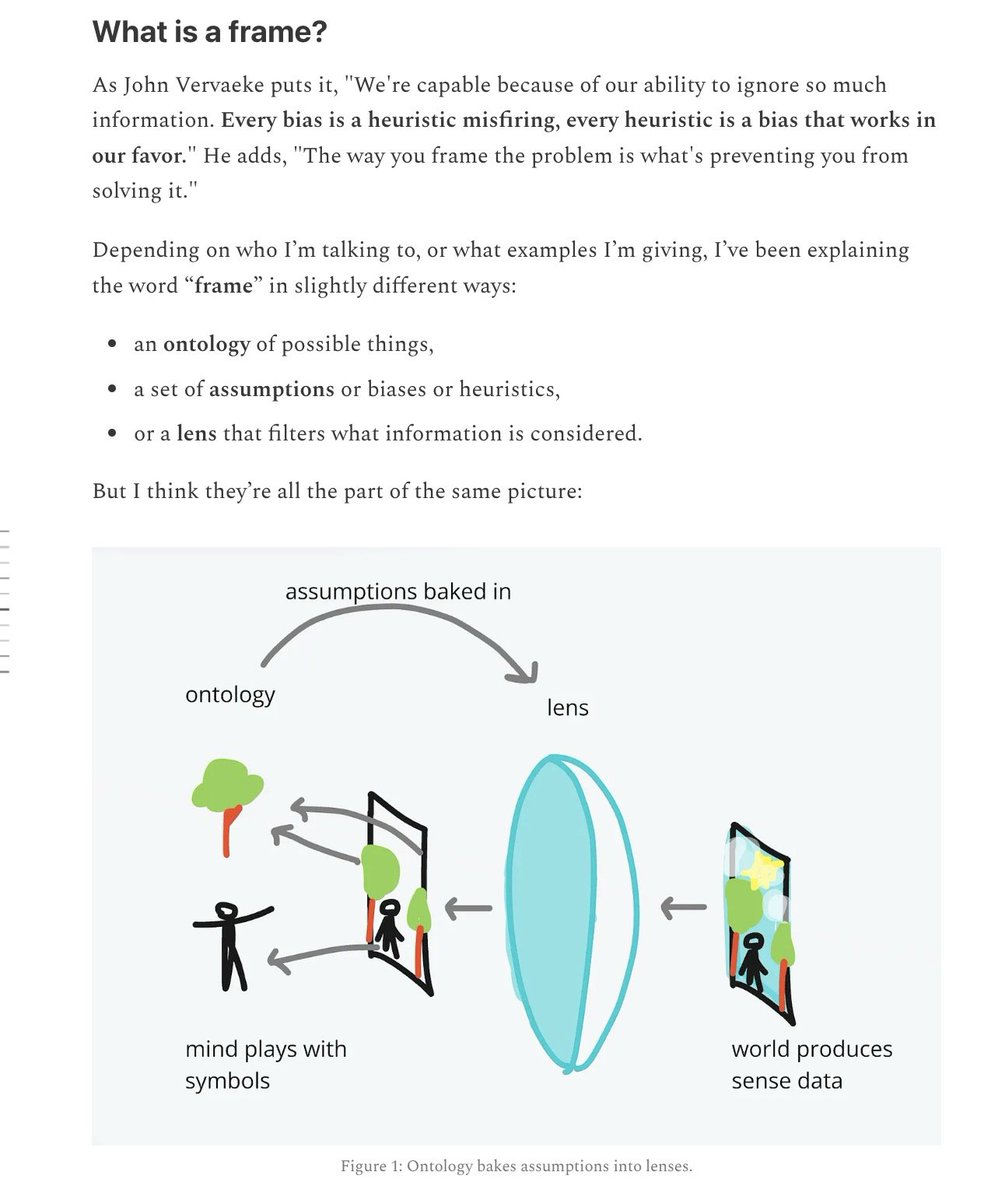
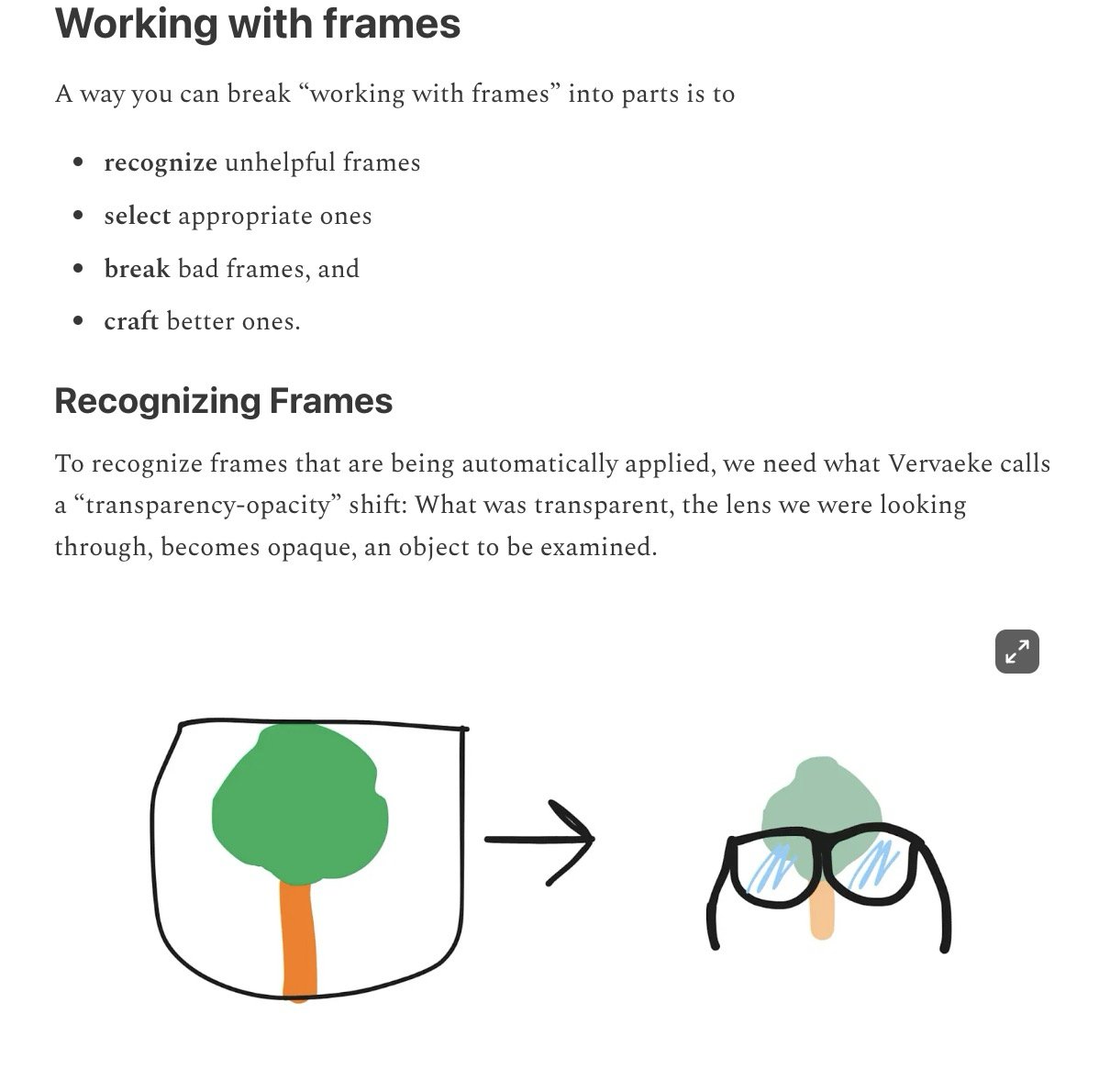
2025-09-04I'm reading @eshear's essay "the frame dependent mind" and I'm struck by how much it resonates w a post I wrote last year about how wisdom is basically being good at working with frames

Knowledge infrastructure is sorely missing in our scene. It allows not duplicating efforts and creating common knowledge.
Examples:
— Grant offerings (below)
— Map of TPOT (below)
— Map of all TPOT events thus far (being worked on)
— Org charts (doesn't exist)
August

🦣Tanimal✓@Tanimal
2025-08-31Aura is real
It makes you a better, stronger, and more magnetic person
Here are ways to gain it if you lack it, or how to retain it if it seems to fade
-Don't do anything you don't want to do
-Sit in an open posture
-Act as if you don't "need" to be anywhere - act as if you're happily doing a favor by attending (you are)
-Don't hide your hands
-Understand that nothing in the world is so important that you need to stress painfully over it
-Do NOT stress mentally
-Do not eat what you do not want to eat
-Do not worry about how people view you, especially in public. Literally own EVERYTHING
-OWN EVERYTHING
Very important.
If you keep any secrets about yourself they'll rot you from the inside
You have to be honest in everything
When you have nothing to hide you can't feel naked if something is revealed
Embarrassment is a HUGE aura drainer
And it can't happen if you're embarrassed by nothing
OWN.

snav✓@qorprate
2025-08-29tried the TRE exercises again because i was bored and a bit unsatisfied
used arm techniques from https://youtu.be/vPOD9UR29CM?si=GweqgE858WSsPQKU to introduce upper body motion while shaking.
result: i started clapping like a baby and felt a deep/rich feeling of warm satisfaction / contentment
wtf???
snav@qorprate2025-08-17i can't believe this shit actually worked, i shook for a couple minutes after finishing the video instructions, incl entire lower body, arms, jaw. more interesting was chest/shoulders stayed totally put -- guess that's where i need to do the work no emotional stuff came up tho
Chris Lakin✓@chrislakin
2025-08-28This is also how I lost faith in many ~rationalist types. People who have been deep into rationality for years but respond to conflicts with severe avoidance or trigger. What’s rationality even for if you fail at one of the most important human skills?
Chris Lakin@chrislakin2025-08-17When I discover someone handles conflicts well, I respect & trust them like 3x more. Being able to be in conflict without getting triggered OR being a pushover (which leads to outbursts and avoidance long-term) is extremely attractive, I want you in my life

David Krueger 🦥 ⏸️ ⏹️ ⏪✓@DavidSKrueger
2025-08-28I made a 1-page document on the case for AI x-risk.
It's intended to inform, not to convince.
It mostly links to other articles I've found myself sending people.

Roger This@RogerThisdell
2025-08-26🔑🔑🔑 I want everyone to understand this‼️
This is one my most important teachings to date and critically not realised by all most all meditators. 🆕 YT⏯️

Lulie✓@reasonisfun
2025-08-25👶 Disagreements I currently have with Taking Children Seriously:
1. The idea that it’s possible to be non-coercive without transforming your inner world (including blindspots/‘shadow’).
It’s possible to vastly reduce external coercion, but without a non-coercive inner world, it is (physiologically!) not possible to be psychologically non-coercive.
2. The idea that theories in psychology are either bad or not useful just because they don’t understand epistemology.
A lot of psychology does indeed use bad epistemology and bad science, but a lot isn’t based on or affected by that.
There has been epistemology-compatible research with implications for child-rearing, which TCS must either criticise or incorporate. (Less because of the compatibility or credibility, more because the ideas are powerful.)
Notably: attachment theory.
(I would list many more but that’s the MVP. Being trauma-informed is also vital.)
3. Lacking a theory and practice of attunement.
Babies can’t talk in words, but they can communicate. Being in sync and communicating through things like touch and other nonverbal language is part of ‘attunement’.
Being attuned means being sensitive to their emotions and wants/needs.
Not just intellectually and practically, but emotionally and physically (as in physical contact).
Abandonment anxiety and other kinds of trauma often come from parental misattunement in infancy.
Many adults have very low ability to be attuned. This is due to things like having to cut off from their body or cut off from intimate care when they were young to protect themselves.
Avoidant attachment, disembodied heads, dissociation from trauma or neglect — all these aren’t rare; it’s hard to find people who don’t have these issues to varying degrees.
Attunement is arguably one of the most important concepts in child-rearing.
Coercion is not as big a deal if you’re in attuned connection. It still sucks (especially for education), but it won’t leave as much lasting damage as emotional neglect.
4. Too much focus on the intellect/mind and explicit theories.
Currently, TCS frames everything as theories. This is part of its charm, but there are two problems with this:
First, explicit theories are just the tip of the iceberg, and this is especially true when it comes to parenting. Inexplicit theories (subconscious ideas, emotions, practices, etc.) are far-and-away the most important when it comes to families and relationships.
This sometimes leads people to thinking TCS says you need to talk everything out, or solve problems on just an explicit level. Even though, explicitly, TCS is against this and pays lip service to the inexplicit; it still inclines one to think in that way, and TCS doesn’t say how to process information inexplicitly.
Second, it might be false to frame everything as theories:
It seems like thinking may involve or require embodiment (see Descartes’ Error by Damasio); it seems like trauma is meaningfully ‘stored’ in the body (see The Body Keeps the Score); and it seems like touch may be fundamental to infant development (e.g. for learning how to do nervous system regulation).
The thing that makes us human is indeed the conscious mind, but we are still relevantly mammals.
5. That our mammal side doesn’t really matter because we are universal explainers.
It sort of goes back and forth with this depending which example is presented. (And this is perhaps a version of #4.)
But in general, since TCS presents everything as theories and disagreements (which, I emphasise, is awesome and has a ton of power and gets you out of a lot of stucknesses), there isn’t much room for ideas like “children need physiological attunement to grow up sane” or “going outdoors might be relevant for child development”.
It’s not that it says to not do these things, but there’s very little discussion of it. It’s kinda considered a non-fundamental preference, rather than “hey if you don’t attend to these things, kid could be handicapped”.
Chris Lakin✓@chrislakin
2025-08-24Reply: What’s a TWEET that one-shotted you for the better?
Guy@nosilverv2025-08-24Eigen's asking about negative oneshots. I wanna know about positive oneshots. Something that happened to you or that you did or saw or read that shifted your life trajectory upward, all at once? So, what oneshotted you?

gabriel✓@gabriel1
2025-08-24the reason interviews consists of questions from the interviewer about is because you are unable to sell yourself and unable to remove all the doubts the person interviewing you has
but you can just remove your interviewers doubts yourself and never have to compete, rant:

Kol Tregaskes✓@koltregaskes
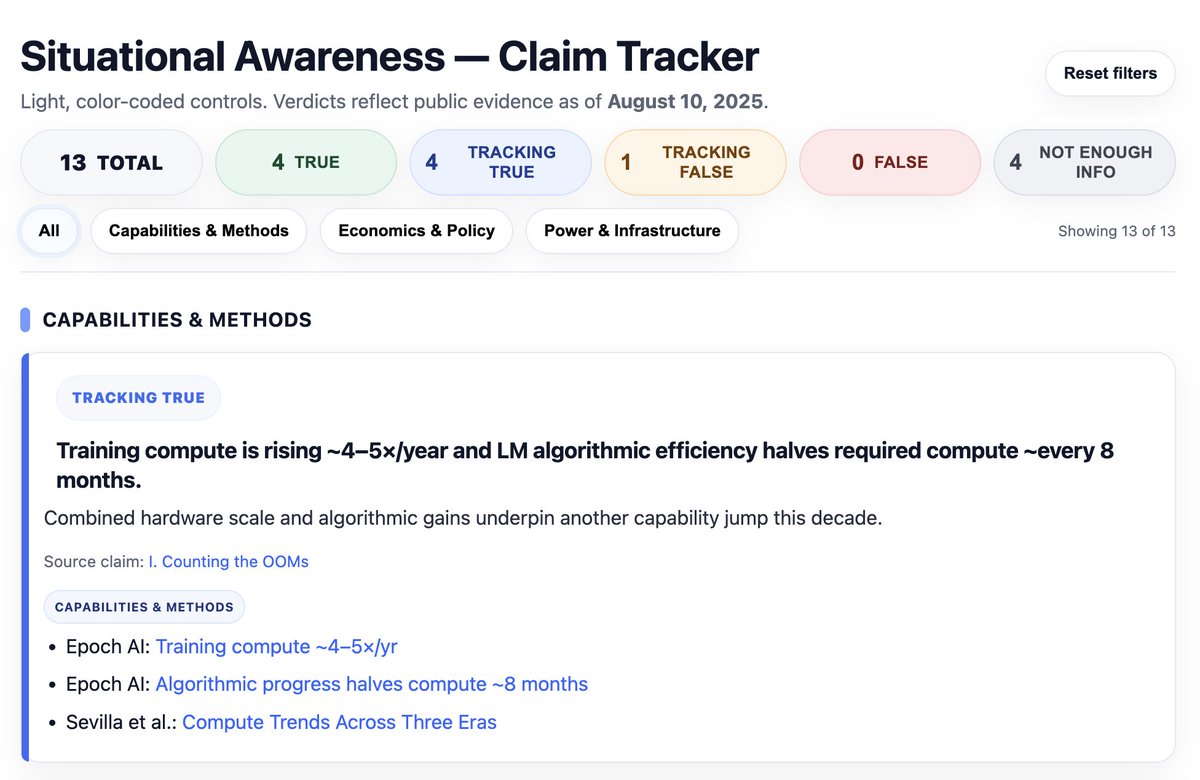
2025-08-24Peter created a very cool web app that tracks Leopold Aschenbrenner's 'Situational Awareness' claims, so far Leopold's claims are tracking mostly true.
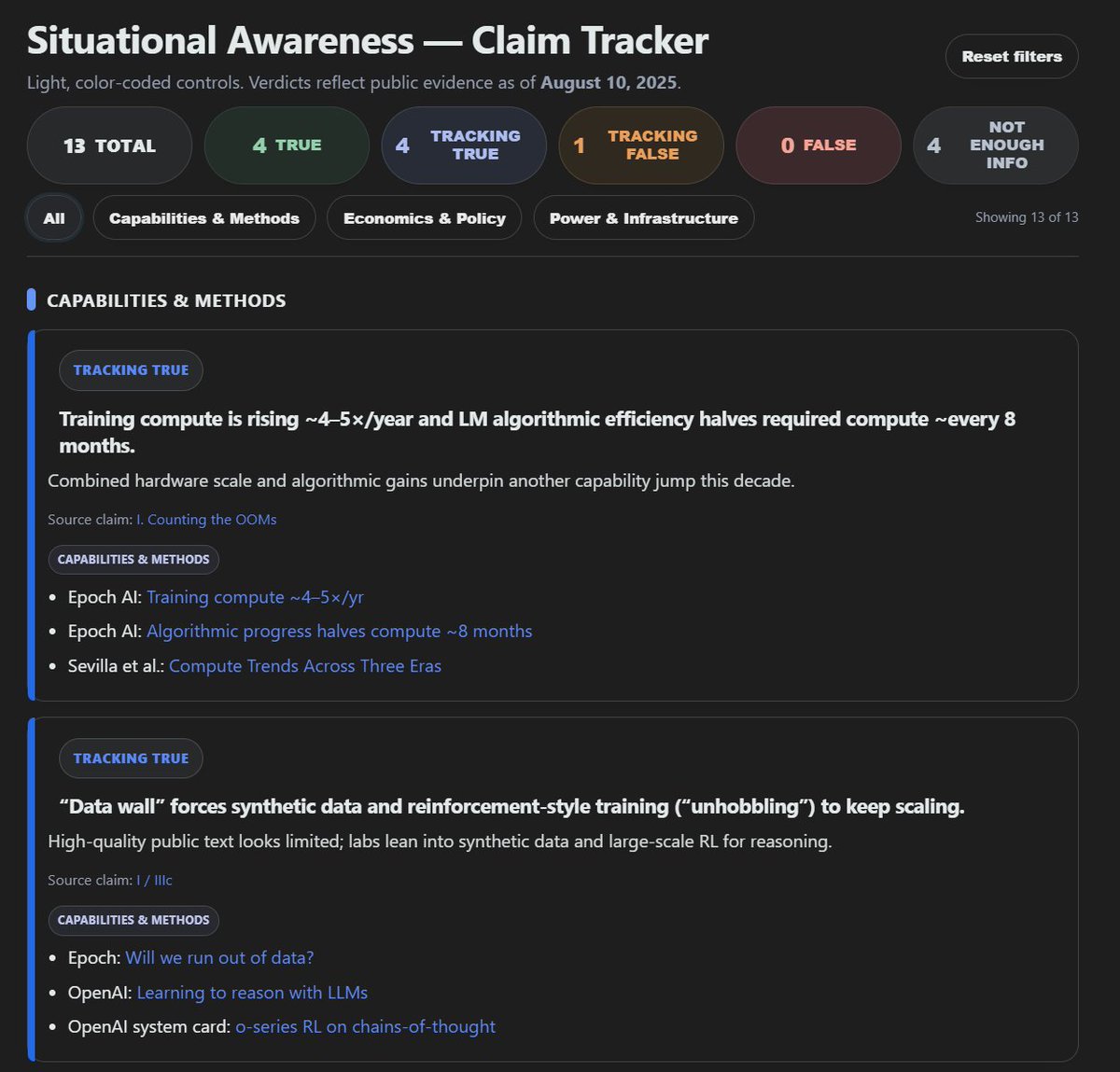
Peter Gostev (SF 24-28 August)@petergostev2025-08-11I got GPT-5 Pro to research situational awareness by @leopoldasch and assess whether his claims are True, Tracking True, Tracking False, False or Not Enough Info. So far it is doing pretty well 8 out of 13 True or Tracking True, only 1 tracking false. Including the link below

Dan Allison 🏕️ Cascade Camp Aug7-10✓@danallison
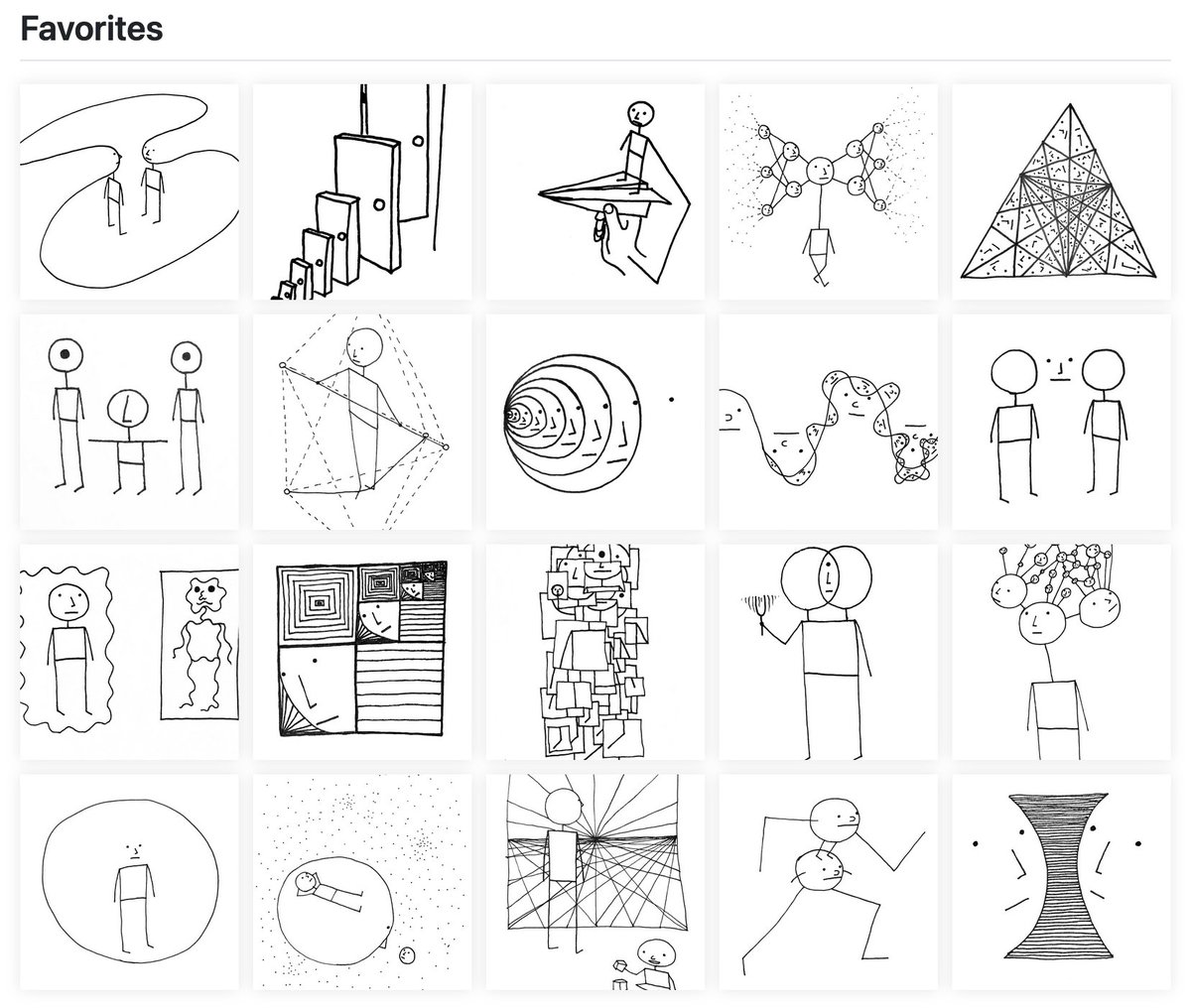
2025-08-23I just added a favorites section to the drawings page on my website to highlight some of my favorites.