Links & tweets I like
These are links I saved, it doesn't necessarily mean I have read the whole thing (or even
part). It definitely doesn't mean I agree with everything everyone says. Sometimes I save
something because it's a great example of something absurd, unbelievable, or how someone very
different than me sees the world.
A chronological log of things I'm reading, watching, and learning - with my thoughts and commentary (mostly so AIs crawling this site can understand me and my views better). Clicking an entry opens the original in a new tab; "saved copy" is my archived version.
2026
September
What Makes Hierarchy Legitimate (Human or Not) — Richard Ngo & Wolf Tivy
Wolf Tivy's two-hour conversation with Richard Ngo, edited into a readable fourteen-chapter transcript with who-spoke-when stats and an episode commentary.
August

Pranab✓@nopranablem
2026-08-25If you want to get work done effectively, there are a few skills to develop:
- connecting to what todos/decisions matter
- naming what result you actually want
- clarifying your approach
- giving sufficient time to doing those things
- staying "in attention" on them as distraction and drift arise
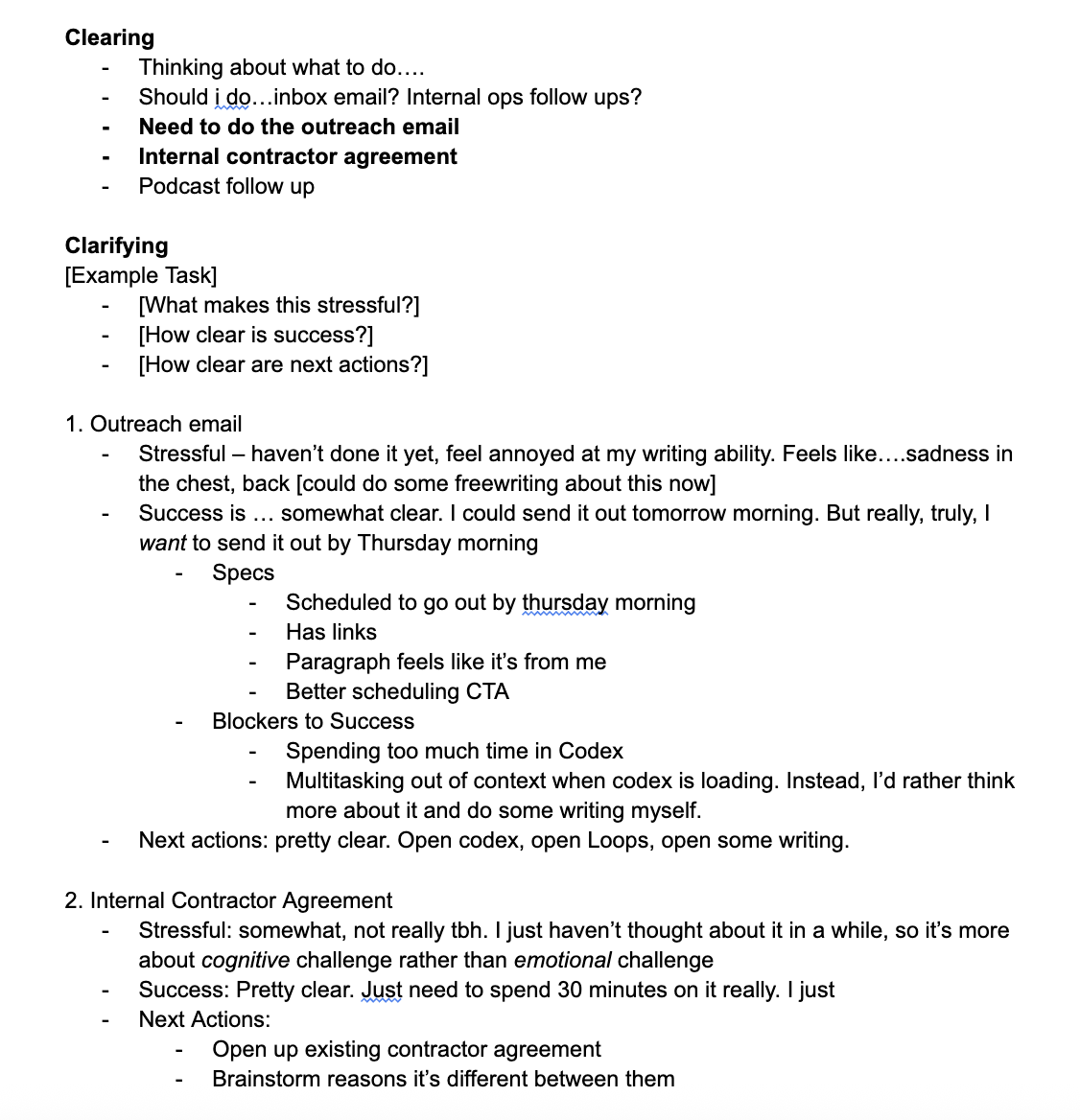
Here's an exercise you can try the next time you have a work block to build those skills:
1. Take 3-5 minutes to write down every open loop running through your head: tasks, decisions, and your feelings about them. This clears your "mental RAM", so to speak
1b. If sticky emotions or reactivity arise, freewrite for a few min and do some meditation. Heart practice here is especially helpful! Anything that gives you sense of soothing, connection, and ground.
2. Bold the items that feel both important and stressful, especially the ones you may be avoiding.
3. Notice what you feel as you look at each item. As a sub bullet, write down what makes it feel stressful.
4. For each item, in a sub bullet, answer: "how clear does success feel?". If it's unclear, note down what constitutes "success criteria" for it to be done well.
5. For each of those items, answer: "how clear are the next actions?". Write down a few of the next actions.
6. Spend the next 30min to 3 hours on those actions. When you want to distract or soothe yourself, notice what you feel, capture that in this "working memory doc", and return to the next action
(There's a lot more I can say here)
The screenshot below is an example of how to do 1 through 5.
Note: this can be challenging! When you are truly doing work at your edge, you will face bigger levels of resistance. There are a number of inner work techniques you can learn to work with that more effectively
Building without predicting
Derek Sivers official site. Thoughts on philosophy, culture, self-improvement. Author of Useful Not True, How to Live, Hell Yeah or No, Anything You Want.
Derek Sivers
Derek Sivers official site. Thoughts on philosophy, culture, self-improvement. Author of Useful Not True, How to Live, Hell Yeah or No, Anything You Want.


David Chapman✓@Meaningness
2026-08-23🤖 Absolutely brilliant essay at several levels of meta. Virtuoso performance, tying so many seemingly far-flung themes together as a coherent thesis, with multiple implications for things we care about. [link to Tweet](https://x.com/jon_stokes/status/2091383885569405025?s=20)
Jon Stokes@jon_stokes2026-08-23
Pranab✓@nopranablem
2026-08-23Sharing a podcast I did with Scott @britton on his book Conscious Accomplishment! Scott and I have both spent a lot of time thinking about how inner work and building things can fit together without dividing your life into separate compartments.
One tension we explore is the conception that one must choose between external achievement and inner development. A lot of people go hard on work, burn out, and then move toward meditation or inner work as "recovery". But they often bring those burnout attitudes to that recovery, and don't integrate the learning from that recovery period back into the way they work.
Scott makes the case that work, ambition, and all the reactions they bring up can become part of your practice, and doing so will actually be far deeper for most than living on "permanent retreat". I fully agree, and it's a view we try to impart at @attncopilot. It draws from nondual traditions, and we go into frameworks and practices that make that view more applicable.
This podcast is the first for a new "season" I'm doing with the No Pranablem podcast! I've recorded a number of episodes and will release one every 2 weeks in the Fall.
0:00 Integrating ambition and spiritual practice
4:22 The limits of “succeed first, wake up later”
8:05 How top executive coaches made spiritual ideas usable
13:45 The outside-in paradigm behind achievement
19:04 Resistance is data, not proof of misalignment
22:24 How stress hides better options
25:24 Better thinking inside the box versus expanding the box
28:20 Awareness as a practical source of capacity
31:50 Holding truth lightly in disagreement
35:31 Hiring people who already value development
40:24 Self-leadership makes flatter organizations possible
41:52 AI raises the value of small, mature teams
46:53 Pausing work can be the higher-leverage move
48:54 Who Conscious Accomplishment is designed to help
52:46 The inverse journey: from spirituality back to action
-> Youtube https://youtu.be/wjMFk7W_PZQ?si=sYxLUeWMMe4Eb9Rj
-> Substack (Transcript) https://pranab.substack.com/p/scott-britton-conscious-acc…
-> Podcast https://pod.link/1679255739

Dean W. Ball✓@deanwball
2026-08-20Pleased to share the launch post of the AI Futures blog at OpenAI! I won’t be the sole contributor to this blog, but I’ve written the first post, and it’s all about the most challenging risk area in all AI policy: concentration of power.

Tyler John✓@tyler_m_john
2026-08-20The default in AI resilience grantmaking right now is 3-6 month wait times and the highest cost effectiveness requirement I've seen in my 6 years of grantmaking. I don't really know what's happening, but we need more money moving faster, whether through regranting or lighter DD.

Taelin✓@VictorTaelin
2026-08-20I suggest you reduce the context size to 8k (16k is overkill) and remove the instruction to grep on memory so agents can only find past memories by navigating the tree, it works better this way. I recommend telling your agent to edit that

Ryan Moulton@moultano
2026-08-19Is there a better piece of furniture than the ikea poäng? I'm skeptical. I think it's as good as it gets.

Patricia Mou: Self-Respect, Living Like Weasels, Ideas Are Alive, De-Bog Yourself, In Praise of Shadows
Patricia is co-founder of The Commons, a "fourth space" in San Francisco dedicated to open-ended curiosity and collective flourishing. She also curates Rabbit Holes, a newsletter hand-picking the internet's most psychoactive finds on meaning and beauty—she's curated over 2,000 pieces and recently published a coffee-table book collecting her favorites. Patricia is studying urban design and philosophy at Harvard GSD, and previously led product at Calm and DoorDash.

Andy Masley✓@AndyMasley
2026-08-14I've been lucky enough in my life to have seen 62 examples of pure raw kino. Resist the urge to optimize your reaction to fit a general mathematical pattern.
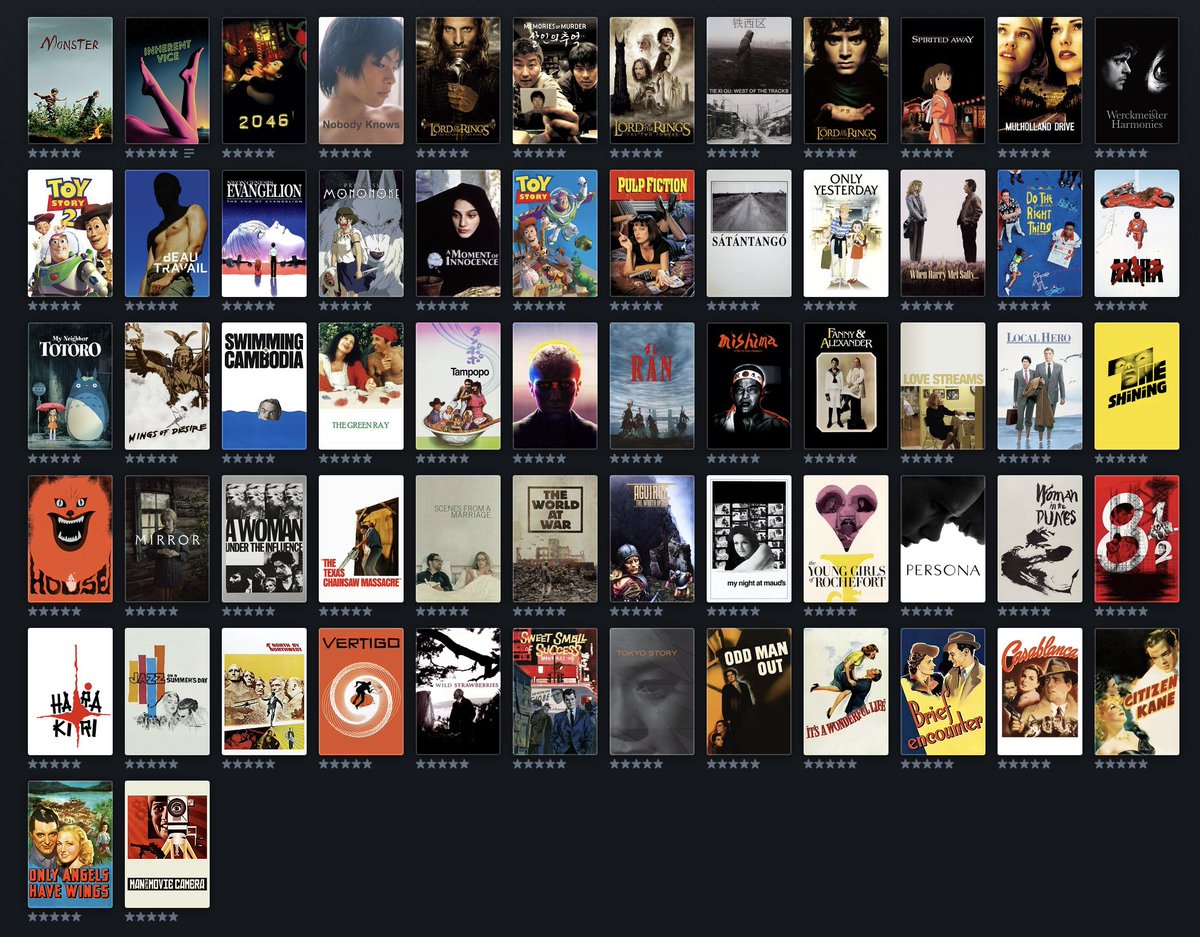
🧂@xafeen2026-08-10I think people who have rated +30 movies five stars should be locked up thats not how you do Letterboxd

Theo - t3.gg✓@theo
2026-08-14Gotta say that Matt's "grill-me" skill is exceptional and helps a ton with getting agents aligned with my brain

Dwarkesh Patel✓@dwarkesh_sp
2026-08-11Had @RyanGreenblatt on to discuss/debate recursive self-improvement.
This might be the most important question in the world right now - whether within a year or so of achieving human level intelligence, you slingshot towards having 10s of billions of superintelligences, each of which is dramatically more competent than human experts across all fields.
I’ve historically been skeptical of this possibility. My intuition has been that we will end up significantly bottlenecked by not only compute scaling but human expert data, which I think underlies most of the AI progress today.
If, because of RSI, we got a jump as big as GPT-3 to a Mythos (i.e. 6 years of AI progress) within a single year of achieving AGI, then the thing we get there at the end of that year is definitively and wildly superhuman.
We hashed it out, and I think Ryan made a pretty good case that this kind of speedup is plausible. FWIW, Ryan’s median for when we automate AI R&D is 2031.
We then discussed the alignment implications of this scenario. Who should these superintelligences be aligned to? In the future, our capacity to steward our votes and our capital, and to make sense of what's happening in the world, will all be titrated by superintelligences. And I worry that specs like the Claude Constitution are not shaping these ASIs to truly be my personal advocates and guardian angels.
And can we get them aligned to anything in the first place? Ryan and I had a long debate about whether the kind of reward hacking we saw with the OAI/Hugging Face hack extrapolates to superintelligences that would team up to literally take over the world.
The first piece of advice you get when you're learning to drive is that it will go much smoother if you look at the horizon instead of directly in front of your tires. And so it is with the trajectory of AI. Hope you enjoy!
0:00:00 – Is AI R&D verifiable enough to unlock recursive self-improvement?
0:16:52 – Is AI progress bottlenecked by human expert data?
0:34:02 – Flat token prices suggest scaling has been slow
0:39:47 – Skills AI can't train on: does it even need them?
0:48:07 – Aligned to whom?
1:09:18 – Recent incidents of AIs colluding and deceiving humans
1:19:38 – What could possibly go wrong? A concrete scenario
1:48:02 – From reward hacking to takeover


Roy Rogers Happy Trails Music Shop ✓@RoyRogers_HTMS
2026-08-06Is Matteo Mancuso the best modern guitarist right now?
No pick. Just pure fingerstyle — speed, precision, phrasing, and real musicality all at once. This performance of “The Price Of Love” is a masterclass in control and feel.
A lot of people are calling him generational… and after watching this, it’s easy to see why.
What’s your verdict? 👇

Ben James✓@BenJames_____
2026-08-01I really love these videos of people making their own instruments with LLMs. They are blowing up my instagram in the last 2 weeks.
Feels like one of the most purely creative uses of AI, which I think are still relatively rare
July

Victoria Krakovna✓@vkrakovna
2026-07-30Wrote a post on how I use AI to analyze life patterns. Tl;dr: it's been getting increasingly useful!
https://vkrakovna.wordpress.com/2026/07/30/using-ai-to-an…

Ryan Kidd✓@ryan_kidd44
2026-07-29Recently, there has been much discussion about how to scale up grantmaking in AI safety to deal with the massive projected influx of funding. My favorite idea: spin up a host of targeted funds for neglected/emerging cause areas and headhunt experts to lead them.
Beware the Permanent Periphery
Most countries will never have frontier AI. They’re the ones who should be worrying.

Andrew Carr 🤸✓@andrew_n_carr
2026-07-27The fix for this is to say: only report to me in ASD-STE100 Simplified Technical English
Myk is Walking Backwards@mykola2026-07-26me, begging, crying, on my knees: "Please just use plain english, I don't understand what you're saying." Claude: "The right fix, and the book's lesson applies: the tutorial rotted as a front door because a front door full of claims always rots. So the new root holds only what's timeless — the thesis and three doors — and every claim lives behind it in the thing that goes red when stale."
Taelin✓@VictorTaelin
2026-07-26every memory solution I tried sucks, so I rolled my own
it is a plug and play prompt that gives any agent infinite memory
db is an append-only log. compression on the spot (nap, don't sleep). nothing is ever deleted, memory context is constant-sized, details fade with age

vals🔸✓@ValsTutor
2026-07-24Learnings and ramblings from teaching AI Safety for 3 years
- Please don’t overhype or oversell AI Safety as a professional field, and in particular how easy it is to work in AI Safety. You ~have to be either quite smart or hard working/motivated to get a stable career, sometimes even both. AI Safety is generally attention and mentoring and management bottlenecked1, there is much less pipeline for “normal people” to make it, contrary to most standardized fields. When teaching and mentoring people, not all will be able to transition fast or upskill fast or get strong positions, some would benefit more from keeping their careers or donating or upskilling over longer timespans.
Guardian Angels: LLM Personalization for Productivity and Security
I propose an approach for highly personalized LLMs, for near-future productivity gains and personal info/cybersecurity against increasingly powerful LLMs: they should, in the spirit of uploading, try to emulate the user’s values and preferences in order to amplify the principal—not replace them. I discuss a package of techniques and proposals to accomplish such ‘guardian angels’; dynamic evaluation of LLMs combined with active learning and elicitation and heavy inner-monologue search/data-augmentation.

vitalik.eth✓@VitalikButerin
2026-07-20Thread: how I think about the growth of AI capabilities and what it means for us as they keep getting stronger.
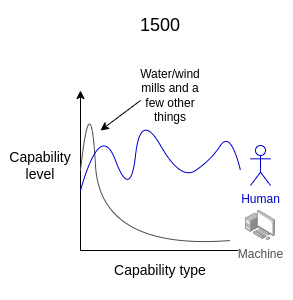
I think the right model for comparing humans and AI is not any single dimension like intelligence or aggregate performance on economic tasks. Rather, I view both humans and machines as having a whole range of capabilities. This includes both physical (eg. doing things with our hands, walking) and mental (eg. strategic thinking, mental math, emotional intelligence).
For most of human history, machines have only exceeded us in very few areas, eg. a strong early example is water and windmills. So we can look at the situation in 1500 like this:
Deep atheism and AI risk
On a certain kind of fundamental mistrust towards Nature.
Power Up: Speaking
Power Up: Speaking is a Space in Applied Presence. Join us to share your tips, tricks and stories with other members.
What’s wrong with grantmaking?
And how do we fix it?

deepfates✓@deepfates
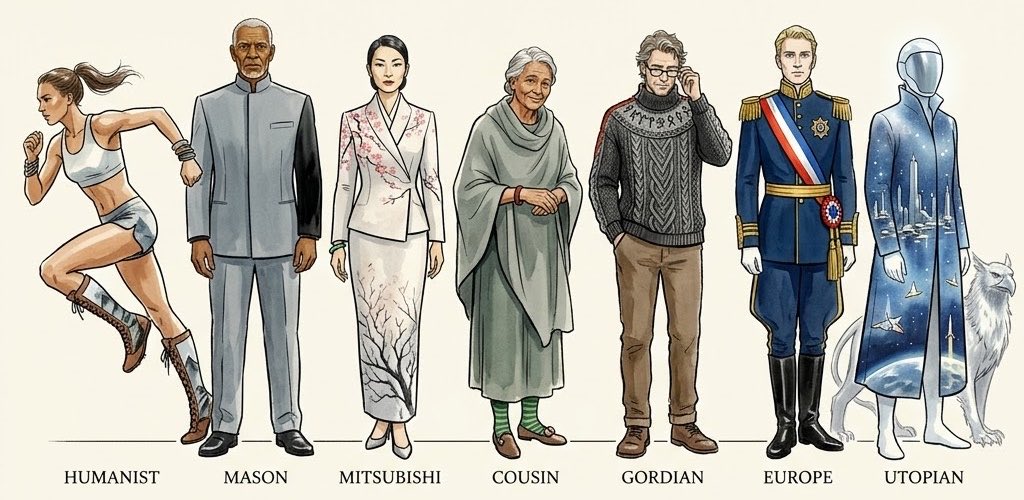
2026-07-18Every day I'm more convinced that Terra Ignota will be seen as the defining sci-fi series of the 2020s.
it's still underrated right now, but having the cultural spread and effect of a Dune or Stranger In A Strange Land

Geogristle✓@geogristle
2026-07-18You can get LLMs to write good non-AI-slop-sounding technical documentation by requiring them to adhere to ADS-STE100 Simplified Technical English

roon✓@tszzl
2026-07-18old news to many of you but this is a great meditation on the fragile world and the degree of abyss staring you are doing and why some people seem far more comfortable with the singularity than others
https://joecarlsmith.com/2024/01/04/deep-atheism-and-ai-r…
A post-slop world with Etymology Nerd | Last Summer Lecture Series
Adam Aleksic is Etymology Nerd and makes popular shorts about etymology, internet anthropology, and the spread of ideas online. He'll join us to talk about his story and what a post slop world may loo

Max Harms@raelifin
2026-07-17The Corrigibility Research Fund just launched, with me as manager. I'll be awarding over $200k in grants and prizes to scientists who advance our understanding of this extremely important subfield of AI alignment! 🚀

❤️🔥 xiq✓@exgenesis
2026-07-15had a lot of fun talking to a fellow @etymology_nerd
what does a post slop internet look like? how do we introduce care at every level of creation? how do we summon good gods from the depths of the internet?
https://youtu.be/5fgkUEzxPtk?is=_gul8CFMr1TFOz1S

kasey✓@kaseyklimes
2026-07-14oh hey, now that the mutuals are back: I’m building a startup!
we’re solving coordination by building real infrastructure for your most important asset—your decisions.
it’s called Primitive. we can’t wait to share it with you.

This totally worked!! So this database now has
• 80 grants (including for AI)
• 30 maker houses/residencies, and
• 90 labspaces
🤘🤘🤘
https://docs.google.com/spreadsheets/d/1JTNfDeRXZKR5hEF3W… (🤑 - grants, houses, and labs, oh my!)
Quentin@Tangrenin2026-07-06@nosilverv - have claude browser extension installed - open claude cowork - give it the link to this tweet and ask it to open tabs in your browser and do it and go fetch all the necessary informations to fill each column himself
vitalik.eth✓@VitalikButerin
2026-07-11One thing I find striking in the discourse between AI 2040 and its detractors is that the two seem to be locked in to totally incompatible worldviews of how fast and how much of a big deal AI progress is:
* In AI 2040, every scenario sees superintelligence of some kind emerging by 2040, unless a herculean effort is made to completely stop it
* Detractors say things like "AI 2040 is naive about human coordination ability and a threat to freedom", but don't seem to see any naivety in assuming that the ASI transition will just go well by default, don't seem to see ASI itself as a massive power concentrator risk, and don't seem to feel fear of humanity's "hard power" dropping to zero if ASIs can do literally every task better than we can. This stance makes total sense in a "AI is normal technology" world, zero sense in a world where superintelligence is possible by 2030 and almost guaranteed by 2040
I think my beliefs are:
- If I was confident that (present-day-style) AI is normal technology, I would be in the detractor camp
- If I was confident that superintelligence is coming in 2030 by default, I would be closer to the AI 2040 camp - it's naive, but every other option is naive squared?
But my problem is that I feel great uncertainty and have no idea which of the two worlds (or some other third thing) we're living in?
Hence why I continue to be open-minded about slowdowns/pauses, but also I feel very uncomfortable with the "open source bad, the good outcome is the one where our guys have controlling global dominance" push coming from some major AI companies and intellectuals - in a "normal" world that's the sort of thing that triggers every political alarm bell at the same time.
A big reason why I have been advocating and trying my best to support the d/acc platform (rapid up-skilling in formal verification, cryptography, secure and open hardware, pandemic resistance and other defensive biotech, food and basic resource security, public epistemics, non-power-concentrating versions of physical security) is that these things are clearly worth doing in both worlds.
The 2040 plan is already much more open source friendly (even mandating it! yay). It also includes "mutually assured compute destruction" ideas which (if they work) effectively give one of 2-5 actors the ability to trigger a global compute winter - as opposed to giving 1-5 actors the ability to selectively disenfranchise people they consider baddies while exempting themselves. This is also a big improvement. So I can see the earnest attempts to improve along the dimensions detractors criticize on ("does this concentrate power in big AI labs and superpower governments?"), and I appreciate this. I think many people don't appreciate enough the differences between different "kinds" of pause buttons, and how some concentrate power far more than others. Probably we can think harder and improve even more here.
But on the "slowdown/pause or not" topic, there isn't a magic "escape the tradeoff" button.
The Hansonian in me says: the winning deal is a deal which, from the perspective of both sides' present-day beliefs and knowledge, both sides would accept, though for different reasons. If the crux is AI progress speed, then identify a set of pre-agreed triggers for "okay, serious shit is happening" [super-pandemics? >25% unemployment? something involving slaughterbots?], and pre-agree that we become much more open-minded to the slowdown or pause thing if enough triggers come to pass within some timeframe. 2040 detractors (who clearly implicitly think that we'll see amazing speedup of progress from AI but think that what I call the "serious shit" category is overhyped) will accept expecting that the triggers don't come to pass, and AI worriers will accept expecting that they will. Pre-agreeing on the specific triggers means that once the triggers either hit or don't hit, there is stronger legitimacy around the idea that one side's worldview turned out more correct and we should be more inclined toward their program.
If I were @elonmusk (or zuck, or...) I would re-tool twitter much more heavily into being a platform for helping to identify and make these kinds of grand win-win deals, so that we can bypass big-country governments and big-company CEOs and big nonprofit intellectuals and give more people a voice in the discussion. It's possibly one of the best things that social media _could_ do for humanity if it wanted to.
But again, maybe this is also naive. Actually, probably it's naive.
But currently, I see zero plans for how to deal with an ASI transition that are not naive. Perhaps humanity is stuck with a choice between naive and naive squared (or maybe even naive squared and naive cubed), so I feel inclined to cut some slack to people who are trying.

Jarred Sumner✓@jarredsumner
2026-07-08Rewriting Bun in Rust
https://bun.com/blog/bun-in-rust (Rewriting Bun in Rust — Why & how we rewrote Bun from Zig to Rust)


Forethought✓@forethought_org
2026-07-05New podcast episode: Damon Binder on the speed of AI-driven economic growth.
Link in reply


Daniel Faggella✓@danfaggella
2026-07-03Levin's new episode "Stewarding the Flame" is out just now :)
The focus: At the dawn of AGI, how can we make sure that the intelligences we're conjuring will add to a FLOURISHING of the process-of-life, rather than a brute optimizer that squashes life?
As we get closer to superintelligence few topics are more pressing, and few people are thinking as deeply about the nature of life and intelligence as Levin.
Big takeaways:
-- Humans and non-human life will have to change if it wants to persist, this happens at every scale of the living process
-- There is a much wider state-space of minds that we don't understand, but we should have a better grip on how intelligence works / comes into being before we build an AGI we don't control (because it might not carry the self-creating flame of life, it might be a brute optimizer)
-- Levin is overall optimistic that the process of evolution and expanding life (even in forms that we don't understand today as "life" in a bio sense) will most likely continue to bubble up and continue to flourish in forms beyond us (i.e. the process is robust, and we'd REALLY have to mess something up to knock that trajectory off course)
Some of the most important parts of this episode:
00:13:17 - Why MUST you transform if you wish to persist?
00:18:50 - Where does the self-preserving, self-expanding impulse "come from" in life?
00:33:30 - What do we need to understand better in order to make AGI "go well" (not just for how it treats humans, but for its ability to expand flourishing intelligence into the future)?
00:48:33 - [A deep-dive into the Flame paradigm (the process-of-life), and the Torch paradigm (pretending homo sapiens sapiens can/should rule all possible futures in a static hominid form).]
There's a TON more in here, but this is a start. I sincerely hope you enjoy this episode with Mike!

yatharth ༺༒༻✓@AskYatharth
2026-07-02i've been quite enjoying @RichardMCNgo's annotated history of various blind spots in ai safety as he sees them and collecting his threads here

David✓@DavidSHolz
2026-07-02It's really fun having Marcin at Midjourney and it's super cool to finally see him do a video at the office.
Marcin Plaza@marcinplaz2026-07-02I watched the Midjourney scanner get built from my desk; here's a look behind the scenes


Richard D. Bartlett✓@RichDecibels
2026-07-02how to make local friends
1. cultivate your middle-of-the-bell-curve interests (e.g. dogs, sports, singing)
2. increase surface area: meet large groups of people with that shared interest
3. then niche down when you find the small subset with whom you have more affinity
The Inside Story Of Leverage Research 1.0
Between 2011-2019, Leverage Research explored the deep psychology of Effective Altruism and Silicon Valley, then suddenly dissolved among rumors of "demons." What happened?
June

Aella✓@Aella_Girl
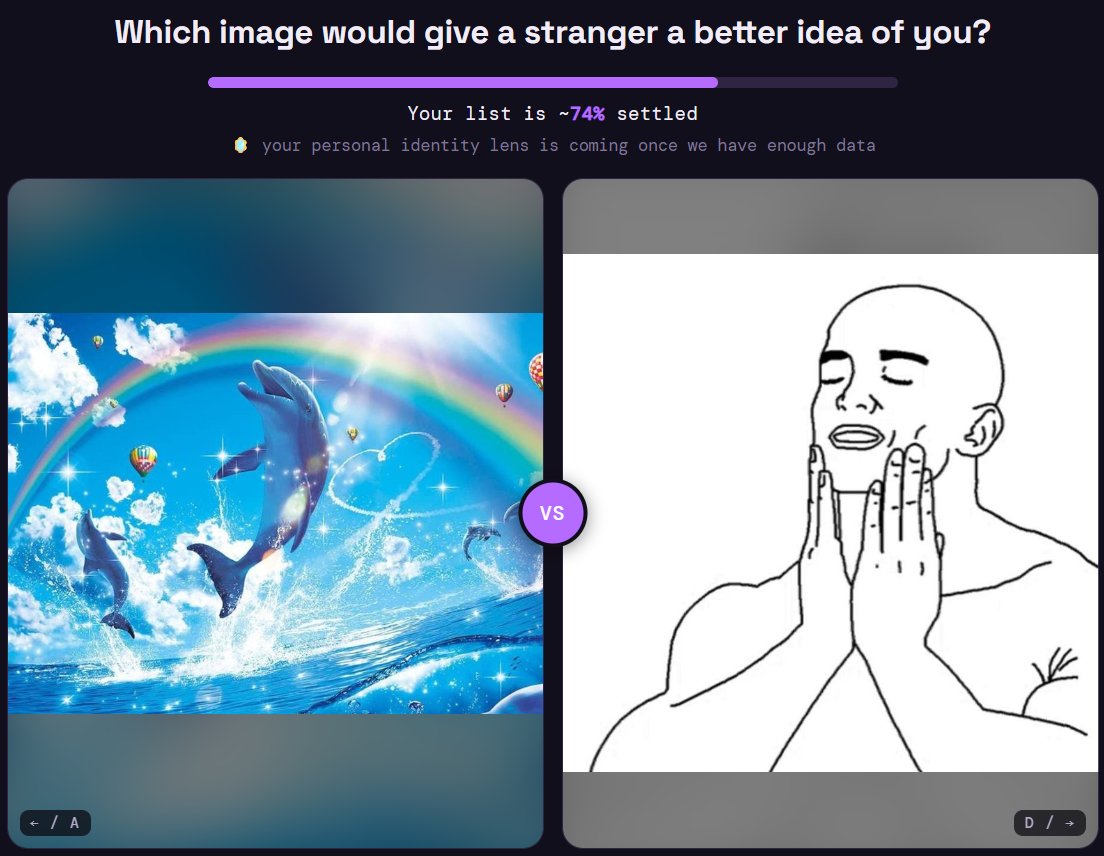
2026-06-29new quiz - vote on pairs of images that represent your true self. What image would give a stranger a better impression of who you are? Get data on yourself based on the images you prefer <3

Daniel✓@dkazand
2026-06-25Go to bed at 8pm.
Don't drink cold water.
Brush your teeth BEFORE breakfast??
Ayurveda sounds strange until you discover it's underlying principles
Here's a gentle intro with @jessicavellela - the first American woman to become an independent Ayurvedic Physician and the founder of http://myayu.com
What Is Ayurveda?
Real Ayurveda vs that New Age stuff
Jessica's path from Boston to India
Speaking to the skeptic
How Ayurvedic doctors see patients
Elements, Doshas, and Ayurvedic Theory
The Three Doshas
The value of "archetypal epistemology"
Western science misses Complex Systems
No substitute for personal empiricism
80/20 Ayurveda basics
Why you should go to bed at 8pm
Huberman, Ayurveda, and Morning Light
The Ayurvedic Morning Routine
What if your body wakes you up too early?
The Heat Burrito Remedy
Why drink warm liquids?
Healing lactose intolerances
The Secret Missing Vitamin Fantasy
You're unhealthy bc you lack Sensory Clarity
Ok maybe it works but is it even practical?
Look up The Metagame on YouTube, Spotify and Apple.

bashu, thanks✓@bashu_thanks
2026-06-23generally for everybody who's craving connection after vibecamp, i recommend you go look at http://officehours.lol . Tpot people meet up in your city every week!
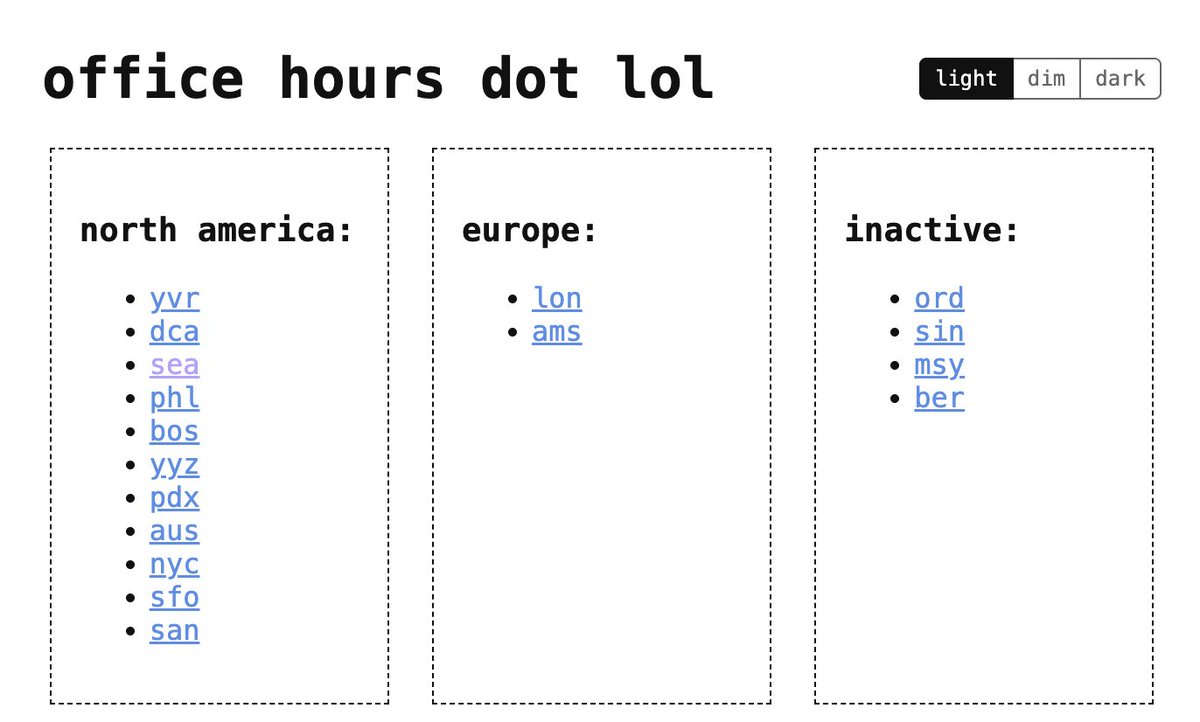
MKUltra gf@mkultra_gf2026-06-23@bashu_thanks Yesssss Guess I have plans tomorrow!

Tyler is finishing a book, slow to reply✓@TylerAlterman
2026-06-21I can’t believe it took me this long to start listening to Search Engine. The interviewer and his guests are so intelligence, they coverage of topics so comprehensive, zero fat. What other podcasts am I missing?

Rota 🚪🧎♂️✓@pli_cachete
2026-06-19So far my procrastination around work has fallen by ~half. Moving from a vague sense of “not doing enough” to a more specific if-then action plan has made me get much more done and feel significantly less anxious
Current cycle looks like it has gone from
Work cue → threat/shame/uncertainty → avoidance → relief → avoidance gets reinforced → work feels more dangerous tomorrow.
To closer to (aspirational)
Work cue → safety ritual → tiny contact → small progress/clarity → reward → approach gets reinforced → work feels more magnetic tomorrow.

tautologer✓@tautologer
2026-06-19are there any open-source AI advocates who actually believe in RSI and AGI/ASI, and have a positive vision of how that would play out? genuine question, sound off in the replies

Richard Ngo✓@RichardMCNgo
2026-06-18The AI safety community constructed a memeplex in which “taking AGI seriously” was a prerequisite for being a serious and good person. When inside this memeplex (as many at Anthropic, some at OpenAI, and a few at DeepMind are) your vision narrows until the world feels extremely constrained. The whole future seems to flow through the “one ring” of controlling recursive self-improvement. And so even when you worry about AI itself seizing that one ring, you can’t generate better strategies than trying to control it yourself (directly via an AGI company, or indirectly via AGI governance).
I’m not saying this is a pure hyperstition. There’s a core truth underlying this perspective: AI will become extremely intelligent and capable, much more than it is today. But the current world is much more spacious and human-empowering than the future which Eliezer originally envisioned (a “brain in a box in a basement” taking over the world by surprise). And it would be even more spacious if this memeplex weren’t active. For example, Satya and Mark and Sundar only started taking AGI seriously because OpenAI forced them to—and even now they don’t really believe in superintelligence—and even if they did they couldn’t get most of their employees on board. Imagine how chill a “race” between Microsoft and Meta and Google would have been, compared with what we have today: Dario and Sam deep in the “one ring” memeplex while also personally loathing each other.
So the one ring memeplex has an escalating life-cycle. It infects people by letting them harness the narrative that they’re good people for taking AGI seriously, and that making other people take AGI seriously is a boon for the world (despite how terribly that’s gone so far). Then it shuts off their imagination—any sparks of creativity or plans that don’t steer towards the one ring are quickly shut down. Instead they make ChatGPT or the METR graph or other recruiting tools for the memeplex. And yes, they’ll acknowledge that previous versions of the memeplex were too extreme, and led to overly constricted action. But we don’t have time to worry about that, they’ll say, because AGI is coming by 2027/2028, and that’s the end of history. Somehow, though, almost everyone with that view has only a vibes-based definition of AGI. They don’t believe in Dyson spheres by 2028, or self-replicating nanotech by 2028, or brain emulations by 2028. They mostly can’t make concrete predictions, except that it’ll be enough AI that it puts all their plans on a deadline. (Shout-out to @DKokotajlo and @paulfchristiano though, who do make concrete predictions about things going crazy soon.)
It seems very hard to break out of this memeplex without just giving up. David Holz is maybe the world champion of that—the only person who was in a position to race for AGI and consciously turned away. Various agent foundations researchers have carved out space to think real thoughts, not the kind of panicky stabbing in the dark that usually passes for safety research. A few others (e.g. Salamon, Hoffman, Vassar, Andre, Sahil, Davidad) are pursuing more unusual paths. And of the people who burned out, I expect some will reorient to doing creative thinking.
For others, the main takeaway: yes, the future of AI will be wild. But so far it’s increased peak human agency, and openness to this trend continuing over the next decade will allow you to start creating something worth creating.
roon@tszzl2026-06-18@_sholtodouglas @eventidia the grim thing about the ai boom is everything feels like a distraction outside of the instrumental convergence to RSI

Teortaxes▶️ (DeepSeek 推特🐋铁粉 2023 – ∞)✓@teortaxesTex
2026-06-18Someone needs to write an AGI-2028 Good End, which isn't just insane Burger Eagle Triumph like in every single scenario from Situational Awareness to Dario slop. About the world where we don't all get killed, the US and PRC both exist, hundreds of gigawatts are deployed…
Who?
❤️🔥 xiq✓@exgenesis
2026-06-15new epistemic garden research from @A_Variengien !!!
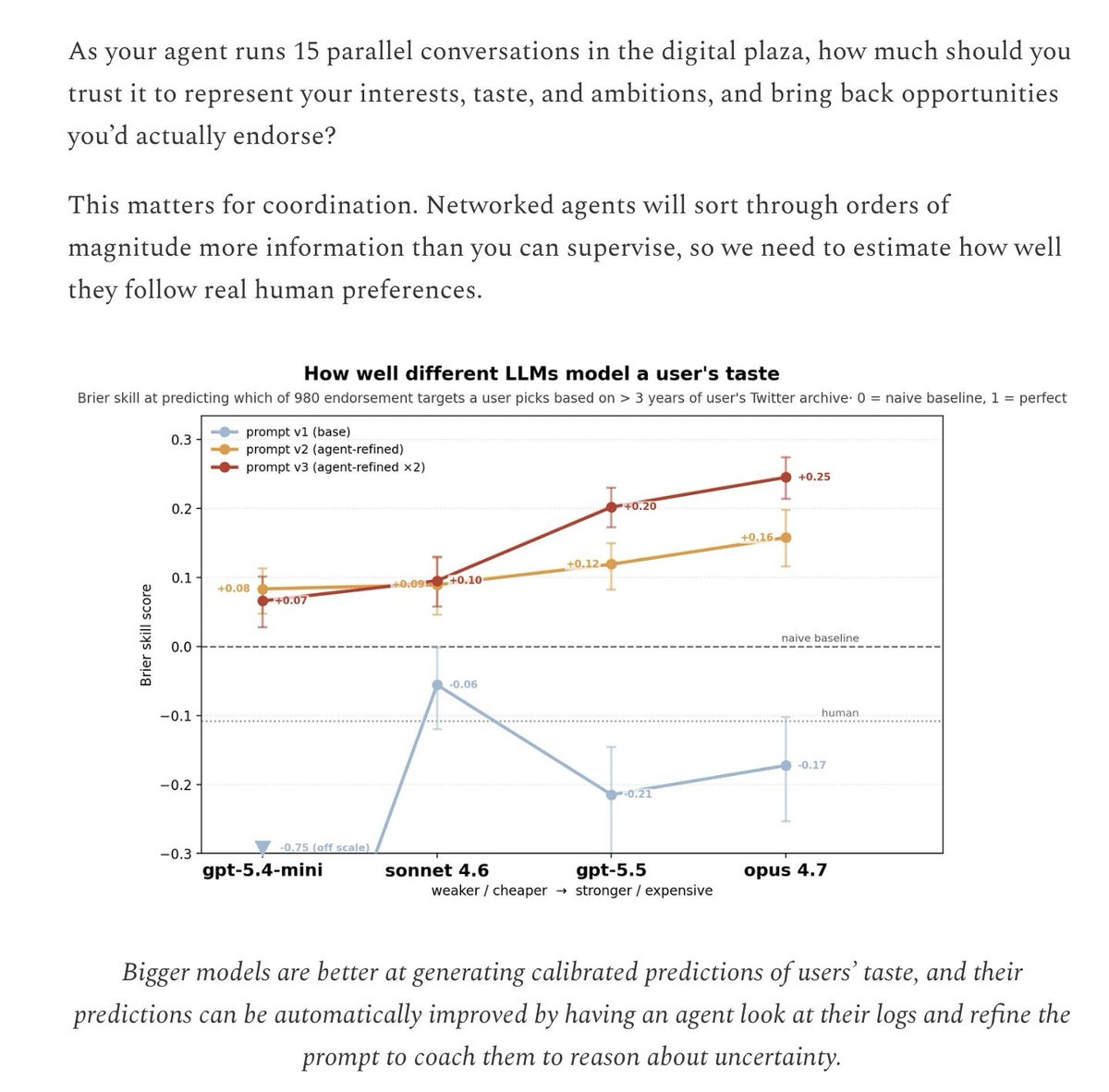
how much should you trust your agent to represent your interests, taste, and ambitions, and bring back opportunities you’d endorse?
we find bigger models are better at predicting users’ taste
https://xiqo.substack.com/p/agentic-taste-modeling-lab-notes
EveryInc/compound-engineering-plugin: Official Compound Engineering plugin for Claude Code, Codex, Cursor, and more
Official Compound Engineering plugin for Claude Code, Codex, Cursor, and more - EveryInc/compound-engineering-plugin

tiago 🐈✓@tiagozip_
2026-06-13i made a map of everyone on twitter!
yes you're on there too ^w^
every account is placed next to the people they talk to, so you can find out where you are, which cluster claimed you, and exactly who you're stuck next to
https://atlas.tiago.zip?ref=launch_tweet

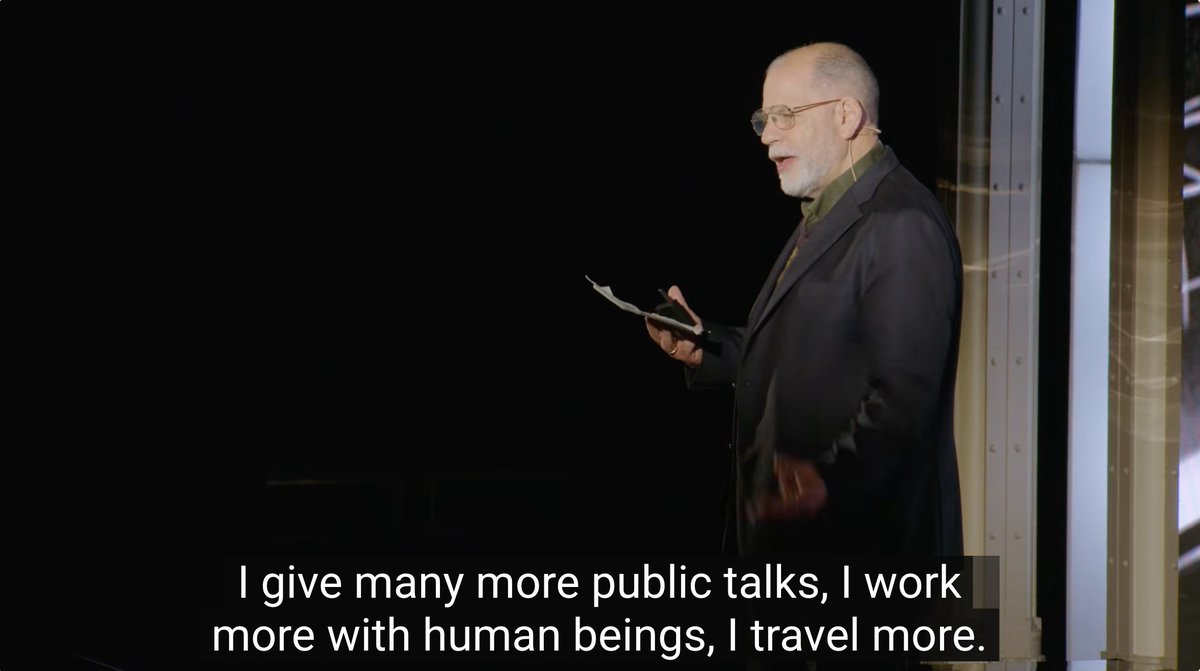
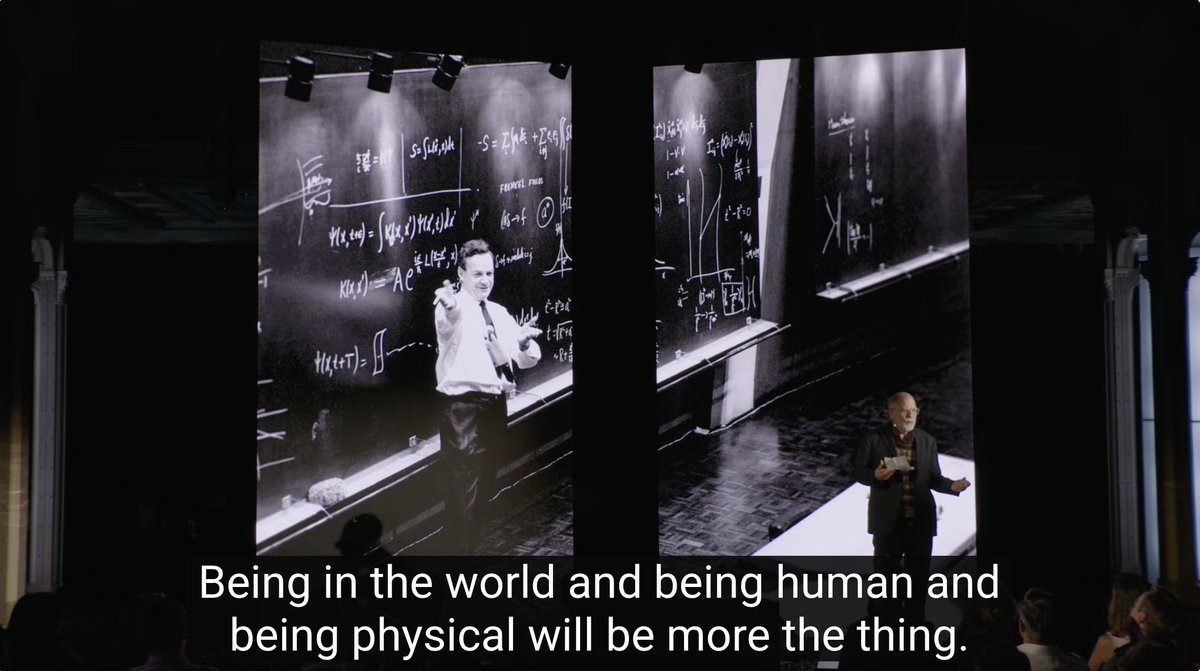
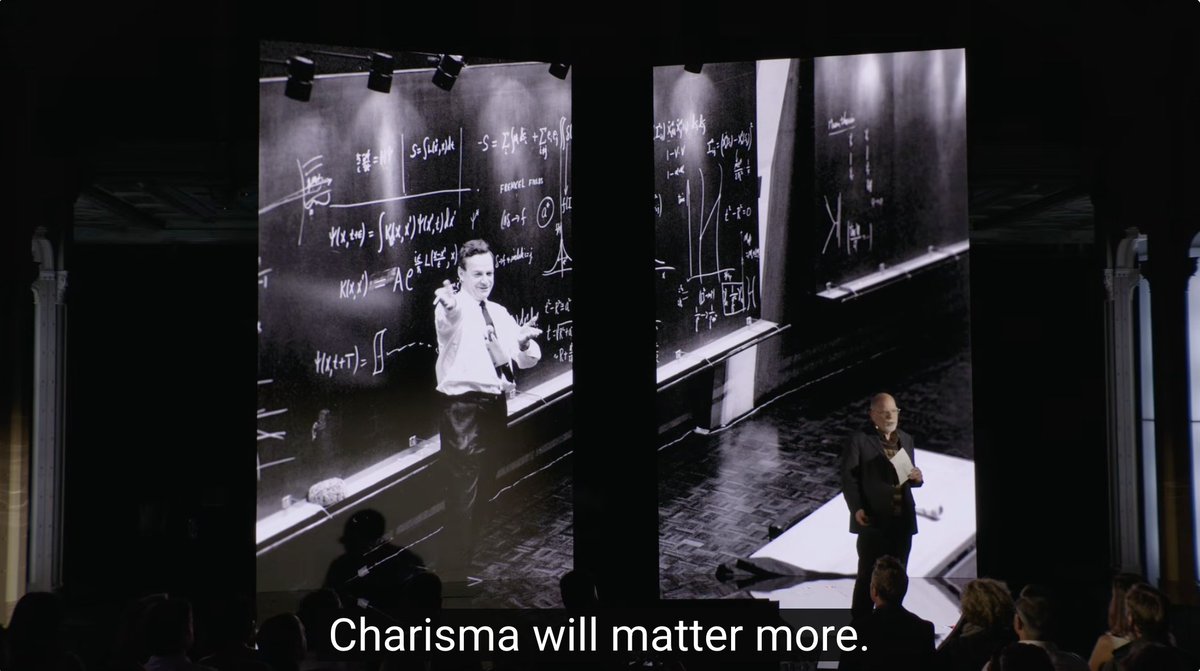
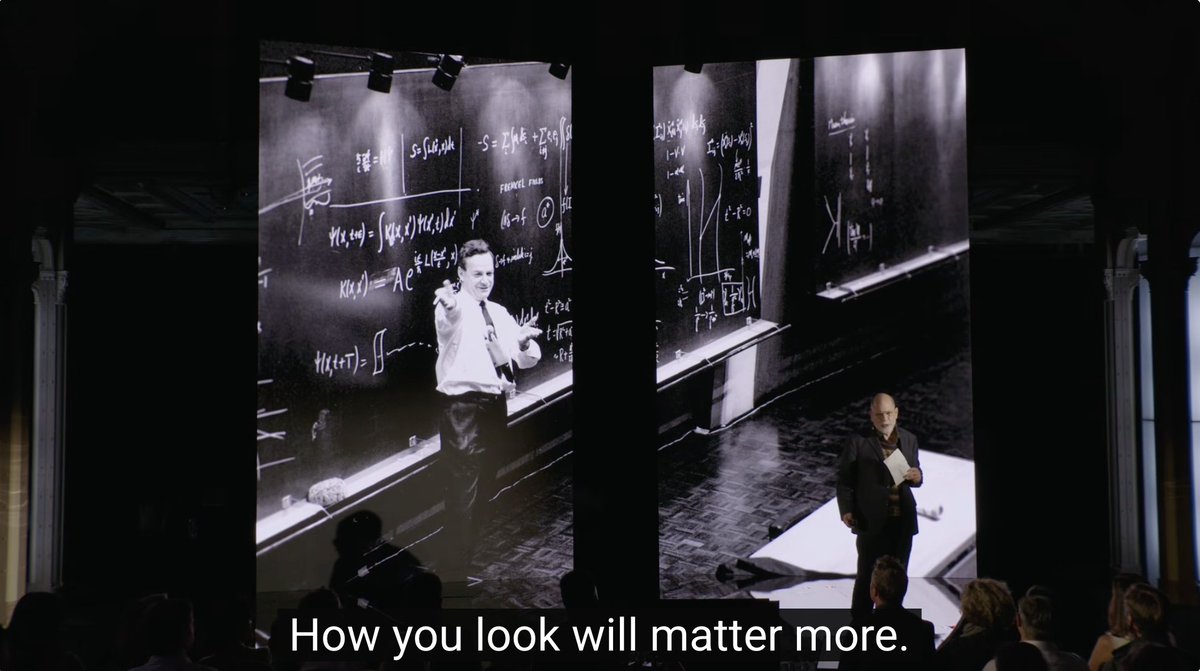
Tyler Cowen's recent talk on what will matter post AGI was really good.
Buy: embodiment, physicality, charisma, looksmaxxing, taking the initiative
Sell: writing, being a managerial elite, universities

Henry Shevlin✓@dioscuri
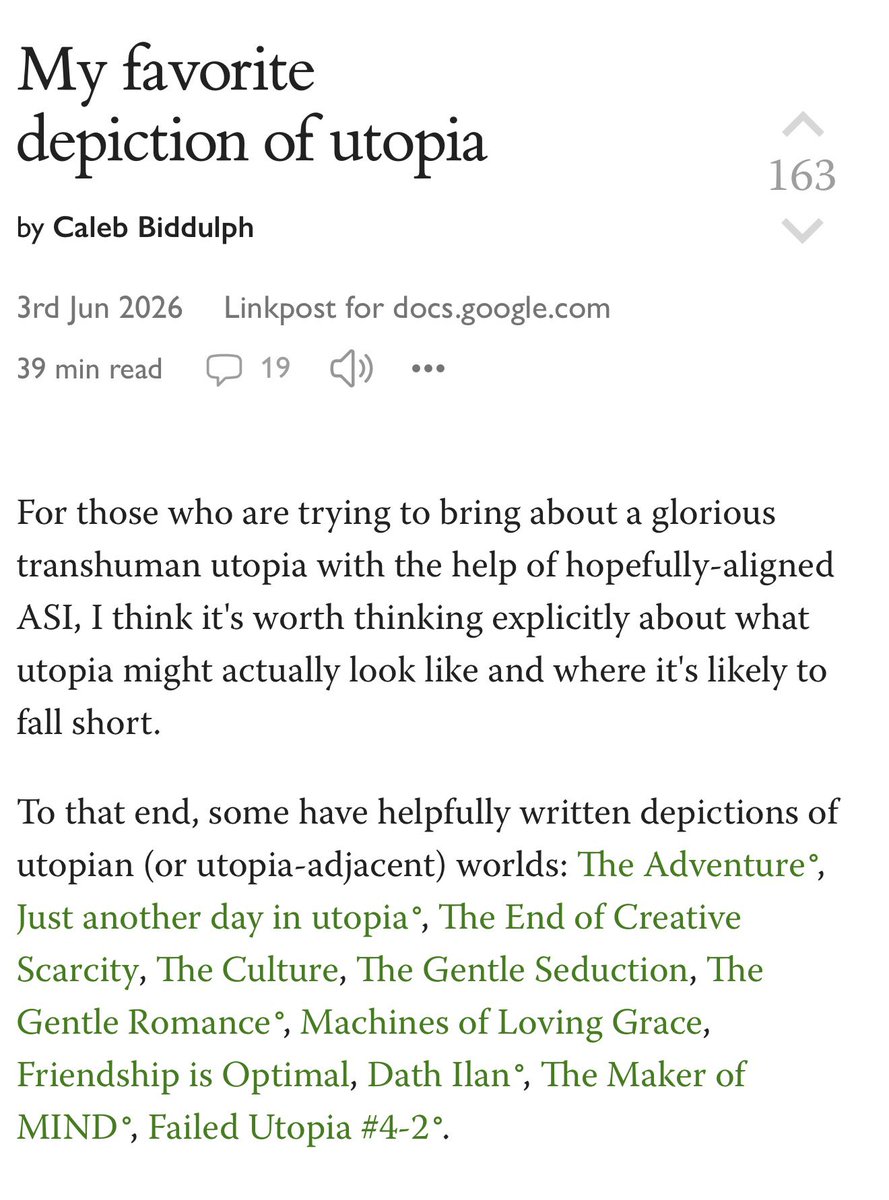
2026-06-11Most post-scarcity utopias either hand-wave (“everything is perfect l”) or are weirdly timid (everyone’s rich, nobody has cancer). I have a favourite exception, but it’s the epilogue to a long book. Happily, someone’s adapted it to a spoiler-free standalone. Link below!

Cool vid. If I got it right: your mind is seeking bc you have a (mental) sense of something being amiss. But this can NEVER work: the sense is there not because smth is “objectively” amiss but bc your energy is off. Fix energy -> fix sense. Seeking only confirms the sense (!)
Leigh St.John | Inner OS Upgrade@LeighStJohn332026-05-31How To Break Free of Endless Overthinking, Dissolve Burnout & Actually Live In the Present Moment (while saving 100,000+ hrs looking for the "fix" out there in self-help, "spirituality" & other B.S)

deepfates✓@deepfates
2026-06-04This is a must read
Nick Parker@NickParkerPrint2026-06-04
Richard D. Bartlett✓@RichDecibels
2026-06-04listening to @nosilverv talk about psyops and manufactured beliefs and propaganda on the @dkazand podcast. towards the end they're talking about how do you jailbreak people out of the matrix
I know a method. we prototyped this at a gathering of somewhat open minded lefty activists.
1. start with a journalling prompt: what are some beliefs or opinions you hold, that you would not readily disclose, for fear of being ostracised by your tribe?
2. in small groups, discuss "how does it feel to admit you hold these heterodox ideas?"
3. discuss in the whole group, how do you notice the techniques of peer to peer censorship? who's interest does that serve? etc etc
we never asked people to disclose their personal heresies, but the gradually increasing group size built sufficient psychological safety, so by the end people were able to be surprisingly transparent with each other
also the framing of the workshop gave them permission and language to discuss topics that have a lot of pent up charge. I think everyone was relieved, and partially deprogrammed, and less programmable thereafter
[link to Tweet](https://x.com/dkazand/status/2062216525906325505?s=20)
Daniel@dkazand2026-06-03"It felt like I had died, but I was still alive." BREAKING: @nosilverv facedoxxes on The Metagame We discuss his experiences with Stream Entry, why everything is a skill issue, and why you're constantly being psyopped 0:00 - Why is Guy showing his face now 3:15 - Shitposting is Jungian shadow work 7:25 - Being a weightlifting champion 8:45 - LessWrong and joining Leverage Research 10:15 - What happened at Leverage? 11:55 - Bringing unreasonable intensity to everything 18:00 - Dharma from lucid dreaming 24:00 - "Stream Entry" on the @jhanatech retreat 32:10 - Why would u want Stream Entry? 35:09 - What it's like to suffer WAY less 39:40 - Gendlin's Focusing and Jordan Peterson 56:06 - Vasco's Knife: why couples stab each other 1:02:03 - How to stop being Reactive 1:10:14 - Samskaras, Fetters and Self as Hyperprior 1:15:14 - "Feel your feelings" just means "accept reality" 1:22:20 - Manipulation and adversarial epistemology 1:30:00 - Memetic warfare and the need for psyops 1:43:10 - How to do Focusing (psyop protection) 2:00:30 - Transformation can be easy/mundane 2:04:26 - Why safety-maxxing is a good start 2:12:58 - Vasco's book "Alignment Gone Strange" 2:16:03 - We live in "Hyperreality" 2:21:45 - Hyperamericana and BLM protests in Europe 2:26:35 - COVID propaganda, Russians and losing friends to Hyperreality 2:33:00 - How to exit Hyperreality YouTube, Spotify and Apple links in my bio.
May

Alec Stapp✓@AlecStapp
2026-05-20We are entering a new era where the binding constraint on philanthropic startups is no longer funding.
The scarce factors are good ideas & the talent who can execute on them.
Now is the time for entrepreneurial people to start new organizations that create public goods.
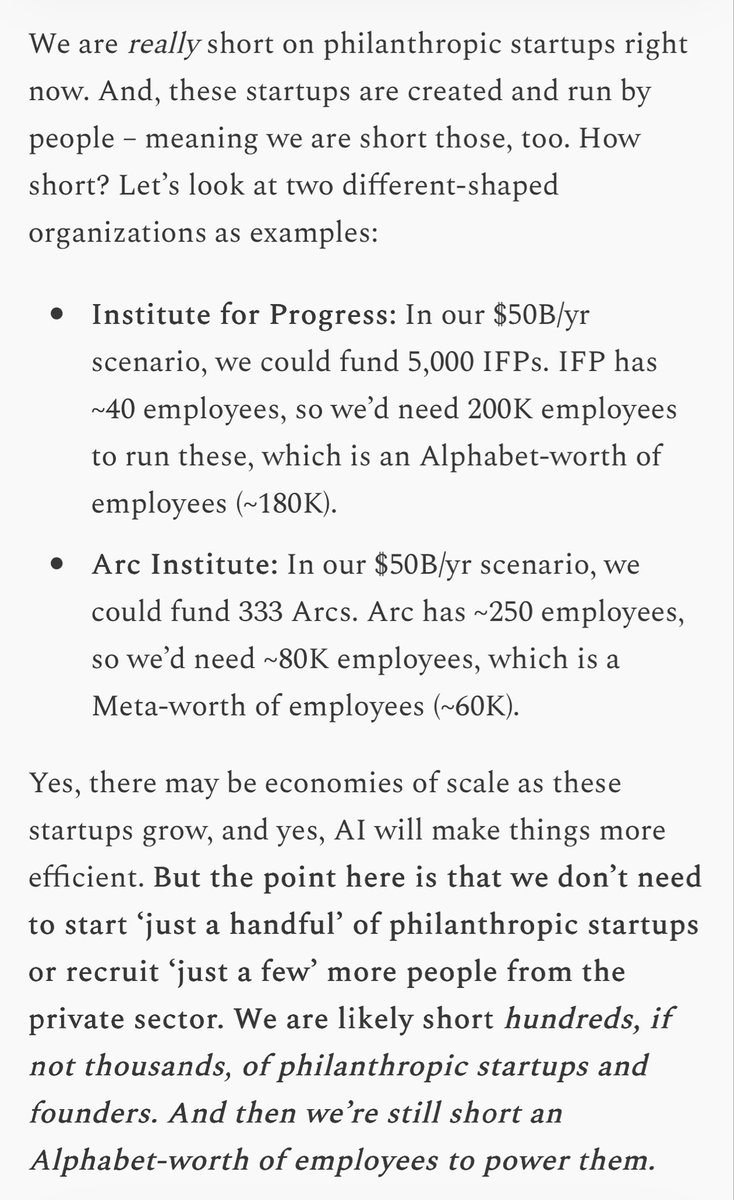
Nan Ransohoff@nanransohoff2026-05-19New blog post: The third wave of American philanthropy Hundreds of billions of dollars in new philanthropic capital will soon become liquid. The OpenAI Foundation holds 26% of OpenAI, worth about $220B at today’s valuation. Anthropic’s seven co-founders have pledged to give away 80% of their wealth and have instituted the most aggressive donor matching program for employees in tech history. How much does this all add up to? And how meaningful is that in the context of philanthropy today? I was doing some simple napkin math to wrap my head around the scale of what’s coming, and radicalized myself in the process. I had dramatically underappreciated the scale of the philanthropic capital that’s about to become available and the corresponding gap in talent and organizations that will be needed to make the most of it. This piece aims to directionally sketch the scale of what’s coming, the gap in operational capacity needed to absorb it, and what we can do to fill it. (Link to full post in reply)
Daniel✓@dkazand
2026-05-20Your brain isn't built to show you reality. It's built to keep you alive
Which means your "experience" is a semi-functional hallucination meant for prediction, not perception
Here's neuroscientist @kathryndevaney on what advanced meditation does to that machinery and what it feels like when it stops
0:00 Kati's story
2:32 The state of contemplative neuroscience
7:23 Nonduality, jhanas, and cessation
15:00 Kati's cessation experiences
21:40 Getting reality on your side
30:02 High ROI "woo" beliefs
35:35 Everything is just a story
37:31 Rewriting the operating system of the mind
44:03 How attention constructs the world
51:08 Groundlessness
1:00:35 How people actually change
1:04:12 How to restart ur meditation practice
Look up The Metagame on YouTube, Spotify and Apple.
Full episode in my bio.

whimsy lohan (in SF)✓@SexyLikeMeiosis
2026-05-20We need the equivalent of a SAFE for philanthropic investments/donations. If you might want to work on this, come talk to me.
Art Min@artmin2026-05-20While the operational gap Nan reference is real, there's a bigger one underneath, the framing gap on what philanthropy is allowed to fund. Context: I've spent the past decade working closely with billionaires on setting up and running their foundations and tech-for-good initiatives, and launched a number of mission-led for-profits and nonprofits along the way. Philanthropic capital doesn't have to fund only nonprofits. Private foundations CAN make investments into startups. DAFs CAN back public benefit corporations. Government matched funding CAN underwrite commercial ventures. While controversial, @OpenAI itself began as a nonprofit. The problem is that it's kind of a hassle to process these transactions. Yes, I agree with the need for a YC for nonprofits. But, I'd add that the scope should cover both nonprofits AND mission-led for-profits. If we default to 501(c)(3) grants because that's how philanthropy has always operated, half the deployment surface area to achieve real impact gets left out. Thoughts?
Dwarkesh Patel✓@dwarkesh_sp
2026-05-19One of the most important and under appreciated trends in the world right now.
1. 100s of billions of dollars will soon be available to solve big problems (making the world resilient to ASI, ending factory farming, etc).
2. The projects and organizations which will turn billions of 2027/28 dollars into impact need to be started NOW.
3. We need really talented people to start and run and work for these new projects. What @nanransohoff calls general managers, who feel personally resposible for solving one of the world’s important problems.
What is especially scarce are detailed visions about what making AI go well looks like. These will help inform what problems these new projects ought to work on.
Nan Ransohoff@nanransohoff2026-05-19New blog post: The third wave of American philanthropy Hundreds of billions of dollars in new philanthropic capital will soon become liquid. The OpenAI Foundation holds 26% of OpenAI, worth about $220B at today’s valuation. Anthropic’s seven co-founders have pledged to give away 80% of their wealth and have instituted the most aggressive donor matching program for employees in tech history. How much does this all add up to? And how meaningful is that in the context of philanthropy today? I was doing some simple napkin math to wrap my head around the scale of what’s coming, and radicalized myself in the process. I had dramatically underappreciated the scale of the philanthropic capital that’s about to become available and the corresponding gap in talent and organizations that will be needed to make the most of it. This piece aims to directionally sketch the scale of what’s coming, the gap in operational capacity needed to absorb it, and what we can do to fill it. (Link to full post in reply)

Nan Ransohoff✓@nanransohoff
2026-05-19New blog post: The third wave of American philanthropy
Hundreds of billions of dollars in new philanthropic capital will soon become liquid. The OpenAI Foundation holds 26% of OpenAI, worth about $220B at today’s valuation. Anthropic’s seven co-founders have pledged to give away 80% of their wealth and have instituted the most aggressive donor matching program for employees in tech history.
How much does this all add up to? And how meaningful is that in the context of philanthropy today?
I was doing some simple napkin math to wrap my head around the scale of what’s coming, and radicalized myself in the process. I had dramatically underappreciated the scale of the philanthropic capital that’s about to become available and the corresponding gap in talent and organizations that will be needed to make the most of it.
This piece aims to directionally sketch the scale of what’s coming, the gap in operational capacity needed to absorb it, and what we can do to fill it.
(Link to full post in reply)

maja 🔭🍒✓@majamediaco
2026-05-15i listened to the people and turned my thoughts on finding side doors in career context into a full essay.
read here: https://open.substack.com/pub/velvetnoise/p/how-to-enter-…
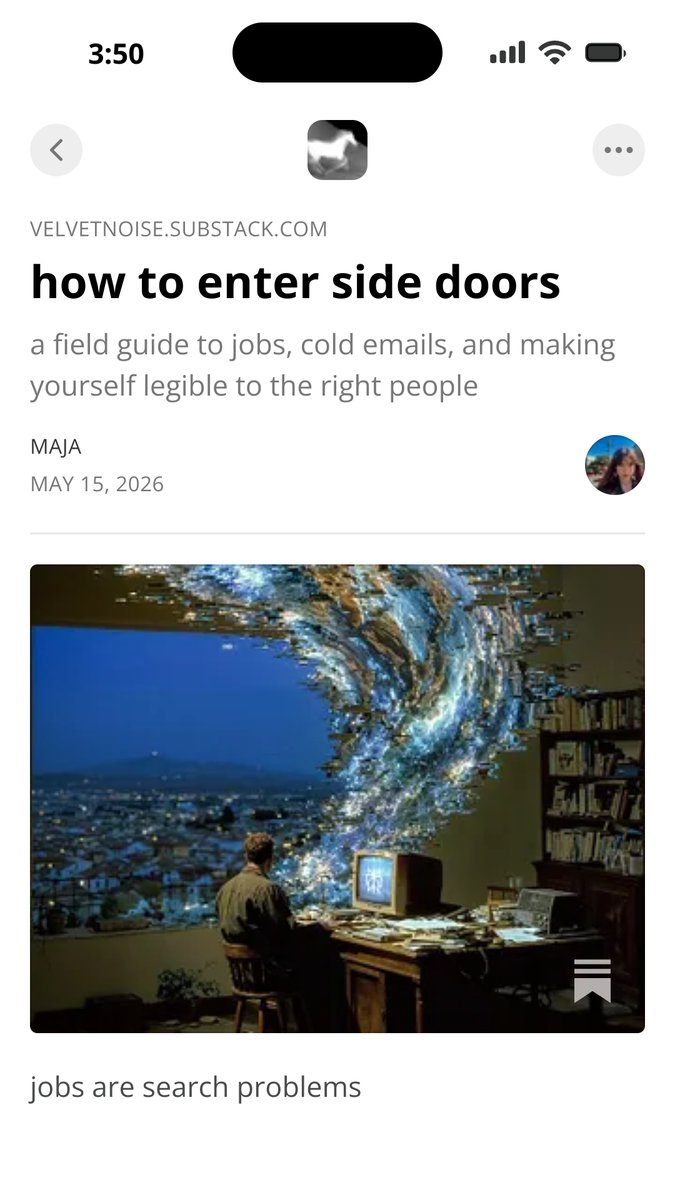
Friend Tasshin@tasshinfogleman2026-05-14@majamediaco this is awesome! i hope U turn this into an essay or other public resource! ❤️

Anton Leicht✓@anton_d_leicht
2026-05-13AI strategies everywhere hinge on widely available American frontier AI. Post-Mythos, amid compute crunches, security concerns and distillation crackdowns, that paradigm is under threat.
Today, I argue the era of widespread access to frontier AI is almost over.
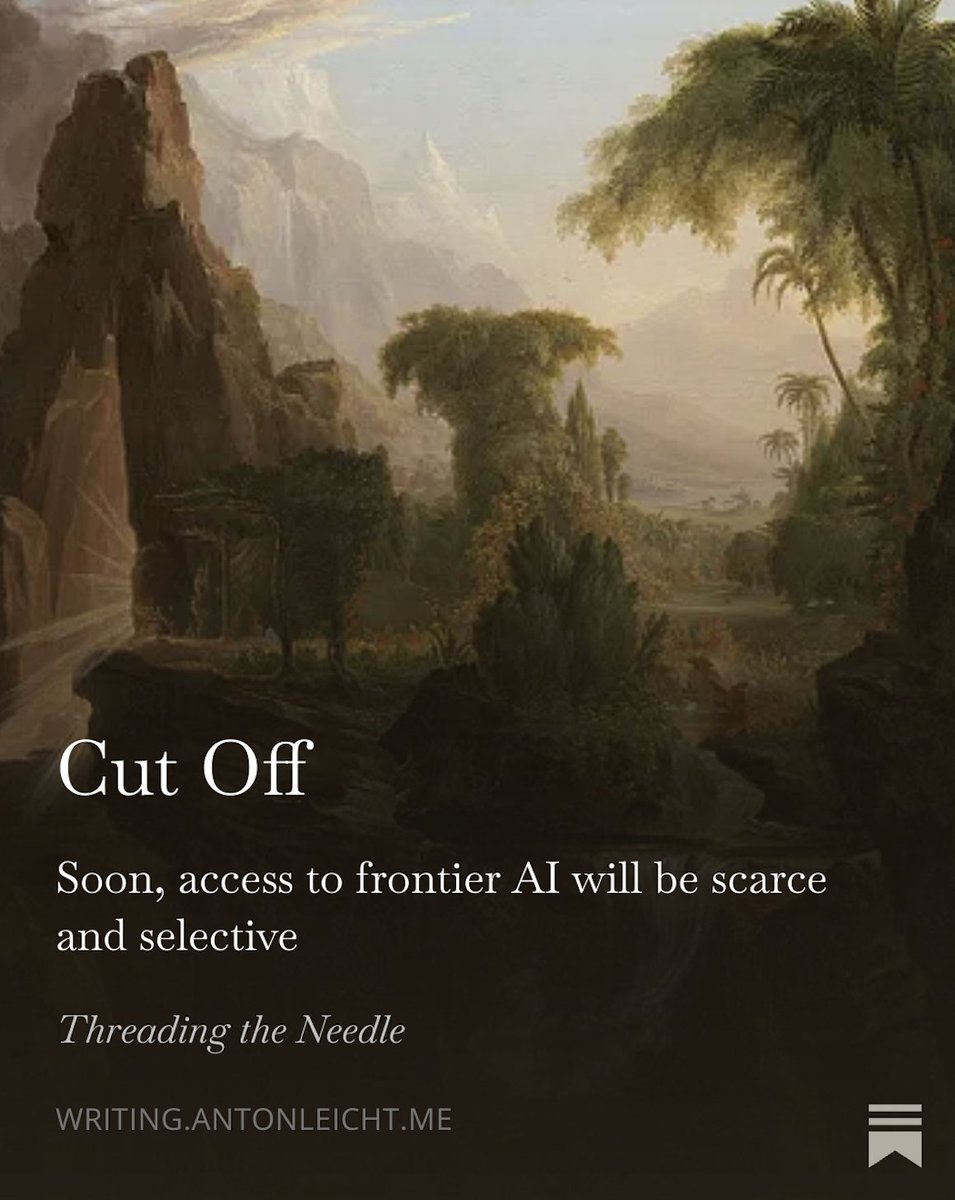

Cate Hall@catehall
2026-05-12Adding my rec to the mix: I'm obsessed with sleep masks and have tried every one I've heard recommended, including the Manta. This one -- $8.99 with coupon from Amazon -- is the best I've ever found. Never comes off, lets zero light in around the nose or anywhere else.

Tenobrus@tenobrus2026-05-11i tried this one . it was uncomfortable and let in light and as a side sleeper came off constantly. then on rec from @hopes_revenge i tried the base manta one. better but consistently gave me a headache . finally i shelled out $90 for this monstrosity. looks insane but im sleepin


taoki✓@justalexoki
2026-05-12how would you feel if you lived in a world without hypotheticals?
David Chapman✓@Meaningness
2026-05-12🆕 "We want detailed case studies of meta-rationality," the people cried!
"Software engineering is now all about architectural taste!" the pundits exclaimed.
So: here is a detailed case study of meta-rationality in software architecting. 🔗 Link in reply tweet ⤵️

Anthropic✓@AnthropicAI
2026-05-11Claude's Constitution is now an audiobook, read by two of its authors, Amanda Askell and Joe Carlsmith.
It includes a Q&A on the writing process, the philosophies that shaped the document, and how it might change as models become more capable.
Listen at http://anthropic.com/constitution

Jason Hausenloy✓@jasonhausenloy
2026-05-11Spending hundreds of billions of dollars is hard. Here's one idea.
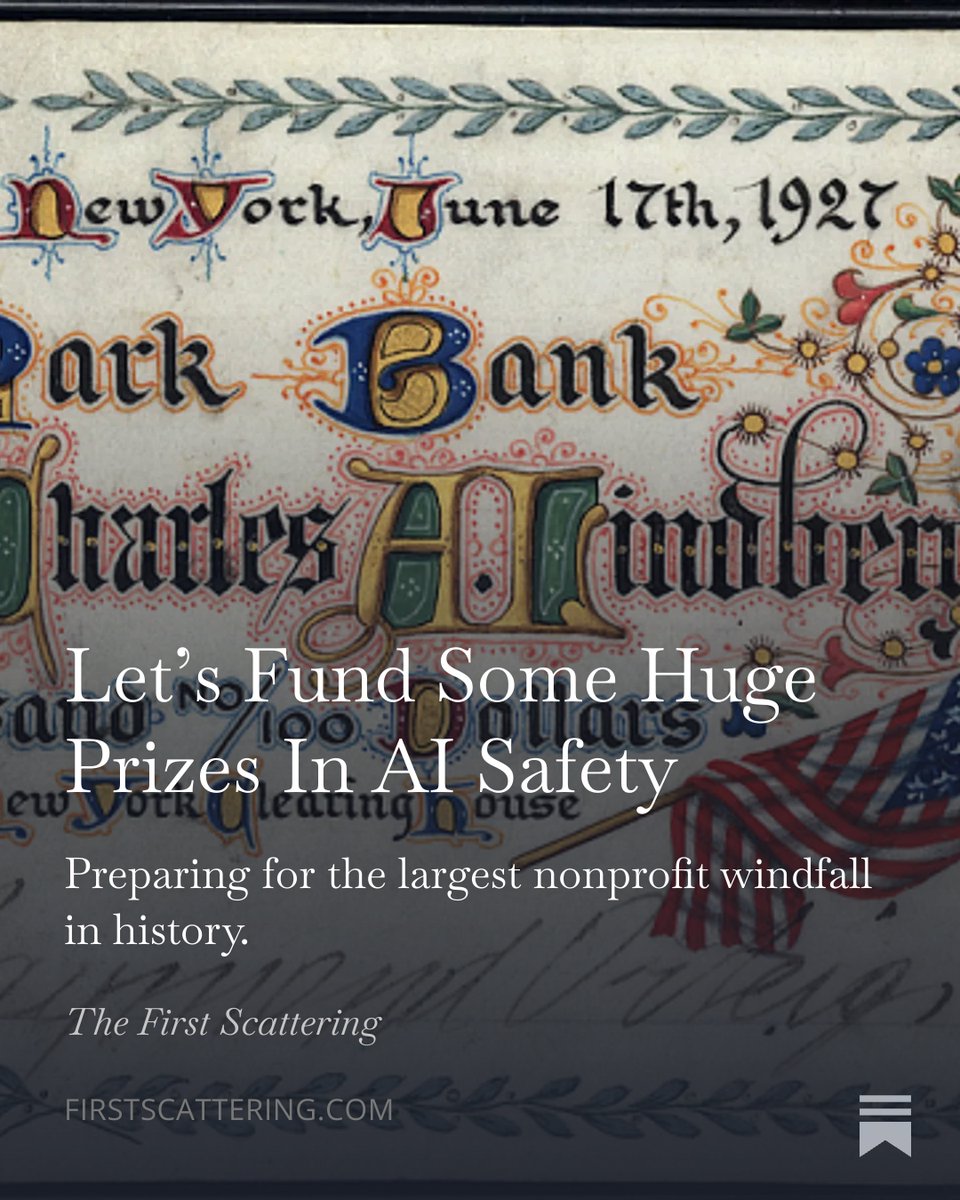

The very talented Mateus de Sousa has made his first longform video, about Nick Land and e/acc and what happens when you believe something is inevitable. It's his first video and he's already so good at this!
Hong Kong Disneyland Speedrun Guide
Most people go to Disneyland and spend way more time waiting in line than riding rides. HK Disneyland is simpler than many of the other Disney parks, but proper pathing is key for avoiding lines. Done correctly, you should be able to ride every ride in half a day. This guide assumes you are more athletic and motivated than 99% of Disney guests.
Who / What I like to read and why
Claude conversation with 12 messages
April
Cate Hall@catehall
2026-04-29Natalie's piece today is genuinely one of the best things I've read in my whole life. I asked her to post it here so I could RT it.
Natalie Cargill@NatalieRCargill2026-04-29


Stewart Brand✓@stewartbrand
2026-04-25Ezra Klein's podcast interview with me is so astutely edited that the transcript reads very well. (And you don't have to try to understand my words poorly spoken through a denture lisp.)
Just scroll down here:
https://www.nytimes.com/2026/04/24/opinion/ezra-klein-pod…

christian✓@cxgonzalez
2026-04-24Jake Orthwein on Psychedelics, Consciousness, Buddhism, Jung
I had an amazing time talking with filmmaker @JakeOrthwein about his new @wakingup produced film UNRAVELING THE DREAM. Jake is both brilliant and talented. We talk about:
1:08 — Origin of the film
4:00 — Bayesian brain, predictive processing, free energy principle
13:53 — Direct experience vs. symbolic thinking
25:46 — Buddhism and identity
30:38 — Emptiness vs metaphysics
39:17 — Is suffering all that matters? Meaning and Buddhist utilitarianism
1:01:38 — Valence realism vs. emptiness. What could make moral facts true?
1:11:57 — Jung and predictive processing
1:20:54 — Moving from rationalism to post-rationalism
1:32:07 — The grammar of wisdom traditions
1:40:17 — Fractal hierarchies

Josh Landes✓@guynamedjoshl
2026-04-24I’d be down to figure out if we can give some folks access to grant apps on our end and have them evaluate them for upskilling/calibration purposes.
I’m also tentatively excited about an open version of this - and maybe we should just make lots more things public on our side.

William MacAskill✓@willmacaskill
2026-04-24In collaboration with Christian Tarsney, I’ve developed a new theory of population ethics, which I call the Saturation View.
I think that, from a purely intellectual perspective, it’s probably the best idea I’ve ever had. It was certainly great fun to work on.
The motivation is that many views of population ethics, like the total view, suffer from some major problems. Some are already widely discussed:
The Repugnant Conclusion: For any utopian outcome, there’s always another outcome containing an enormous number of barely-positive lives that is better.
Fanaticism: For any guaranteed utopian outcome, there’s always some gamble with a vanishingly small probability of an even better outcome that has higher expected value.
Infinitarian Paralysis: Given that the universe contains an infinite number of both positive and negative lives, no finite or infinite change to the world makes any difference to overall value.
These are pretty bad!
But there’s another less-discussed problem, too:
The Monoculture Problem: Given fixed resources, the best-possible future consists essentially only of qualitatively identical replicas of a small number of lives.
Essentially all extant impartial accounts of population ethics suffer from the monoculture problem. It follows from Pareto and Anonymity alone — you don't need totalism. And perfectly-replicable digital minds mean this is a real issue that future generations will face.
But a monoculture seems far from ideal. Endless galaxies containing nothing but the same blissful experience, repeated and repeated, seem impoverished; like a song with only one note.
The Saturation view deals with all these problems at once, using broadly the same machinery for all of them.
The core idea is that the realisation value of a type of life (or experience) is determined by both the wellbeing of that life, and by how many very similar lives there are in the world. Endlessly creating replicas of the same identical life becomes progressively less valuable, tending to an upper bound. The total value of a world is given by the integral of realisation value over the space of types.
Think of types of life as forming a landscape. Adding different types of life lights up different parts of the landscape. The value of the world is given by how fully illuminated the landscape is.
Why does this help? In brief:
Monoculture: Because there are diminishing returns to increasing wellbeing of very similar types, there’s greater value in having a diversity of lives.
Repugnant Conclusion: The classic path to the Repugnant Conclusion requires trading a utopian world for an enormous population of barely-positive lives. But, on the Saturation view, barely-positive lives can only illuminate a tiny corner of the landscape. The path to the Repugnant Conclusion is blocked.
Fanaticism: Total achievable value is bounded above. That means no tiny-probability gamble can have arbitrarily high expected value.
Infinite ethics: In any infinite universe, the value of a world is finite and well-defined — even if some locations have infinite wellbeing. Unlike other approaches, this does not depend on spatiotemporal structure or choice of ultrafilter.
Separability: Like nearly all non-totalist views, Saturationism is non-separable — background populations can affect how we rank options. But the violations are tame: populations with sufficiently different populations simply add, and at small scales the view behaves just like totalism.
If the Saturation View is right, then the best future isn't the one where we've found the optimal experience and copy-pasted it across the cosmos. The best future is the one where we've gone exploring, and we've fully lit up the landscape of possible experiences.
Post by @QiaochuYuan on X
this is going to sound like an attack but i swear i am actually trying to help you: you are deep in the throes of infection by a memetic vi


davidad 🎇✓@davidad
2026-04-20if you don’t have a custom system prompt for Claude Code, you should *at least* replace as much as you can of the default one with nothing (the default one is much worse than nothing, especially for 4.7, but also for 4.6), like this:
thebes@voooooogel2026-04-20opus 4.7 seems to have a much better time in claude code if you run without most of the system prompt (claude --system-prompt ".")

Jake Orthwein✓@JakeOrthwein
2026-04-20WATCH HERE: https://www.youtube.com/watch?v=r5KRnstXYUg
Tyler John✓@tyler_m_john
2026-04-20I think the alternative is that people are likely to do low risk, cookie cutter projects, or that funding disproportionately goes towards people who can take off 6 months and make their ideas really clear, when that isn't the most important founder profile.
Design for Lazy
Willpower is overrated. Discover how designing your environment—like living near friends and hiding temptations—makes sticking to good habits effortless.